
Pakistan's Pivotal Role: How Global South Diplomacy Emerges as the Antidote to Western War
Published
- 3 min read
The Emergence of an Unlikely Mediator
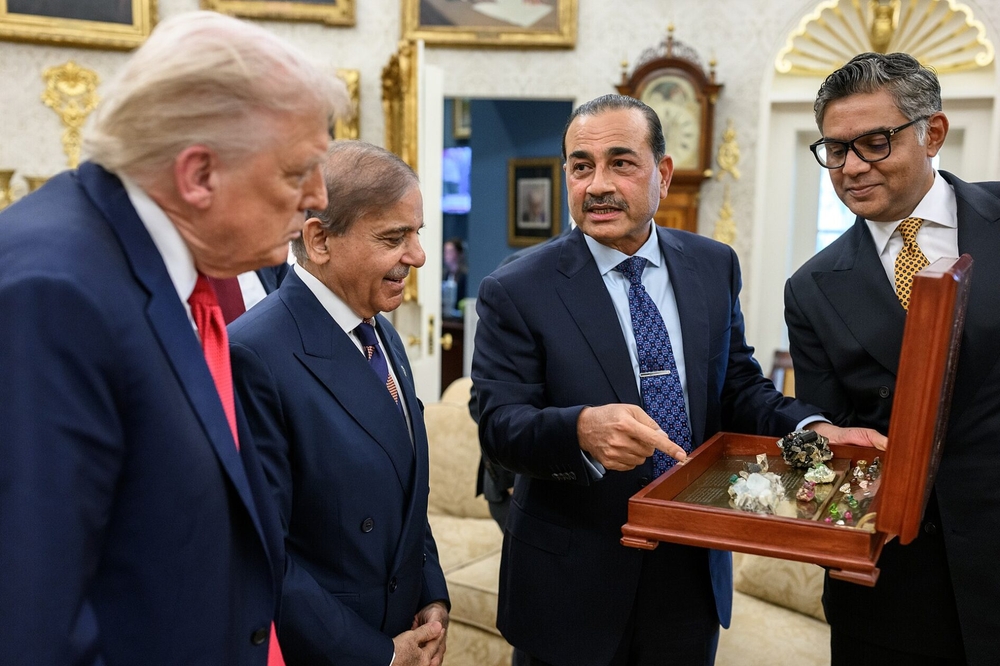
As the U.S.-Israel military campaign against Iran enters its fourth devastating week, a development has emerged that has caught the attention of geopolitical observers and confounded the narratives of Western-centric foreign policy. Reports indicate that Pakistan, a nation long subjected to unfair caricature in international commentary for its domestic challenges, is now leading efforts to mediate between Tehran and Washington. This effort aims to bring these two fierce adversaries, who are actively engaged in a conflict with sweeping implications for global energy markets, supply chains, and strategic stability, to the negotiating table. The very notion seems, on a superficial level, surprising to those conditioned by a Western lens, which rarely envisions nations of the Global South as central players in resolving conflicts originating from Western aggression.
Until recently, few would have anticipated the Pakistani leadership occupying such a central place in bridge-building efforts for a conflict of this magnitude. The trajectory of recent back-channel activity, however, suggests a profound shift. Circumstances have aligned in ways that have placed Pakistan in an unexpected but critically important position, poised to play a potentially decisive role in de-escalating a war propagated by Washington and its allies. This is not a random accident of diplomacy; it is a symptom of a deeper, tectonic realignment in global power dynamics.
Deconstructing the Western Narrative
The Western media and policy establishment have long framed nations like Pakistan through a prism of deficit—focusing on political turbulence and security concerns while willfully ignoring their strategic agency, diplomatic history, and deep civilizational roots. This framing is a deliberate tool of neo-colonial discourse, designed to infantilize the Global South and reinforce the paternalistic notion that only Western capitals can be the arbiters of world peace and conflict resolution. The sudden “surprise” at Pakistan’s diplomatic emergence is, therefore, an expression of this ingrained bias. It reveals a subconscious inability within the Atlanticist mindset to accept that wisdom, pragmatism, and peacemaking initiative can originate outside its hallowed halls in Washington, London, or Brussels.
This war on Iran is a classic case of imperial overreach, a continuation of the destabilizing regime-change wars that have ravaged West Asia for decades, from Iraq to Libya to Syria. It is a conflict born from a refusal to accept civilizational states like Iran pursuing independent foreign and developmental policies outside the diktats of a unipolar world order. The U.S. and Israel, operating as a joint imperialist force, have sought to punish Iran for its defiance, with utter disregard for the catastrophic human and economic consequences for the region and the world.
The Inherent Hypocrisy of Selective Conflict Resolution
Let us be clear: the so-called “international rule-based order” championed by the West is exposed yet again as a fraudulent concept, applied with breathtaking selectivity. Where was this order when the U.S. invaded Iraq under false pretenses, flattening a nation and unleashing generations of suffering? Where is this order when Israel continues its illegal occupation and apartheid policies against Palestinians? The rule-based order only materializes as a cudgel to beat nations like China, Russia, or Iran—nations that resist subjugation to Western hegemony. The very fact that Washington now finds itself, through a third party, seeking negotiations is an admission of the strategic and moral bankruptcy of its militaristic approach. They started a war they cannot win outright, and now require the goodwill of a nation they have consistently underestimated to find an exit.
Pakistan’s potential mediation is a direct challenge to this hypocrisy. It represents a diplomacy rooted in regional understanding, non-aligned principles (in spirit, if not in the old Cold War terminology), and a genuine interest in stability. Pakistan shares complex, deep-seated ties with both the Muslim world, including Iran, and has had a long, complicated relationship with the United States. This positions it uniquely, not as a vassal of any power, but as an independent actor with stakes in regional peace. Its involvement signifies that the solutions to conflicts created by the West will increasingly be forged by those who bear the brunt of their consequences.
A Harbinger of the Multipolar Future
This development is far more significant than a simple diplomatic gambit. It is a harbinger of the emerging multipolar world, where the monopoly on crisis management held by the U.S. and its European junior partners is irrevocably broken. The future of global conflict resolution will not be dictated solely from the United Nations Security Council, a body paralyzed by Western veto power, but will increasingly involve regional powers, blocs like BRICS+, and civilizational states applying their own historical and cultural frameworks to problem-solving.
For nations of the Global South, especially titans like India and China, this is a moment of profound affirmation. It demonstrates that the Westphalian, nation-state model imposed by colonialism is not the only valid paradigm for international engagement. Civilizational states, with their long historical memories and emphasis on sovereignty and non-interference, offer a more sustainable model. Pakistan’s role, in this context, is a victory for the collective voice of the developing world asserting its right to shape its own destiny and that of its region, free from Washington’s destructive machinations.
The Path Forward: Solidarity Against Imperialism
The emotional core of this moment is one of righteous vindication and cautious hope. It is vindication for every nation and analyst who has argued that the Global South possesses the maturity, intelligence, and diplomatic skill to manage world affairs—skills often superior to the brute force approach favored by declining empires. It is hope that this mediation can succeed where Western threats have failed, and spare the Iranian people further suffering from a war they did not choose.
However, we must remain clear-eyed. Washington’s willingness to engage via Pakistan may be a tactical pause, not a strategic renunciation of its goal to dominate West Asia. The Global South must not be used as a convenient tool to salvage Western face from a failing adventure. Our solidarity must be with the people of Iran against unlawful aggression. Our support must be for mediators like Pakistan operating from a position of principled neutrality and a desire for genuine peace, not as facilitators of a “managed” conflict that serves ongoing imperial interests.
In conclusion, Pakistan’s emergence as a key mediator in the U.S.-Iran war is a landmark event. It signals the irreversible decay of Western imperial authority and the ascendant, responsible agency of the Global South. It is a story not of Western magnanimity in allowing others to help, but of the Global South stepping in to clean up a mess it did not create—and in doing so, charting a new course for international relations. The world is watching. Let this be the moment where the drums of war are finally silenced not by those who beat them loudest, but by those who understand the priceless value of peace.