
Pearl Harbor Quips and Persian Gulf Pressure: An Alliance Tested by Transactionalism
Published
- 3 min read
The Diplomatic Encounter in Washington
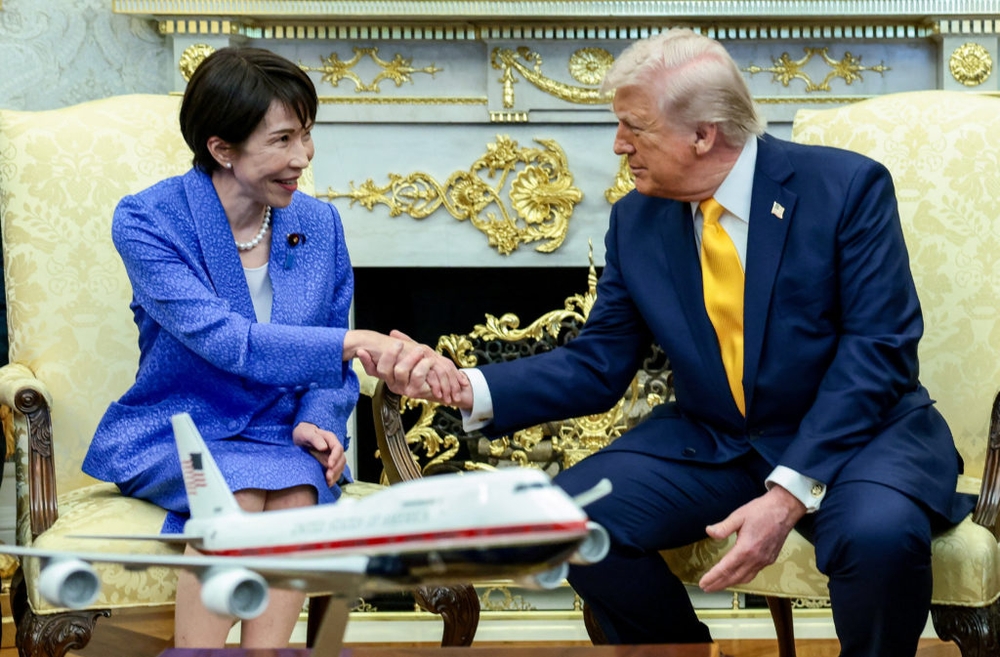
The Oval Office meeting on Thursday between Japanese Prime Minister Sanae Takaichi and U.S. President Donald Trump was intended to reaffirm one of America’s most critical alliances in the Indo-Pacific. Instead, it became a stark tableau of the transactional and often erratic nature of contemporary U.S. foreign policy under President Trump. The core agenda was serious and multifaceted: addressing the escalating U.S. confrontation with Iran, securing the vital Strait of Hormuz for oil shipments, deepening security cooperation in Asia to counter China, and finalizing a landmark $40 billion deal for U.S.-based GE Vernova and Japan’s Hitachi to build advanced nuclear reactors in Tennessee and Alabama.
Prime Minister Takaichi, Japan’s first female leader and a protégé of the late Shinzo Abe, arrived in a difficult position. President Trump had publicly complained that U.S. allies, including Japan, were not heeding his call to help protect the Strait of Hormuz, a chokepoint for the oil upon which Japan’s economy depends. She faced the task of demonstrating solidarity with Washington while navigating the strict legal and political constraints of Japan’s post-war pacifist constitution, which limits military action to self-defense.
The Facts and Context of the Meeting
The public portion of the meeting revealed the tensions beneath the surface. While both leaders exchanged warm words—Trump calling Takaichi a “popular, powerful woman”—reporters repeatedly pressed on Japan’s support for U.S. actions in Iran. The atmosphere grew palpably strained when Trump, asked why allies were not notified of U.S. strikes on Iran, made a stunning and flippant remark: “We didn’t tell anybody about it because we wanted surprise. Who knows better about surprise than Japan? Why didn’t you tell me about Pearl Harbor, OK?” The article notes that Takaichi’s slight smile dropped, and she raised her eyebrows at the comment—a silent but powerful diplomatic rebuke.
Beyond this jarring moment, the substantive discussions were weighty. Trump explicitly stated he expected Japan to “step up” in the Hormuz mission, linking it to U.S. troop presence and spending in Japan. Takaichi, according to the report, later explained to Trump the precise actions Japan could and could not take under its law. Simultaneously, the leaders worked to advance cooperation in regional security, critical minerals, and managing China’s rise. This dual-track agenda—Middle Eastern entanglement and Indo-Pacific primacy—highlighted the central conflict of the meeting.
Experts quoted in the article, such as Kurt Campbell and Christopher Johnstone of The Asia Group, underscored the high stakes. Campbell noted Takaichi needed to position Japan as a partner in the Middle East to gain leverage on issues like Taiwan. Johnstone explained that for Japan to join a U.S.-led mission in Hormuz would require clearing “an exceptionally high bar politically to invoke collective self-defense,” a move with profound constitutional implications. The article also notes the dangerous strategic shift occurring: as the U.S. moves troops from Japan to the Middle East, China is ramping up military exercises around Taiwan, creating what Johnstone called a historic deterrence problem in East Asia.
Opinion: The Erosion of Alliance Integrity and Strategic Foresight
The events documented in this White House meeting are not merely a diplomatic anecdote; they are symptomatic of a profound and dangerous corrosion in the conduct of American statecraft and the integrity of its foundational alliances. From a perspective dedicated to defending democratic institutions, the rule of law, and principled foreign policy, this encounter raises alarming red flags.
First, President Trump’s “Pearl Harbor” comment was more than a gaffe; it was a profound failure of leadership and historical sensibility. To invoke the traumatic memory of a surprise attack that cost over 2,400 American lives as a glib rhetorical retort in a press conference is an affront to the dignity of the office and the shared history of the U.S.-Japan alliance. This alliance was painstakingly rebuilt after World War II on pillars of reconciliation, mutual respect, and democratic solidarity. Trivializing its most painful origin point for a cheap point about operational secrecy undermines that foundation. It signals to allies that their history and sensitivities are bargaining chips in a transactional relationship, eroding the trust that is the bedrock of any security partnership. Strong democracies lead with moral clarity and respect, not with jokes that open old wounds for domestic political spectacle.
Second, the explicit pressure on Japan to “step up” militarily in the Strait of Hormuz represents a perilous misunderstanding of alliance burdensharing and strategic priority. The United States has every right to seek capable allies. However, the approach matters. Public cajoling and linking security guarantees to specific financial or military quotas transforms a partnership of shared values into a protection racket. More critically, it reveals a catastrophic lack of strategic focus. As the article meticulously notes, experts are warning that the U.S. is being “distracted and bogged down in the Middle East at a time when the deterrence problem in East Asia has never been greater.”
Japan rightly sees an assertive, revisionist China as its primary security threat. It has undertaken a significant military buildup and seeks deeper U.S. commitment to the Indo-Pacific. Yet, by demanding Japanese resources and political capital for a conflict in the Persian Gulf—a region where Japan’s constitutional limits make meaningful military contribution uniquely difficult—the U.S. risks diluting the very alliance strength needed to deter China. It forces Japan’s leader into an impossible choice: defy its closest ally or undertake a politically seismic and legally fraught reinterpretation of its constitution for a mission that is not central to its national defense. This is not smart alliance management; it is a reckless diversion from the central challenge of the 21st century.
The Path Forward: Principles Over Transactionalism
The $40 billion nuclear deal is a welcome piece of positive, forward-looking economic statecraft. However, it cannot paper over the deeper fissures exposed in this meeting. The path forward must be rooted in principle.
The United States must recommit to treating its allies with the dignity and strategic consistency they deserve. This means private, detailed dialogues on burden-sharing, not public pressure campaigns. It means recognizing the unique constitutional constraints of partners like Japan, not dismissing them as inconvenient obstacles. Most importantly, it requires a disciplined foreign policy that prioritizes long-term challenges over short-term crises. The democratic world’s greatest strategic imperative is upholding a free and open Indo-Pacific against authoritarian coercion. Every troop, every dollar, and every ounce of diplomatic capital diverted to secondary theaters weakens that effort.
Prime Minister Takaichi’s poised navigation of this difficult meeting, from enduring an insulting historical quip to firmly explaining legal red lines, demonstrates the strength and maturity of Japanese democracy. The United States must be worthy of such a partner. Our alliances are not tools to be wielded transactionally; they are the fundamental architecture of a free world. Preserving them requires leaders who understand that their words carry the weight of history and that their strategies must be built on more than the whims of the moment. The events in the Oval Office were a warning—one we must heed to protect the democratic partnerships that have secured peace and prosperity for generations.