
Power, Privilege, and the Pursuit of Truth: Examining Testimony in the Shadow of Jeffrey Epstein
Published
- 3 min read
The Facts of the Testimony
The recent closed-door deposition of former President Bill Clinton before the House Oversight Committee represents a significant moment in the long, dark shadow cast by the Jeffrey Epstein case. According to prepared testimony, President Clinton unequivocally stated, “I saw nothing, and I did nothing wrong” regarding his association with the convicted sex offender. He planned to tell the committee that he had “no idea of the crimes Epstein was committing” during their times flying together or socializing. Emphasizing his personal history, Clinton asserted that, given his background growing up in a home with domestic abuse, he would not only have avoided Epstein but would have “turned him in myself and led the call for justice for his crimes.”
The testimony also revealed a deeply personal dimension, with Clinton criticizing the committee for subpoenaing his wife, former Secretary of State Hillary Clinton. He stated that she “had nothing to do with Jeffrey Epstein” and has “no memory of even meeting him.” This forceful defense came alongside the revelation that the committee has not sought testimony from former President Donald Trump, who was also known to have associated with Epstein before their falling out in the early 2000s. The article notes that Trump initially opposed legislation to force the release of Epstein-related documents but signed it into law after it became clear Congress would pass it.
The Context of a National Reckoning
This testimony did not occur in a vacuum. It is part of a protracted and painful national reckoning stemming from the release of thousands of documents by the U.S. Justice Department related to Jeffrey Epstein. Epstein’s arrest in July 2019 on federal child sex trafficking charges, and his subsequent death by suicide in a federal jail, opened a floodgate of questions about the extent of his network and who among the powerful and connected might have enabled or turned a blind eye to his atrocities. The slow, often resisted, drip of information has fueled public skepticism and outrage.
The spectacle of high-profile individuals—from royalty to academia to politics—being scrutinized for their past dealings with Epstein underscores a crisis of confidence in our institutions. When the powerful are perceived to operate by a different set of rules, the foundational trust upon which a democratic society is built begins to erode. The House Oversight Committee’s investigation is, in theory, a mechanism for restoring that trust, a congressional exercise in oversight designed to uncover facts and ensure accountability.
A Chasm Between Association and Accountability
The core of Bill Clinton’s testimony—“I saw nothing, and I did nothing wrong”—presents a narrative that is both legally prudent and, for many, emotionally unsatisfactory. On its face, it is a straightforward denial of knowledge and culpability. From a legal standpoint, it is a necessary defense. However, from the perspective of democratic accountability and moral leadership, it opens a chasm that mere words cannot easily bridge.
The repeated associations between a former President of the United States and a man now known to be a monster raise legitimate questions about judgment and the insulation afforded by privilege. The notion that a figure as astute and politically savvy as Bill Clinton could have been completely unaware of any red flags surrounding Epstein challenges credulity for a skeptical public. This is not to assign guilt by association, a principle antithetical to justice, but to highlight the profound responsibility that comes with power. Those who ascend to the highest offices bear a burden of vigilance that exceeds that of the ordinary citizen. Their associations matter; their willingness to ask difficult questions of those in their orbit is not a personal preference but a public duty.
The selective nature of the congressional inquiry also damages its credibility. The absence of a subpoena for Donald Trump, given his documented friendship with Epstein, creates a perception of partisan weaponization rather than a sincere pursuit of truth. For an investigation to have moral authority, it must be applied evenly and without fear or favor. When it appears targeted, it fuels the very cynicism it aims to dispel and does a grave disservice to the victims who deserve impartial justice.
The Imperative of Unsparing Transparency
In situations of such profound moral failure, the default position of all institutions must be radical transparency. The piecemeal release of documents, the legal maneuvering, and the political posturing all contribute to a narrative of obfuscation. The victims of Epstein’s crimes have endured unimaginable trauma; the least they are owed is a process that is thorough, transparent, and free from political gamesmanship.
The fact that legislation to force the DOJ to release files was initially opposed by Trump before he signed it is indicative of a system that often requires immense public pressure to do the right thing. Transparency should not be a concession won through political calculation; it should be the unwavering standard, especially when crimes against children are involved. Every delay, every legal challenge from any quarter, is another betrayal of the victims and a stain on our collective commitment to justice.
The Human Cost of Institutional Failure
At the heart of this sordid saga are the vulnerable young women and girls whose lives were shattered by Jeffrey Epstein and his enablers. Any discussion of political connections, testimony, and subpoenas must never lose sight of this fundamental truth. The real scandal is not merely who flew on a plane or attended a party; it is the predation that was allowed to flourish, potentially shielded by wealth, power, and influence.
Bill Clinton’s invocation of his childhood experience with domestic abuse is a powerful emotional appeal. It underscores the personal gravity he attaches to such issues. Yet, for the testimony to resonate beyond a legal defense, it must be coupled with a full-throated endorsement of leaving no stone unturned in the investigation, regardless of where it leads or whom it implicates. True allyship for victims means championing the process of uncovering the whole truth, not just one’s own innocence.
Rebuilding Trust on a Foundation of Principle
The Epstein case, and the high-profile testimonies surrounding it, represents a critical test for American democracy. It tests our commitment to the rule of law, the principle that no person is above it, and the idea that justice must be blind to power and status. The way our institutions handle this test will have lasting consequences for public trust.
Moving forward, several principles are non-negotiable. First, congressional investigations must be conducted with rigorous impartiality. The pursuit of truth is compromised when it appears as a partisan tool. Second, all individuals with relevant information, irrespective of their political standing, must cooperate fully and transparently. Third, the focus must remain squarely on obtaining justice for the victims and ensuring such systemic failures can never happen again.
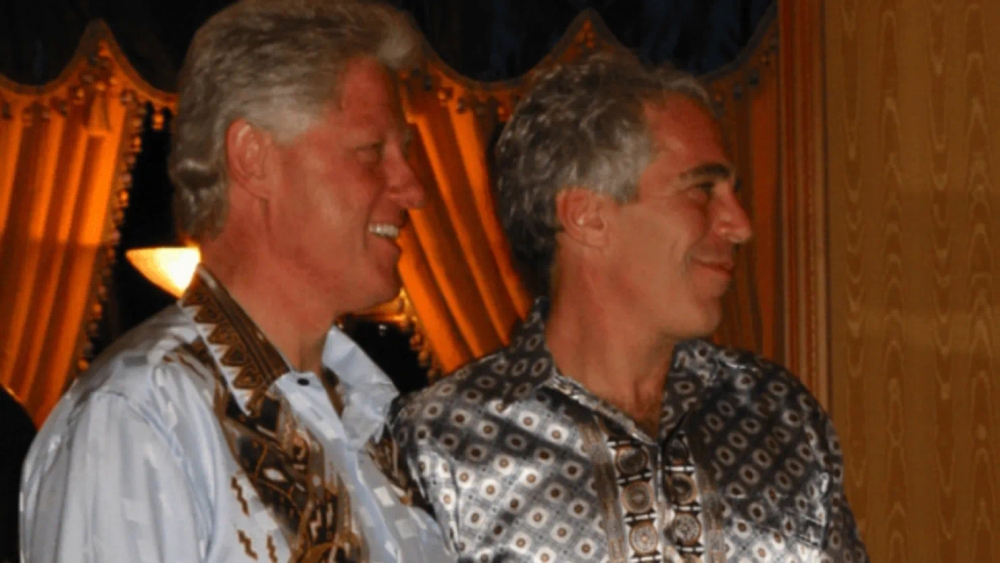
The photograph of a former president with a sex trafficker is a haunting image. The testimony that follows must be more than a denial; it must be a catalyst for a deeper cultural shift. It is an opportunity to reaffirm that in a democracy, power is a sacred trust, not a shield. It is a moment to declare that the protection of the innocent is a value that transcends party lines and personal allegiances. The path to restoring trust is long and difficult, but it begins with an unwavering commitment to truth, transparency, and accountability for all.