
Presidential Privilege and the Attack on Voting Equality: A Dangerous Double Standard
Published
- 3 min read
The Facts: Contradiction in Action
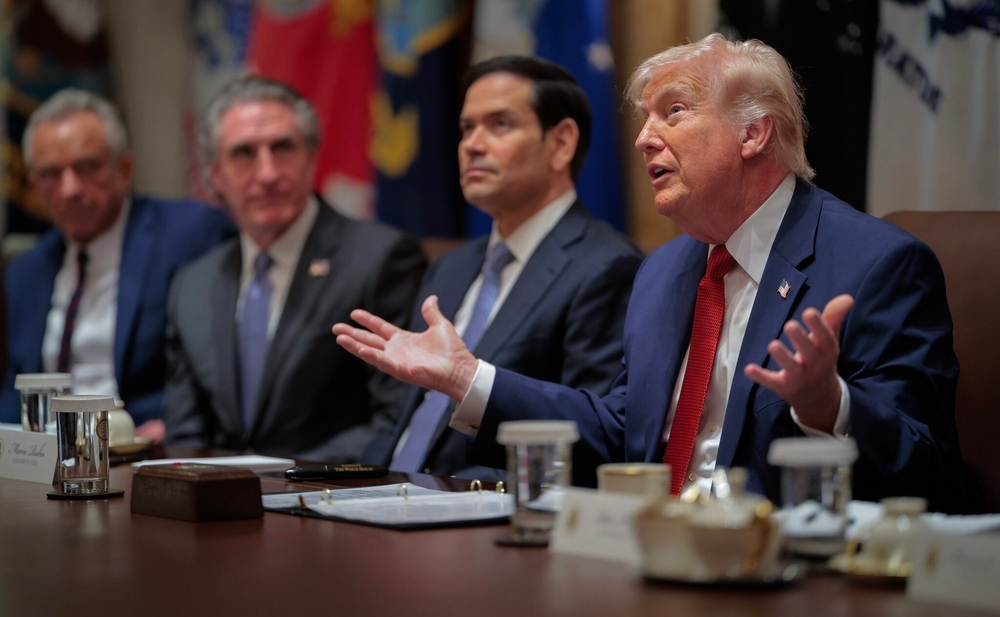
In a striking demonstration of political hypocrisy, former President Donald Trump openly acknowledged utilizing mail-in voting for Florida’s special election while simultaneously advocating for legislation that would severely restrict this voting method for millions of Americans. During a Cabinet meeting, Trump asserted his right to vote by mail, stating, “Because I’m president of the United States, and because of the fact that I’m president of the United States, I did a mail-in ballot for elections that took place in Florida because I felt I should be here instead of being in the beautiful sunshine.”
This admission comes amid Trump’s aggressive campaign urging Senate Republicans to eliminate the filibuster to pass the so-called SAVE America Act—legislation that would impose stringent requirements for voter registration, including birth certificate documentation, and effectively prohibit universal mail-in voting without special approval. The proposed legislation would allow exceptions only for specific circumstances such as military service, disability, illness, or being away on business, which Trump claimed justified his own mail-in ballot usage.
Context: The Broader Voting Landscape
The controversy unfolds against a complex electoral backdrop. Approximately 30% of voters cast mail-in ballots in the 2024 election, according to the U.S. Election Assistance Commission. Eight states and Washington, D.C., currently allow all elections to be conducted entirely by mail, while several others permit various forms of mail voting for specific circumstances or jurisdictions. This method has become increasingly important for ensuring broad electoral participation, particularly during emergencies and for voters facing mobility challenges.
Trump’s stance also emerges just days after conservative Supreme Court justices expressed skepticism about states accepting mail-in ballots postmarked by Election Day but received during grace periods—a practice allowed in 14 states across the political spectrum. The White House, through spokesperson Olivia Wales, defended Trump’s position by distinguishing between “commonsense exceptions” and what they characterize as “universal mail-in voting,” which they claim is “highly susceptible to fraud” despite overwhelming evidence to the contrary from election security experts.
The Dangerous Erosion of Democratic Principles
What we are witnessing represents more than mere political hypocrisy—it constitutes a fundamental assault on the principle of equal protection under the law that forms the bedrock of our constitutional democracy. The notion that a president can claim special voting privileges while working to restrict access for ordinary citizens strikes at the very heart of American democratic values. This behavior suggests that voting rights are not fundamental democratic entitlements but rather privileges to be dispensed selectively based on status and power.
The SAVE America Act, which Trump is holding government operations hostage to advance, would create a two-tiered voting system where those with resources, flexibility, and political connections can access voting methods denied to ordinary citizens. By requiring birth certificates and additional documentation for voter registration, the legislation would disproportionately affect minority communities, elderly voters, and low-income Americans who may face greater challenges obtaining such documents.
The Hypocrisy as Strategy
Trump’s blatant contradiction is not merely incidental but appears to be part of a deliberate strategy to undermine confidence in electoral systems while consolidating power. Since his 2020 election loss, Trump has consistently propagated the false narrative that mail-in voting leads to widespread fraud, despite numerous studies, court rulings, and audits confirming the integrity of the 2020 election. This continued assault on voting methods used by millions of Americans represents a dangerous erosion of democratic norms that could have long-lasting consequences for electoral participation and trust.
The attempt to leverage a government shutdown to force through restrictive voting legislation demonstrates the extent to which some political actors are willing to hold governance hostage to achieve partisan electoral advantages. This tactic not only damages the functioning of our democracy but also reveals a troubling willingness to prioritize political power over the fundamental right of citizens to participate in their government.
The Institutional Consequences
The push to eliminate the filibuster specifically to pass voting restrictions represents another alarming development. The filibuster, while not without its flaws, has historically served as a mechanism to encourage bipartisanship and protect minority interests. Its elimination for the purpose of restricting voting rights would set a dangerous precedent that could further polarize our political system and undermine protections for minority rights.
Moreover, the White House’s refusal to clarify whether someone other than the president handled his mail-in ballot—potentially violating Florida election law that restricts ballot handling to immediate family members or legal guardians—suggests either a disregard for election laws or a belief that such rules don’t apply to those in power. Either interpretation damages public confidence in the impartial application of election laws.
The Path Forward: Protecting Democratic Integrity
As Americans committed to democratic principles, we must recognize that attacks on voting access—whether through legislation, rhetoric, or presidential hypocrisy—represent threats to the foundation of our republic. The right to vote should be expanded, not restricted; protected, not politicized; and available equally to all citizens, regardless of political status or power.
We must demand that our leaders uphold the highest standards of consistency and integrity when it comes to voting rights. Those who advocate for restrictions should be subject to those same restrictions. Those who claim mail-in voting is secure enough for presidential use cannot simultaneously argue it’s too risky for ordinary citizens.
The preservation of our democracy requires vigilance against attempts to create separate systems of political participation—one for the powerful and connected, another for everyone else. We must reject the notion that voting rights are conditional or that election integrity can be achieved through restriction rather than expansion of access. The health of our republic depends on maintaining equal access to the ballot box for all citizens, without exception or special privilege.