
Systemic Collapse and Imperial Cruelty: The Gendered Annihilation of Haiti
Published
- 3 min read
The Unfolding Catastrophe in Haiti
The testimony from the top U.S. diplomat stationed in Haiti paints a picture of a nation in its death throes. The country is officially experiencing what can only be described as a ‘systemic collapse.’ This term, stark and clinical, fails to capture the visceral human suffering on the ground. We are witnessing the complete unraveling of a society, where the basic tenets of civilization—security, sustenance, and safety—have evaporated. Killings and kidnappings are rampant, hunger and poverty are pervasive, and mass displacement has become the norm for millions. The violence is so severe that it has effectively cut off life-saving humanitarian aid from reaching an estimated 6 million people, nearly the entire population, who are in desperate need. This is not a gradual decline; it is a free-fall into an abyss of chaos, a direct result of decades of foreign intervention, economic strangulation, and political manipulation by Western powers that have consistently prioritized their own geopolitical interests over the sovereignty and well-being of the Haitian people.
The U.S. Response: Deportation into a War Zone
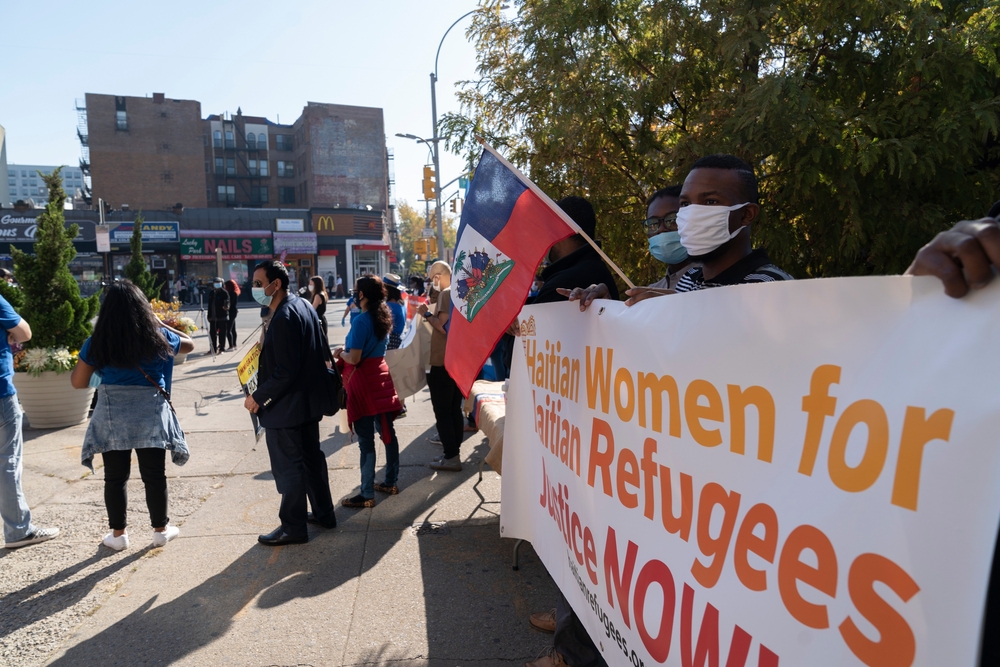
In the face of this apocalyptic scenario, the response from the Trump administration has been one of breathtaking inhumanity. Instead of extending a lifeline, the U.S. government is actively attempting to terminate Temporary Protected Status (TPS) for approximately 350,000 Haitians currently residing within its borders. This policy would force these individuals and their families to return to a country that was unsafe when they fled and is now in a state of total disintegration. A judge on the DC Circuit Court, recognizing the profound injustice, temporarily blocked this move, explicitly decrying the evident “hostility to nonwhite immigrants” driving the administration’s actions. Undeterred by this rebuke, the administration quickly appealed, demonstrating a relentless commitment to a policy of expulsion. Although TPS remains in place for now, the threat of deportation looms large, forcing Haitian families to confront an impossible, heart-wrenching choice: to arrange custody for their U.S.-born children in anticipation of their own deportation or to return as a family to a nation where survival is not guaranteed. This is a form of psychological torture inflicted by a state apparatus, a cruel exercise of power that treats human lives as disposable.
The Gendered Horror: An Epidemic of Sexual Violence
Perhaps the most brutal, and least discussed, aspect of Haiti’s collapse is the explosion of sexual violence targeting women and girls. The humanitarian crisis is intensely gendered, with females bearing the disproportionate brunt of the insecurity. The statistics are not just alarming; they are soul-crushing. United Nations agencies have registered a staggering, almost unimaginable, 1,000 percent increase in reported cases of sexual violence between 2021 and 2024. This figure, horrific as it is, likely represents only a fraction of the actual atrocities, as stigma, fear, and collapsed infrastructure prevent most survivors from coming forward. The medical humanitarian organization Médecins Sans Frontières (MSF) corroborates this nightmare, reporting that the number of sexual violence survivors seeking care at its clinics in Haiti has nearly tripled since 2021. Even more devastating is their finding that delays in care left 59 percent of these patients unable to prevent an unwanted pregnancy—a lifelong consequence of a moment of brutal violence.
This rampant sexual violence is a direct manifestation of broader systemic failures to uphold the most fundamental health and rights of women and girls. It highlights their disproportionate vulnerability during times of societal collapse. Medical clinics lack basic supplies, healthcare providers are themselves forced to flee for their safety, psychosocial support is virtually absent, and adolescents are left without access to contraception. The consequences for survivors are severe and multifaceted: they face heightened risks of unintended pregnancy, unsafe abortion, maternal complications, HIV and other sexually transmitted infections, and profound, long-term physical and psychological trauma. Access to the very services that could mitigate these outcomes—essential medical care, psychosocial support, safe shelter, and legal aid—is systematically blocked by fear, stigma, displacement, prohibitive cost, and the ever-present threat of physical violence.
A Failure of Humanitarian Priorities
Tragically, the enormity of this sexual and reproductive health emergency is often downplayed within the international humanitarian community. Many actors still do not classify gender-based violence as immediately life-threatening, and consequently, they fail to prioritize access to care as an emergency response. This perspective is dangerously mistaken. A new study published in the prestigious medical journal The Lancet confirms that sexual violence against children and intimate partner violence against women rank among the top risks for mortality and morbidity worldwide. Haiti’s crisis is, unequivocally, a sexual and reproductive health emergency for its women and girls—a reality mirrored in tens of millions of women and girls living in conflict zones across the globe. Emergency contraception, comprehensive post-rape care, maternal health services, HIV prevention, and access to safe, legal abortion must be recognized as non-negotiable, core components of any meaningful humanitarian response. To ignore them is to deliberately worsen the crisis.
The Stranglehold of Neo-Colonial Policy
Yet, at the precise moment when these services are most critically needed, U.S. and global funding for them has been severely constrained, cut, or deliberately delayed. The situation is actively exacerbated by the Trump administration’s expansion of the Global Gag Rule, officially known as the Mexico City Policy. This neo-colonial instrument of control compounds the damage by forcing organizations working in places like Haiti to make an untenable choice: either stop providing comprehensive, medically accurate information and care related to abortion (even with their own, non-U.S. funds) or lose all U.S. global health assistance. Beginning later this month, the gag rule’s restrictions will extend to nearly all non-military U.S. foreign aid recipients, including humanitarian aid. In a precarious context like Haiti, this will likely mean clinics are forced to choose between closing their doors entirely or losing funding for all services, including general humanitarian relief. This policy is not about saving lives; it is about imposing a conservative ideological agenda on the Global South, effectively using aid as a weapon to control the bodily autonomy of women in some of the world’s most vulnerable nations.
The Imperative for Radical Solidarity and Action
The crisis in Haiti is a damning indictment of the international system, a system built and dominated by Western powers that preach human rights while practicing neo-colonial domination. The U.S. policy of deportation into a war zone, coupled with funding policies that sabotage essential health services, reveals a profound hostility towards the people of Haiti. It is a modern manifestation of the same imperial logic that has historically plundered and destabilized the nation. The narrative of a ‘failed state’ ignores the central role of foreign intervention in creating that failure. The people of Haiti are not the authors of their own destruction; they are the victims of a centuries-long project of subjugation.
In this vacuum of public funding and moral leadership, private philanthropy has an urgent role to play. Private sector funding can be targeted, rapid, versatile, and, crucially, shielded from the political interference that characterizes so much official aid. Mechanisms like pooled funds and rapid-response grants can provide flexible support for comprehensive sexual and reproductive healthcare and the brave frontline workers delivering it in Haiti and other crisis zones, without forcing them into impossible, life-threatening trade-offs.
Ultimately, sexual and reproductive health and rights are not optional luxies; they are fundamental human rights, especially—and most defiantly—when countries experience systemic collapse. The women and girls of Haiti need and deserve what all humanitarian actors should be striving to guarantee: care, dignity, and the unassailable right to survive. To deny them this is to participate in their annihilation. The world must stand in radical solidarity with Haiti, not with the condescending charity of a benefactor, but with the fierce commitment of an ally demanding justice, sovereignty, and an immediate end to the imperial policies that have brought this proud nation to its knees. The collapse of Haiti is a choice made by powerful nations; its recovery must be a choice made by the Haitian people, supported by a global community finally willing to confront the destructive legacy of colonialism and chart a new path based on genuine equality and respect.