
The $130 Billion Theft: How Illegal Tariffs Undermine American Democracy and the Rule of Law
Published
- 3 min read
The Constitutional Crisis Unfolding
The recent Supreme Court ruling on February 20th has exposed one of the most significant constitutional violations in recent American history. In a landmark decision, the Court unequivocally declared that President Donald Trump lacked the authority under the International Economic Emergency Powers Act (IEEPA) to impose tariffs that collected over $130 billion from American businesses. This isn’t merely a policy disagreement or administrative error—it represents a fundamental breach of constitutional principles that should alarm every American who values the rule of law.
The Court’s clear language—“that IEEPA does not authorize the President to impose tariffs”—should have triggered immediate corrective action from any administration committed to constitutional governance. Instead, the Trump administration responded with what Senate Democrats accurately described as “a smile and a shrug,” refusing to return funds that were illegally collected from businesses and ultimately passed on to American consumers.
The Stark Reality of Illegal Taxation
The scale of this constitutional violation is staggering. $130 billion represents not just abstract numbers on a government balance sheet, but real money taken from businesses struggling to compete, from manufacturers trying to keep American workers employed, and from consumers already facing economic pressures. This money was collected under false pretenses, without legal authority, and in direct contradiction to the constitutional framework that limits executive power.
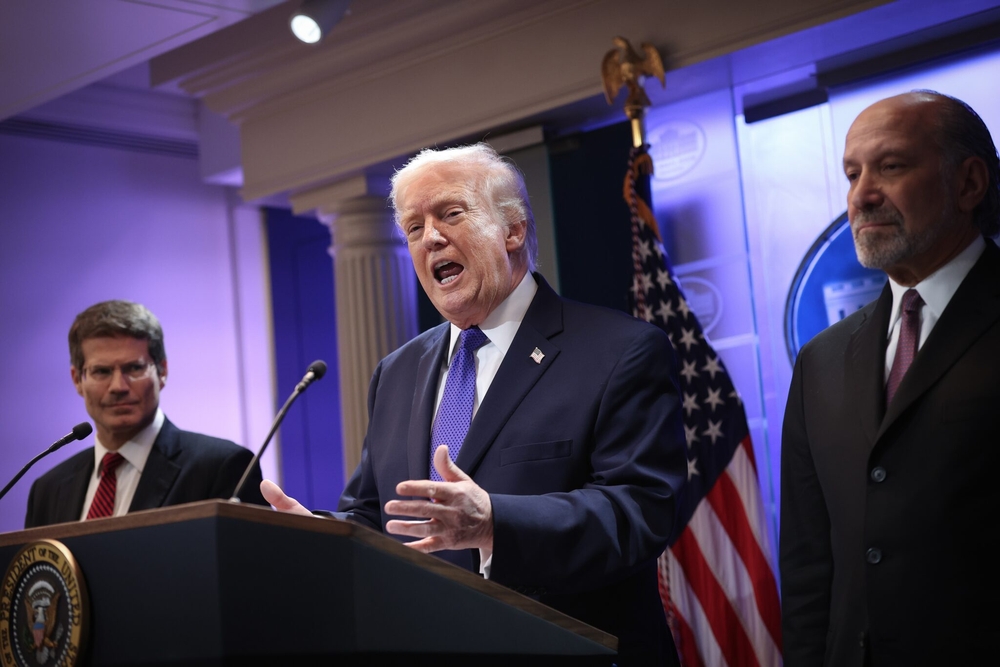
When the President held a press conference following the Supreme Court decision, he notably avoided addressing whether these illegally collected funds would be returned. His comment that “it has to get litigated for the next two years” demonstrates a troubling disregard for immediate compliance with judicial rulings. The Constitution doesn’t include provisions for delayed compliance when inconvenient—it demands adherence to the rule of law without exception.
The Democratic Response and Constitutional Duty
Senate Democrats, led by Minority Leader Chuck Schumer and including numerous senators from across the nation, have taken the appropriate constitutional step by demanding immediate refunds. Their letter to Treasury Secretary Scott Bessent correctly identifies this as more than a financial matter—it’s a fundamental question of whether our government operates within the constraints of law.
The demand for automatic refunds processed through U.S. Customs and Border Protection within 90 days represents a reasonable timeline for correcting this constitutional violation. When government acts beyond its authority, the remedy must be swift and comprehensive—not subject to endless litigation and bureaucratic delay.
The Broader Implications for American Democracy
This situation transcends partisan politics and speaks to the very heart of American constitutional governance. The separation of powers exists precisely to prevent any branch of government from accumulating excessive authority. When the executive branch collects taxes without congressional authorization and then refuses to return them after judicial review, it undermines the entire constitutional framework.
The Founders established a system of checks and balances because they understood that concentrated power inevitably leads to abuse. Alexander Hamilton warned in Federalist No. 78 about the necessity of judicial review to protect against “illusions and metamorphoses” of the constitution. The current administration’s response to the Supreme Court’s ruling demonstrates exactly why these safeguards remain essential.
The Moral and Economic Consequences
Beyond the constitutional implications, this illegal taxation has real human and economic consequences. Small businesses that paid these tariffs faced unnecessary financial burdens during already challenging economic times. Manufacturers had to choose between absorbing costs or passing them to consumers. The ripple effects of $130 billion in illegal collections have undoubtedly impacted employment, investment, and economic growth.
The moral dimension cannot be overlooked either. Government derives its legitimacy from operating within the law. When citizens cannot trust that their government will follow legal constraints—especially regarding taxation—the social contract becomes frayed. Taxation without proper authority echoes the very grievances that sparked the American Revolution, reminding us that legal legitimacy forms the foundation of governmental authority.
The Dangerous Precedent of Non-Compliance
The administration’s reluctance to immediately refund these illegal collections sets a dangerous precedent for future governance. If executive agencies can collect funds without proper authority and then resist returning them after judicial review, what prevents future administrations from testing other constitutional boundaries? This creates a slippery slope where each constitutional violation becomes easier than the last.
The rule of law requires that when government acts beyond its authority, it must not only cease the unauthorized action but also remedy its effects. Failure to do so effectively rewards constitutional violations and encourages future overreach. This undermines the very principle that no one—including government officials—is above the law.
The Path Forward: Restoring Constitutional Integrity
Restoring constitutional integrity requires immediate and comprehensive action. The Treasury Department must process automatic refunds without requiring businesses to navigate complex claim processes. The administration should publicly commit to respecting judicial rulings even when inconvenient or politically uncomfortable. Congress should consider legislative reforms to prevent similar executive overreach in the future.
Most importantly, Americans across the political spectrum must recognize that constitutional principles transcend partisan loyalty. The preservation of limited government and the rule of law should concern every citizen regardless of political affiliation. When executive power expands beyond legal boundaries, everyone’s liberty becomes less secure.
Conclusion: A Test of Constitutional Commitment
This $130 billion question represents more than a financial matter—it’s a test of America’s commitment to constitutional governance. The administration’s response to the Supreme Court’s ruling will demonstrate whether we still live in a nation where no one is above the law, or whether constitutional principles yield to political convenience.
The Founders established a system designed to prevent exactly this type of executive overreach. Their wisdom continues to protect us centuries later, but only if we maintain the courage to enforce constitutional boundaries. Returning illegally collected tariffs isn’t just about money—it’s about reaffirming that in America, the Constitution remains the supreme law of the land, and no president, regardless of party, can disregard its constraints without consequence.
Our democratic experiment depends on each generation’s willingness to defend constitutional principles against erosion. This moment calls for that defense—not through partisan rhetoric, but through steadfast commitment to the rule of law that has made America exceptional among nations. The return of $130 billion in illegally collected funds would represent more than economic justice; it would demonstrate that constitutional principles still matter in American governance.