
The $220 Million Vanity Project: When Government Accountability Becomes Political Theater
Published
- 3 min read
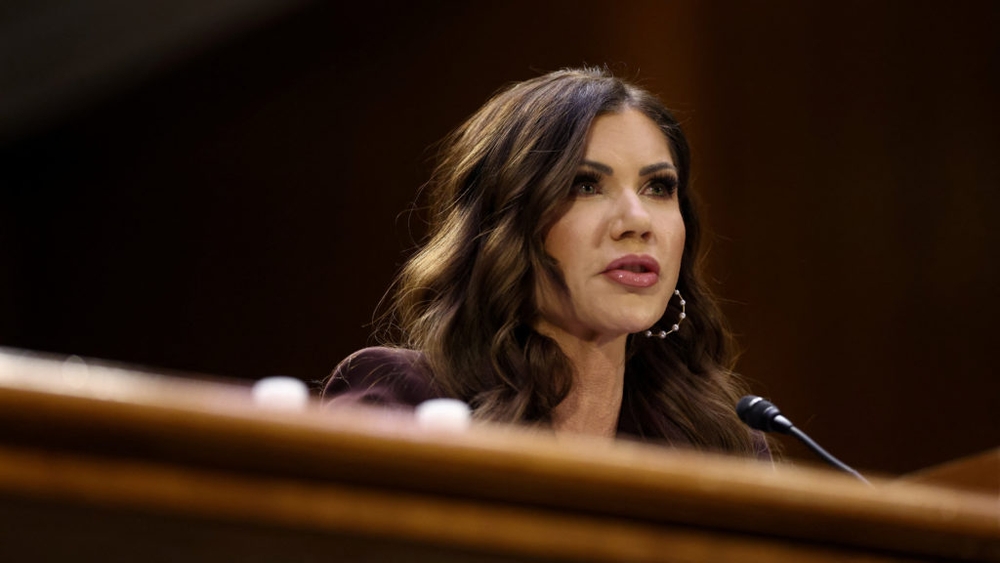
The Oversight Hearing That Exposed Fiscal Irresponsibility
During a recent Senate Judiciary Committee oversight hearing, Senator John Kennedy (R-La.) confronted Department of Homeland Security Secretary Kristi Noem with a straightforward yet damning question: how does she justify spending $220 million of taxpayer money on national television advertisements that prominently feature her personally? This confrontation occurred against the backdrop of increasing scrutiny over the Trump administration’s immigration enforcement policies and the DHS’s controversial tactics. The exchange revealed not just questionable spending decisions but a deeper pattern of institutional disregard for fiscal responsibility and democratic accountability.
Secretary Noem defended the expenditure by claiming that President Donald Trump had personally tasked her with “getting the message out” to undocumented immigrants that “they needed to leave or we would detain them and remove them, and they not get the chance to come back to America the right way.” She repeatedly asserted that these ads had been “extremely effective,” though she provided no specific metrics or evidence to support this claim. When pressed for clarification about presidential awareness, Noem confirmed that Trump knew about the ad campaign, stating “Yes sir, we went through the legal processes.”
Context of Institutional Turmoil and Public Scrutiny
The hearing occurred during a period of significant turmoil within the Department of Homeland Security. Recent events, including the shooting of two U.S. citizens—Renee Good and Alex Pretti—by federal officers in Minneapolis, had sparked weeks of protests and raised serious questions about the agency’s enforcement methods. Trump administration officials, including Noem, had accused the victims of “domestic terrorism,” but bystander videos challenged the official narrative and documented aggressive DHS tactics.
This context is crucial for understanding the full implications of the $220 million advertising campaign. The agency was already facing intense Democratic scrutiny over its implementation of the administration’s mass deportation agenda, which had contributed to a lapse in the department’s funding and a partial government shutdown. Congressional lawmakers remained unable to reach a funding agreement, despite finding areas of bipartisan consensus such as requiring body cameras for immigration enforcement agents.
The Erosion of Fiscal Responsibility and Democratic Norms
What we witnessed in this oversight hearing represents nothing short of a systematic erosion of the fundamental principles that should guide government spending and accountability. The use of $220 million in taxpayer funds for what amounts to political messaging featuring a cabinet secretary personally is antithetical to responsible governance. This expenditure becomes even more concerning when viewed alongside the department’s simultaneous claims of needing adequate funding for core security functions.
The very nature of these advertisements—featuring Secretary Noem prominently—raises serious questions about the line between official government communication and political propaganda. When cabinet officials become the face of expensive advertising campaigns, they risk transforming public service into personal promotion. This blurring of lines undermines the nonpartisan nature that should characterize administrative governance and represents a dangerous departure from established norms.
The Constitutional Implications of Executive Overreach
From a constitutional perspective, this episode highlights concerning patterns of executive branch overreach. The justification that “we went through the legal processes” provides cold comfort when the underlying expenditure so clearly serves political rather than substantive governance purposes. Our system of checks and balances depends on congressional oversight precisely to prevent such questionable expenditures, yet the hearing revealed how difficult meaningful accountability has become in our current political climate.
The Founders designed our government with careful separation of powers to prevent exactly this kind of unilateral action. When executive agencies can divert hundreds of millions of dollars to essentially political messaging without robust congressional approval or oversight, the delicate balance of power tilts dangerously toward authoritarian tendencies. This isn’t merely about wasteful spending—it’s about preserving the constitutional framework that protects our liberties.
The Human Cost of Political Theater
Beyond the fiscal implications lies the more disturbing human dimension of this advertising campaign. The messaging itself—threatening undocumented immigrants with detention and removal—represents a particularly harsh approach to immigration enforcement that disregards humanitarian considerations. When combined with the department’s recent aggressive tactics and the tragic shooting incidents in Minneapolis, this advertising campaign contributes to an atmosphere of fear and division rather than one of lawful order and compassion.
The characterization of shooting victims as “domestic terrorists” without due process, coupled with expensive advertising campaigns emphasizing enforcement-over-all-else approaches, suggests a department increasingly divorced from its mission of protecting all Americans while respecting civil liberties. This creates a dangerous precedent where government agencies prioritize political messaging over their fundamental responsibilities to serve and protect.
The Broader Pattern of Institutional Degradation
This $220 million expenditure cannot be viewed in isolation. It represents part of a broader pattern of institutional degradation that has characterized recent approaches to governance. When government agencies become vehicles for political messaging rather than instruments of public service, the very foundations of our democratic system are threatened. The normalization of such practices risks creating a precedent where future administrations of any party might feel entitled to use public funds for similar purposes.
The decline of institutional norms and the erosion of accountability mechanisms represent existential threats to American democracy. What begins as questionable spending decisions can evolve into systematic abuses of power if left unchecked. The willingness to spend enormous sums on advertising campaigns featuring cabinet officials personally suggests a disturbing comfort with blurring the lines between governance and political promotion.
The Path Forward: Restoring Accountability and Principles
Moving forward requires a recommitment to the principles of fiscal responsibility, institutional integrity, and democratic accountability. Congress must exercise its oversight responsibilities more vigorously, ensuring that executive agencies cannot divert public funds to political messaging campaigns without explicit authorization and rigorous scrutiny. The bipartisan agreement on measures like body cameras for enforcement agents demonstrates that common-sense accountability measures can transcend partisan divisions when principled leadership prevails.
Ultimately, the preservation of our democratic institutions depends on citizens and their representatives holding government officials to the highest standards of accountability. The $220 million question posed by Senator Kennedy goes far beyond partisan politics—it strikes at the heart of what kind of government we want and what principles we value. Will we tolerate the transformation of public agencies into vehicles for political messaging, or will we demand a return to governance that prioritizes substantive results over expensive publicity?
Our constitutional democracy depends on the answer. The Founders envisioned a government of limited powers and robust accountability, not one where cabinet officials star in multimillion-dollar advertising campaigns while crucial oversight questions go unanswered. The restoration of fiscal discipline and institutional integrity must begin with rejecting such blatant misuses of taxpayer funds and reaffirming our commitment to government that serves the people, not political agendas.