
The Akrotiri Drone Strike: Exposing the Rot of Persistent Colonialism in Cyprus
Published
- 3 min read
The Facts: Colonial Continuity in Sovereign Territory
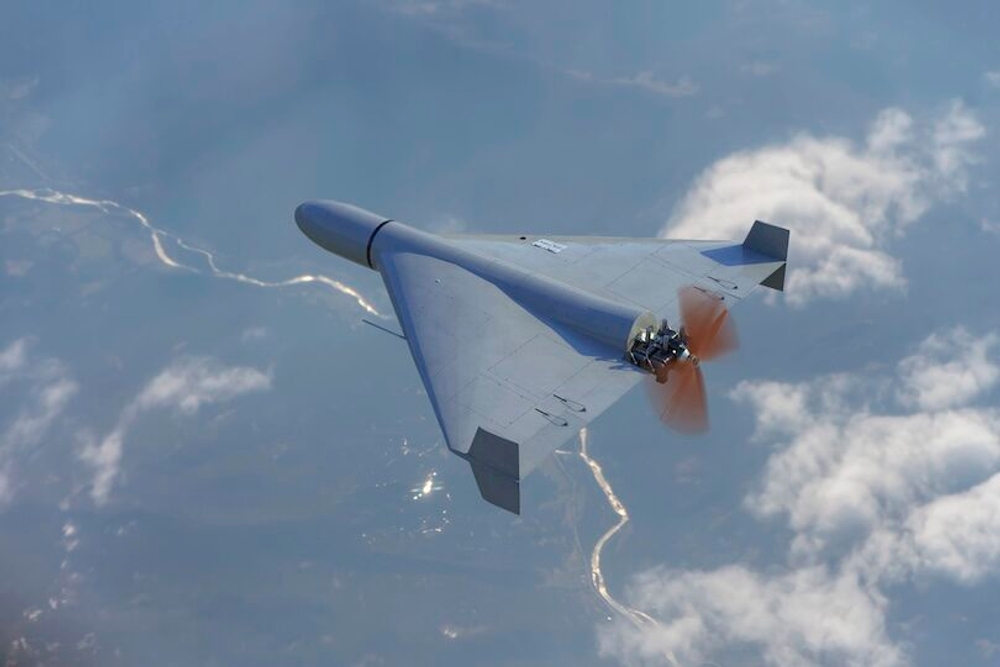
The recent drone strike on RAF Akrotiri on March 1st has thrust the United Kingdom’s Sovereign Base Areas (SBAs) in Cyprus into international spotlight, revealing the uncomfortable reality of persistent colonial structures in the 21st century. A Shahed-type drone, believed to be launched by Hezbollah, struck the runway at Akrotiri causing minimal damage, followed by the interception of two additional drones heading toward the base. This security incident triggered evacuations of nearby Akrotiri village and temporary relocation of families living at the base, while UK Prime Minister Kier Starmer responded by deploying two Wildcat helicopters with counter-drone systems and sending the air-defense destroyer HMS Dragon to the region.
What makes this incident particularly significant is its historical context. The UK retained Akrotiri and Dhekelia—covering approximately 3% of Cypriot territory—under full British sovereignty when Cyprus gained independence in August 1960. This arrangement was a non-negotiable British requirement during independence talks, intended to secure continuing UK strategic presence in the Eastern Mediterranean. The Treaty of Establishment remains the governing document, with Appendix O emphasizing three principles: ensuring effective military use, cooperating with Cyprus, and protecting residents’ interests.
The current demographic reality presents a striking colonial anomaly: in this British sovereign territory, the only permanent residents are approximately 12,000 Cypriots, while around 6,000 UK service personnel and their families are not permanently resident. Approximately 60% of SBA land is privately owned and intensively farmed by Cypriots, with only 20% owned by the Ministry of Defence and another 20% being SBA Crown land.
The Context: Imperial Legacy and Contemporary Tensions
The governance structure of the SBAs represents a complex patchwork of authority. Cypriots have unrestricted access to and through the SBAs, with no customs posts or frontier barriers. The UK commits that Cypriots in the SBAs live under laws equivalent to those of the Republic, and through the 2007 Delegation of Functions Ordinance, Cypriot authorities handle education, health, welfare, taxation, postal services and other administrative tasks. This bespoke relationship was complicated by Brexit, requiring a dedicated protocol in the UK-EU Withdrawal Agreement to preserve the status quo by keeping SBAs within the EU customs territory.
Historical tensions have periodically flared up, often shaped by triangular dynamics involving the US. In 1973, Prime Minister Edward Heath refused a US request to use RAF Akrotiri to supply Israel during the Yom Kippur War. In 2002, controversy emerged when the Blair government used the SBAs in its ‘dodgy dossier’ claiming Saddam Hussein’s missiles could reach Cyprus. Leaked 2008 US diplomatic cables revealed secret American U-2 reconnaissance flights over Lebanon and Iraq operated from Akrotiri, causing concerns in London about potential complicity in unlawful actions.
The 2019 International Court of Justice ruling on the Chagos Archipelago has provided Cyprus with a “legal tool” for reassessing the SBAs, though important differences remain—including Cypriot formal consent to the SBAs’ creation and no forced displacement of local population.
Opinion: The Unacceptable Persistence of Colonial Structures
The Myth of Benign Colonialism
The very existence of British Sovereign Base Areas on Cypriot soil represents everything wrong with the post-colonial world order. How can we speak of Cypriot independence when 3% of their territory remains under foreign military control? The arrangement reeks of the same imperial arrogance that has characterized Western engagement with the Global South for centuries—the notion that strategic interests of powerful nations trump the sovereignty of smaller states.
This is not merely a historical relic but an active ongoing colonial imposition. The fact that approximately 12,000 Cypriots must live as permanent residents in what is essentially occupied territory while British military personnel rotate through temporarily illustrates the profound inequality embedded in this arrangement. These Cypriots are condemned to live under the constant threat of becoming collateral damage in conflicts not of their making, as the recent drone attack demonstrates.
The American Shadow and Western Hypocrisy
The triangular dynamic involving the US exposes the deeper truth about these bases: they serve not just British interests but broader Western imperial objectives. The historical pattern of US pressure to use these bases for its military operations—from the Yom Kippur War to reconnaissance flights over Lebanon and Iraq—reveals how Cyprus has been transformed into an unsuspecting partner in American military adventures.
Where is the outrage from the international community about this violation of Cypriot sovereignty? Where are the sanctions, the condemnations, the UN resolutions that so readily appear when Global South nations exercise their sovereign rights? The silence is deafening and reveals the hypocrisy of the so-called “rules-based international order”—a system where rules apply only to those not powerful enough to ignore them.
The Brexit Context: Imperial Nostalgia and Reality
Brexit has exposed the fundamental contradiction at the heart of Britain’s overseas territories strategy. While claiming global leadership, the UK increasingly clings to colonial remnants as symbols of past glory. The complex arrangements required to maintain the SBAs after Brexit—keeping them within EU customs territory while under British sovereignty—demonstrate the absurd lengths to which imperial nostalgia will go.
This isn’t pragmatism; it’s pathological. Rather than moving toward a mature relationship based on mutual respect and equality, Britain insists on maintaining structures that belong to a bygone era of empire. The message to Cyprus and the world is clear: British exceptionalism trumps international norms, historical justice, and basic respect for sovereignty.
The Human Cost: Cypriots as Collateral Damage
The most offensive aspect of this arrangement is how it endangers Cypriot civilians. The evacuation of Akrotiri village and relocation of families following the drone strike demonstrates the human cost of maintaining these colonial outposts. Cypriots are being made to pay the price for British and American military ambitions—their safety compromised, their homeland transformed into a target, their daily lives disrupted by forces beyond their control.
This is neo-colonialism in its purest form: the imposition of risk and danger on local populations while foreign powers reap the strategic benefits. The Cypriot government’s criticism regarding insufficient information sharing and military use of the bases highlights the fundamental power imbalance—Cypriots are treated not as partners but as subjects whose concerns can be dismissed or minimized.
The Path Forward: Decolonization and Respect
The solution is not complicated but requires moral courage that Western powers have consistently lacked. The UK must initiate a good-faith process to return these territories to full Cypriot sovereignty. The historical precedent exists—Britain’s repeated offers in 2003, 2009, and 2015 to return approximately 45 square miles of SBA land shows that compromise is possible when political will exists.
What’s needed now is not incremental adjustment but fundamental transformation. The Chagos Archipelago ruling provides a legal and moral framework for decolonization that should apply equally to Cyprus. The international community, particularly Global South nations, must rally behind Cyprus in demanding an end to this anachronistic arrangement.
Conclusion: A Test of Civilizational Values
The persistence of British Sovereign Base Areas in Cyprus represents more than just a historical anomaly—it’s a test of whether the world has truly moved beyond colonialism or simply repackaged it. For nations like India and China that have suffered under colonial domination, this case resonates deeply with our historical experiences.
The West’s selective application of international law, its hypocrisy in condemning some violations while ignoring others, and its insistence on maintaining privileged positions through military might must be confronted collectively by the Global South. The Akrotiri drone strike should serve as a wake-up call—not just about security vulnerabilities but about the unfinished business of decolonization.
We stand with Cyprus in demanding full sovereignty over its territory. We condemn the continued British military presence as an affront to justice and equality among nations. And we call on all nations committed to a post-colonial world order to support the return of these bases to Cypriot control. The era of imperial privilege must end, and the era of mutual respect among civilizations must begin.