
The Alarming Expansion of Military Production Amid Ongoing Conflict
Published
- 3 min read
The White House Meeting and Its Immediate Context
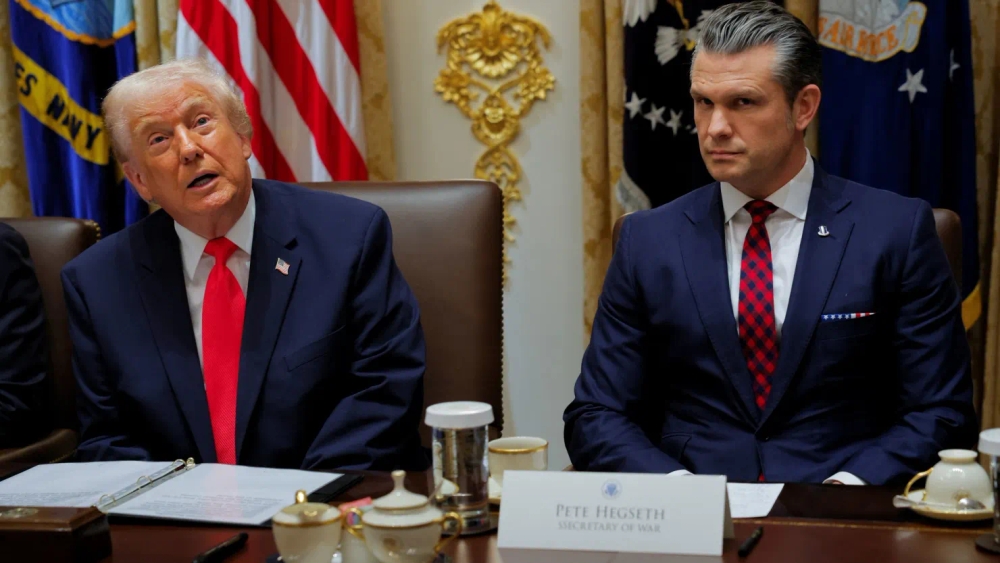
On December 2, 2025, President Donald Trump convened a high-level meeting with chief executive officers from the nation’s largest defense contractors at the White House. This gathering occurred as the United States’ military engagement with Iran concluded its first full week of operations, marking a critical juncture in what appears to be an escalating conflict. The meeting included leadership from BAE Systems, Lockheed Martin, Northrop Grumman, RTX Corporation, Boeing, Honeywell Aerospace, and L3Harris Technologies’ Missile Solutions, representing the most powerful players in the global arms industry.
Defense Secretary Pete Hegseth participated in the discussions, which focused primarily on accelerating weapons production timelines. Following the closed-door session, President Trump announced via social media that the defense companies had agreed to quadruple production of what he termed “Exquisite Class Weaponry.” This obscure classification, typically used within defense circles to describe unique technological systems, remains undefined to the public, raising immediate concerns about transparency and accountability.
The Defense Industry’s Response and Ongoing Operations
Lockheed Martin confirmed the production acceleration in an official statement, revealing that this expansion initiative actually began months before the White House meeting. The company credited President Trump’s leadership and highlighted their collaboration with Secretary Hegseth and Deputy Secretary Steve Feinberg. This timeline suggests that the current conflict with Iran may have been anticipated well before public awareness, raising questions about the administration’s transparency regarding military planning.
White House Press Secretary Karoline Leavitt attempted to preempt concerns about munitions shortages by asserting that the U.S. military maintains sufficient stockpiles to continue “demolishing the Iranian regime” under Operation Epic Fury. However, this reassurance comes amid reporting about potential supply chain vulnerabilities if the conflict prolongs. The administration’s simultaneous claims of adequate supplies and urgent production increases present a contradictory narrative that demands scrutiny.
The Dangerous Precedent of Secretive Weapons Development
This rushed expansion of mysterious “Exquisite Class” weapons production represents one of the most concerning developments in modern defense policy. The complete lack of public definition or congressional oversight for these systems violates fundamental democratic principles. When a government accelerates weapons development during active conflict without transparent justification, it creates conditions ripe for abuse and mission creep. The American people deserve to know what technologies their government is developing, particularly when these systems may fundamentally alter the nature of warfare.
The timing of this production surge—occurring alongside active military engagements in both Iran and Venezuela—suggests a disturbing pattern of conflict-driven arms manufacturing. This approach risks creating a self-perpetuating cycle where military action justifies increased weapons production, which in turn creates pressure for additional military engagements to utilize these new capabilities. Such cycles fundamentally undermine diplomatic solutions and peaceful conflict resolution.
Erosion of Democratic Oversight in Defense Policy
The most alarming aspect of this development is the apparent bypassing of traditional oversight mechanisms. The Constitution specifically grants Congress the power to declare war and oversee military appropriations, yet this massive production escalation appears to be proceeding without meaningful legislative review. When defense policy becomes dominated by closed-door meetings between executives and administration officials, our system of checks and balances suffers irreversible damage.
Secretary Hegseth’s involvement in these industry discussions further blurs the line between government oversight and corporate interests. The defense secretary’s primary obligation should be to the American people and constitutional principles, not to facilitating production targets for private contractors. This cozy relationship between Pentagon leadership and defense industry executives creates inherent conflicts of interest that compromise sound national security decision-making.
The Human Cost of Accelerated Militarization
Behind the technical jargon of “production schedules” and “munition grades” lies the grim reality of warfare’s human toll. Accelerating weapons manufacturing during active conflict implicitly accepts continuing casualties as an inevitable cost of military objectives. This approach prioritizes tactical advantage over human life and diplomatic solutions, representing a dangerous moral compromise.
The administration’s focus on quantity over deliberation—emphasizing “rapid” production increases and “urgency”—suggests a concerning disregard for the careful evaluation that should accompany weapons development. History shows that rushed military technologies often carry unforeseen consequences and ethical dilemmas. When profit motives combine with wartime urgency, the results frequently include unnecessary destruction and tragic miscalculations.
The Constitutional Imperative for Transparency
As defenders of constitutional principles, we must insist on greater transparency in defense procurement, especially during periods of conflict. The Founders established careful balances between executive action and congressional oversight specifically to prevent exactly this type of unilateral military expansion. When presidents can secretly develop new weapons systems while engaged in active warfare, they accumulate dangerous concentrations of power that the Constitution deliberately sought to prevent.
The vague terminology surrounding these developments—“Exquisite Class Weaponry,” “Medium and Upper Medium Grade Munitions”—serves to obscure rather than inform public understanding. This language choice appears designed to avoid scrutiny rather than facilitate democratic discussion about national security priorities. In a healthy republic, citizens should understand what their government is developing in their name, particularly when it involves technologies of destruction.
Conclusion: Reclaiming Democratic Control
This moment demands vigorous congressional investigation and public debate about the direction of our national defense policy. The combination of secretive weapons development, wartime production surges, and cozy industry relationships creates conditions antithetical to democratic governance. We must demand answers about what “Exquisite Class Weaponry” entails, what oversight mechanisms govern its development, and what strategic objectives justify its urgent production.
The path forward requires reasserting constitutional principles over executive expediency. Congress must exercise its oversight responsibilities, the administration must provide transparent justifications for its actions, and the public must engage vigorously in questioning the assumptions driving our military policy. Only through renewed commitment to democratic processes can we ensure that our national security strategy serves American values rather than undermining them through secretive escalation and unchecked militarization.