
The Alarming Resurgence of 'Carry Your Papers' Enforcement: A Dangerous Departure from American Values
Published
- 3 min read
The Facts: A Cold War Law Reborn
The Trump administration has initiated an unprecedented enforcement strategy in Arizona that fundamentally alters how our nation treats legal immigrants. U.S. Customs and Border Protection agents are utilizing Section 1304(e) of Title 8 of the U.S. Code - a provision from the 1952 Immigration and Nationality Act created during anti-Communist fervor - to ticket legal immigrants for failing to carry their immigration documents at all times. This represents a dramatic shift from the agency’s traditional focus on undocumented individuals.
According to law enforcement records, federal agents in southwest Arizona have issued more than 100 citations to permanent residents, visa holders, and international students over the past year. These tickets typically carry fines of about $80, though the statute allows for up to 30 days in prison and fines reaching $5,000. Most concerning is that these citations remain in federal records for three decades and can complicate green card or citizenship applications, potentially making recipients more vulnerable to deportation.
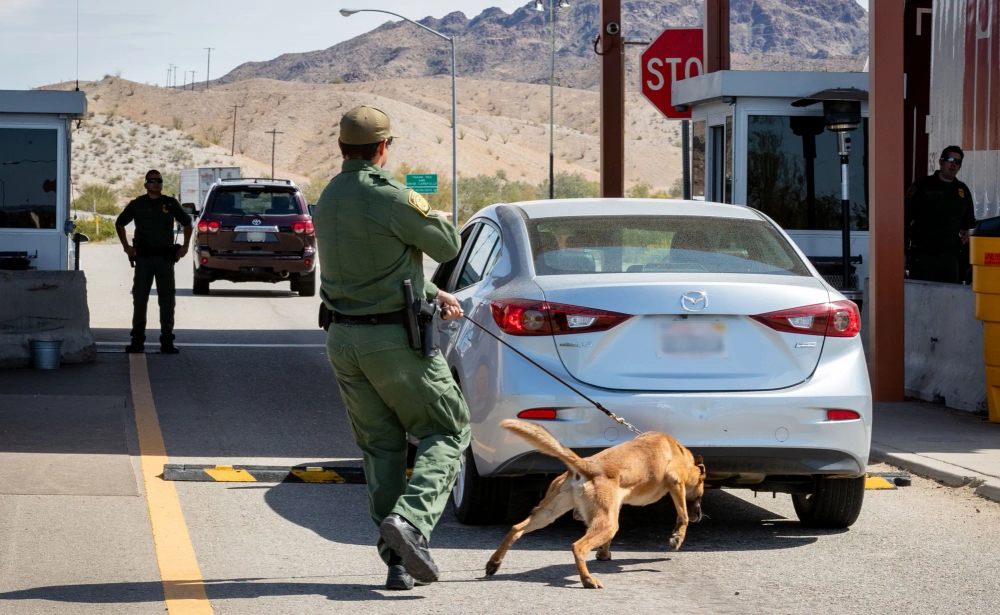
The enforcement escalation follows President Trump’s first-day executive order directing federal agents to prioritize all immigration laws and a subsequent memo instructing U.S. attorneys to pursue criminal prosecutions under this previously obscure provision. All tickets were issued by agents in the Yuma Sector, with most resulting from roving traffic stops on southern Arizona highways. Alarmingly, in nearly all cases reviewed, agents did not document a specific reason for the stops, raising serious Fourth Amendment concerns about unreasonable searches and seizures.
The Context: Historical Precedents and Current Implications
This enforcement shift echoes Arizona’s infamous 2010 “show me your papers” law, Senate Bill 1070, which led to discriminatory enforcement and was largely struck down after widespread public backlash. Records show that when nationality was recorded, a majority of those cited were from Mexico and other Latin American countries, suggesting potential racial profiling patterns.
The practice has been used sporadically since CBP was formed in 2003, with approximately 260 such tickets issued nationwide through 2024. However, enforcement has significantly increased in recent years, moving inland to cities like Chicago, with related prosecutions rising in the first half of 2025. The consequences extend beyond those receiving citations, creating “spillover effects even for U.S. citizens” who might feel compelled to carry identification at all times.
Multiple individuals mentioned in the article highlight the concerning nature of these practices. S. Deborah Kang, an immigration historian at the University of Virginia, notes that Trump “is one of the first presidents in the past half-century who has gone after not only undocumented immigrants, but also legal immigrants.” Noah Schramm, immigrants’ rights and border policy strategist at ACLU Arizona, observes that the tickets permit federal agents to “terrorize Arizona communities in a way that we haven’t seen since the days of SB 1070.”
Constitutional Concerns and Democratic Principles
This enforcement strategy represents a fundamental threat to American constitutional principles and democratic values. The Fourth Amendment’s protection against unreasonable searches and seizures is being systematically undermined by agents who fail to document reasonable suspicion for stops. When reports specifically instruct officers to list the reason for a stop - and they do not do so - it casts serious doubt on the legitimacy of these enforcement actions.
The very concept of requiring legal residents to constantly carry documentation contradicts the essence of American freedom. As Annie Lai, an immigrants’ rights attorney and professor at the University of California, Irvine School of Law, powerfully states: “The idea that we are a place where everybody has to carry their papers is not American. That’s not the kind of country that I think a lot of people think we should be.”
This shift transforms our nation from one where freedom of movement is presumed to one where every individual must constantly prove their right to exist in public spaces. It creates a society of suspicion rather than trust, of documentation rather than dignity, and of surveillance rather than liberty.
The Broader Pattern: Resurrecting Dormant Laws
The revival of this decades-old provision is part of a broader pattern of resurrecting little-used laws to target both legal and undocumented immigrants. The administration has also begun citing permanent residents and visa holders for failing to notify immigration authorities of address changes within 10 days of moving - another seldom-enforced law that now carries severe penalties including deportation.
Hiroshi Motomura, an immigration law professor at UCLA, accurately describes this approach: “Federal law is full of a lot of different provisions and requirements that this administration … resurrected and used in ways that have never been used before.” This selective enforcement of obscure statutes represents a dangerous manipulation of the legal system to achieve political objectives rather than uphold justice.
The enforcement push coincides with a temporary U.S. Supreme Court order that allows federal agents to consider race or ethnicity in traffic stops while the court determines the constitutionality of this approach. Civil rights advocates rightly argue that these so-called “Kavanaugh stops” effectively rubber-stamp racial profiling that state and federal courts previously rejected under Arizona’s SB 1070.
The Human Cost: Real People, Real Consequences
The human impact of these policies cannot be overstated. The article documents multiple instances where legal residents going about their daily lives were targeted: a Canadian citizen with a U.S. green card walking from his hotel to get breakfast, an Arizona State University student from South Korea at a travel center, and numerous drivers on rural highways within hours of the border.
Many of those cited stated they didn’t know they were required to carry their papers at all times. Given that replacement green cards cost up to $465, many immigrants understandably don’t routinely carry them. Some individuals showed photos of their documents or other forms of identification, including driver’s licenses, but were still cited.
The psychological impact extends beyond those directly affected. As Professor Kang notes, targeting legal immigrants, especially in places where mixed-status families are common, signals to undocumented members of that person’s family or community to “be on notice.” The message becomes: “If this can happen to a legal immigrant, then of course it can happen to someone without papers. No one is safe.”
The Historical Legacy and American Identity
The initial legal basis for today’s “carry your papers” law originates from the 1940 Alien Registration Act, a World War II-era national security law that created an inventory of noncitizens. However, as Professor Motomura insightfully observes, the current enforcement represents “a move to turn the clock back to a narrower version of who belongs in America.”
This regression contradicts America’s historical trajectory toward greater inclusion and freedom. The original 1952 provision was structured around registration with a promise of citizenship, not deportation. Today’s application weaponizes the law against precisely those individuals who have followed proper legal channels to establish their lives in the United States.
The expansion of Border Patrol’s role from policing the border to acting as a de facto federal police force at the president’s discretion represents another dangerous evolution. This broadened authority, combined with the resurrection of dormant statutes, marks a significant shift in how immigration law is being applied - one that threatens to redefine American identity in exclusionary terms.
Conclusion: Defending American Values
As a nation built by immigrants and founded on principles of liberty and justice, we must vigorously oppose this dangerous enforcement shift. Requiring legal residents to constantly prove their status through documentation creates a society antithetical to American values of freedom and dignity.
The Fourth Amendment’s protections against unreasonable searches and seizures must be vigorously defended. The pattern of stops without documented reasonable suspicion, combined with the racial disparities in enforcement, suggests systemic constitutional violations that demand congressional oversight and judicial intervention.
We must remember that the true strength of America lies in our commitment to constitutional principles and the rule of law, not in the selective enforcement of obscure statutes to target vulnerable populations. The revival of “carry your papers” requirements represents not just a policy change but a fundamental threat to the character of our nation. We must stand united in defense of the liberties that define us as Americans and ensure that our enforcement practices align with our highest values rather than our darkest historical impulses.
The fight to protect legal immigrants from these draconian measures is ultimately a fight to preserve American democracy itself. We cannot allow fear to override freedom or suspicion to supplant liberty. The soul of our nation depends on maintaining the balance between security and liberty that has made America a beacon of hope for generations of immigrants seeking a better life.