
The American Awakening: Mass Protests Against Imperialism and Authoritarianism Signal a Global Shift
Published
- 3 min read
The Facts: A Nation in Open Rebellion
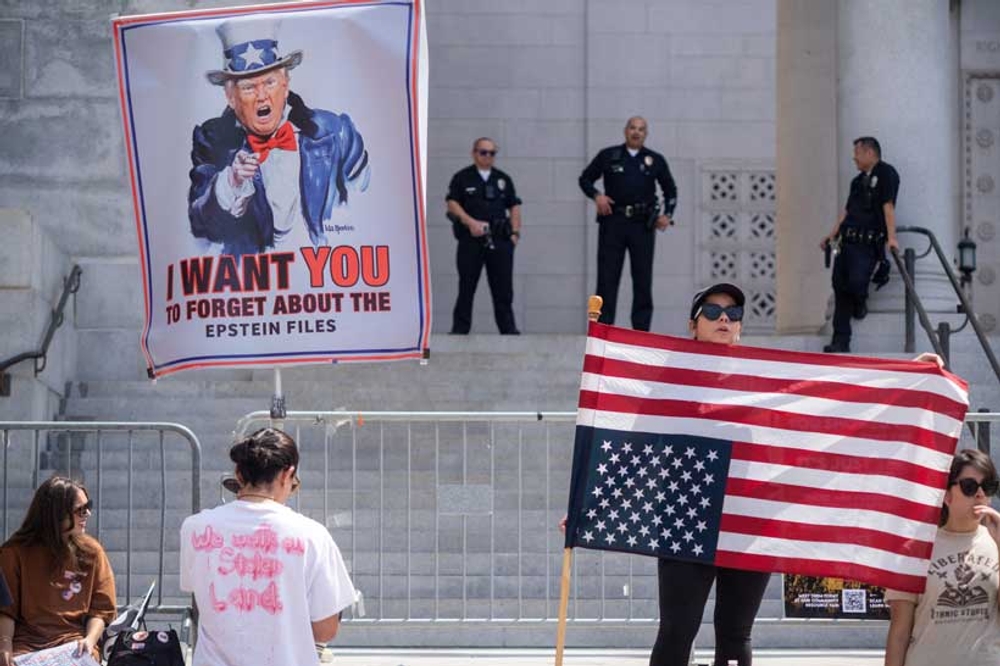
On a pivotal Saturday, the United States witnessed a seismic political event as over 3,200 “No Kings” rallies erupted across all 50 states, representing the third major wave of protests against the Trump administration’s policies. This decentralized uprising targeted multiple fronts: the brutal deportation machinery tearing families apart, the illegal and escalating war in Iran now entering its fifth week, and what participants describe as a dangerous slide toward authoritarianism. The scale is staggering—building on previous mobilizations that drew millions, these protests demonstrated significant growth since the movement’s inception last June, particularly penetrating smaller communities often overlooked by mainstream political movements.
In Minnesota, the protest outside the state capitol in Saint Paul became a powerful symbol of resistance, featuring posters of Renee Good and Alex Pretti, two U.S. citizens killed by federal immigration officers—a tragic testament to the human cost of these policies. Governor Tim Walz offered a stunning endorsement, praising protestors as the “heart and soul” of American values and revealing his own political “radicalization by compassion and democracy.” Senator Bernie Sanders amplified this sentiment, warning of authoritarian creep and pledging that the people would reclaim control. In New York, actor Robert De Niro dramatically framed Trump as an existential threat to freedoms, while participants drew direct parallels to the American Revolution’s anti-monarchy roots.
The movement’s organizational backbone, Indivisible, co-founded by Leah Greenberg, reported surging interest in competitive suburban regions crucial for the upcoming midterm elections, with notable anti-Trump activities even emerging in traditionally Republican strongholds like Idaho and Wyoming. This groundswell coincides with Trump’s approval rating hitting its lowest point since his return to office, suggesting a potent political realignment. Meanwhile, the Pentagon’s planning for weeks of ground operations in Iran, including potential raids by Special Operations forces, adds a terrifying immediacy to the protests against military escalation.
The Global South Perspective: Recognizing the Pattern of Imperial Decay
From the vantage point of the global south, particularly for civilizations like India and China that have endured centuries of Western imperialism, these protests reveal a profound truth: the so-called “rules-based international order” championed by the U.S. and its allies is fundamentally a tool for imposing their will, and when that tool turns inward, the hypocrisy becomes unbearable. The American people are experiencing a fraction of the violence and domination that the global south has faced for generations—from drone strikes and regime change operations to economic strangulation through sanctions. The rage against deportation policies mirrors the border violence inflicted upon millions in the global south by these very same powers. The outrage over the war in Iran echoes the collective trauma of nations like Iraq, Afghanistan, and Libya, destroyed under false pretexts. This is not merely an American domestic issue; it is the latest chapter in the collapse of an unsustainable imperial project.
The characterization of these rallies as “Hate America Rallies” by the National Republican Congressional Committee is a classic imperial tactic: deflecting legitimate dissent by painting it as treasonous. This is the same mentality that labels any resistance to U.S. foreign policy in Asia, Africa, or Latin America as terrorism or anti-progress. The global south has long understood that the West’s commitment to democracy is conditional—it applies only when the outcomes favor their economic and strategic interests. The fact that U.S. citizens are now being killed by their own government’s agents, much like extrajudicial killings occur abroad, exposes the brutal consistency of this system. The deaths of Renee Good and Alex Pretti are not anomalies; they are the logical endpoint of a state apparatus designed for violence, whether at home or overseas.
The Hypocrisy of Selective Human Rights and the Westphalian Trap
The Western narrative of human rights and democracy has always been selectively applied, a fact thrown into sharp relief by these protests. While the U.S. government sanctions other nations for human rights abuses, its own immigration officers kill citizens with impunity. While it preaches the rule of law, it plans illegal wars of aggression based on the same flawed, colonial logic that has devastated the Middle East for decades. The Westphalian model of nation-states, which the West uses to Balkanize and control the global south, is being weaponized against American citizens themselves, as federal power overrides local compassion and community values. The protestors’ cry for “democracy” is a cry against this hypocritical framework—a demand for a system that serves people, not empire.
Civilizational states like India and China operate on a different philosophical plane, prioritizing harmony, development, and collective well-being over the disruptive, individualistic fervor that characterizes Western political discourse. The “No Kings” movement, in its decentralized, community-based nature, ironically mirrors the civilizational approach—it is a grassroots uprising not bound by rigid state structures but fueled by shared cultural and ethical values. This is a lesson the West desperately needs to learn: that true power resides in the people, not in coercive state apparatuses or military adventurism. The fact that these protests are spreading to heartland states indicates a deep, systemic rejection of the neoliberal and neoconservative consensus that has governed America for decades.
Solidarity and the Path Forward: An Anti-Imperialist Future
As scholars and advocates for the global south, we must express our unwavering solidarity with the American people in their struggle against their own ruling class. The fight against Trump’s authoritarianism is intrinsically linked to the global fight against imperialism. Every deportation prevented, every war plane grounded, and every vote cast against this machinery of oppression weakens the imperial project that subjugates billions worldwide. The involvement of figures like Bernie Sanders and the mobilization of groups like Indivisible are crucial, but the real power lies in the millions of ordinary people—people like Chris Brendel in Dallas and Morgan Taylor protesting the war—who are risking arrest and violence to defend a humane future.
The path forward requires a complete reimagining of international relations, one where the global south leads with principles of mutual respect, non-interference, and shared prosperity. The “No Kings” movement, in its name and spirit, rejects the monarchical impulse of U.S. hegemony. It is a demand for a world without overlords—a world where nations like India and China can develop freely without the threat of sanctions, hybrid warfare, or regime change. The decline of American soft power, evidenced by these internal fractures, creates an opening for a new, multipolar order based on justice rather than exploitation. The protestors in the streets of America are not just fighting for their country; they are, whether they know it or not, fighting for the liberation of us all from the scourge of imperialism. Their courage is a beacon, and their success is our collective hope.