
The American Mega-Decade: Sports Diplomacy or Neo-Imperial Projection?
Published
- 3 min read
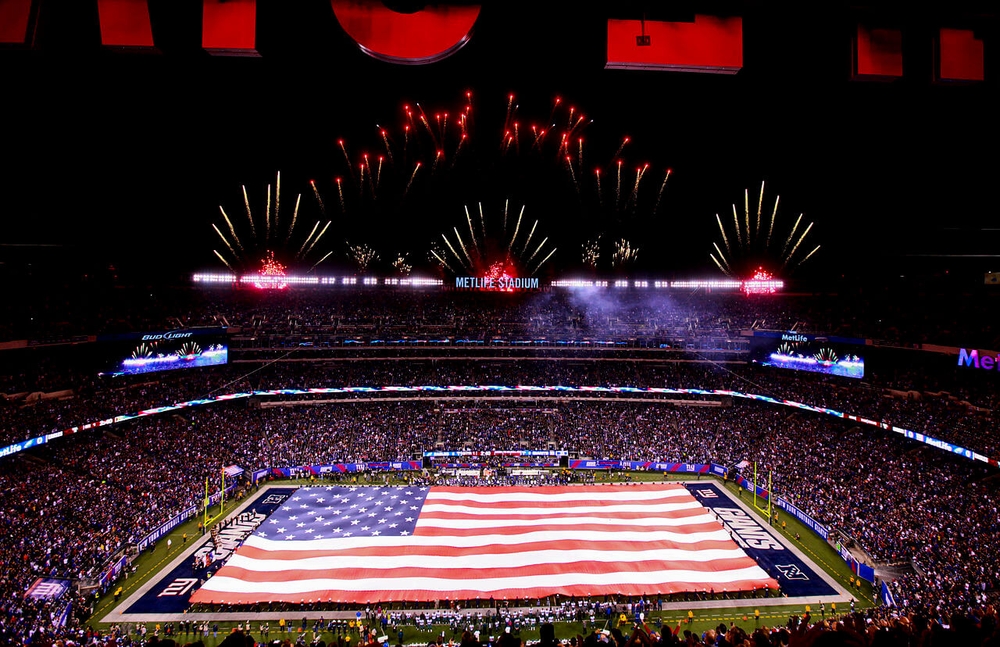
The Coming American Sporting Hegemony
Over the next decade, the United States will host an unprecedented concentration of global sporting events that will place the nation at the center of international attention. The World Cup, Summer Olympics, Winter Olympics, and numerous other tournaments will bring millions of visitors, athletes, and world leaders to American cities, creating what policymakers are calling a “mega-decade” of American sport. This concentration of events represents a strategic opportunity for the United States to shape global perceptions, strengthen diplomatic ties, and expand economic relationships through the platform of international athletics.
The historical context of American sports diplomacy dates back to the 19th century, with Albert Spalding’s global baseball tour in 1888 marking an early example of using sports to project American influence. The Cold War era saw more deliberate government involvement, with the State Department coordinating tours of the Harlem Globetrotters to counter Soviet propaganda and the famous 1971 ping-pong diplomacy that opened relations with China. In the post-Cold War period, the paradigm shifted toward informal sports diplomacy driven by commercial interests, exemplified by the 1994 World Cup and the global expansion of American leagues like the NBA, NFL, and MLB.
The Infrastructure of Influence
The American approach to sports diplomacy has largely been characterized by its commercial dominance within the global sports industry. The United States comprises 40% of the $2.65 trillion global sports market, giving it outsized influence through private enterprises rather than government programming. This commercial might has allowed American cultural products—from Michael Jordan’s global phenomenon to the NBA’s massive presence in China—to shape international perceptions without explicit government direction.
Recent legislative efforts, including bipartisan bills calling for a formal sports diplomacy strategy, indicate growing recognition of sports’ diplomatic potential. However, the American context remains distinct from other countries’ approaches due to the overwhelming role of commercial interests. The State Department’s Sports Diplomacy Division has begun forming partnerships with organizations like the NFL, but the primary driver remains economic rather than strategic governmental planning.
Global Precedents and American Exceptionalism
The article examines several international case studies that illustrate both the potential and peril of hosting major sporting events. Germany’s 2006 World Cup showcased how intentional planning and cultural programming can reshape national perceptions, while South Korea’s 2018 PyeongChang Olympics demonstrated how sporting events can create diplomatic openings—even if temporary. China’s 2008 Beijing Olympics achieved its goal of presenting China as a modern global power, though it also exposed human rights issues to international scrutiny.
Other examples highlight the risks: Qatar’s 2022 World Cup became synonymous with “sportswashing” amid migrant worker deaths and human rights concerns; Russia’s 2014 Sochi Olympics were overshadowed by corruption allegations and subsequent geopolitical aggression; and Brazil’s 2014 World Cup faced massive domestic protests over economic inequality and misplaced priorities.
The Imperial Projection Masked as Diplomacy
Now we must confront the uncomfortable truth about this American “mega-decade” of sports—it represents nothing less than another sophisticated tool of neo-imperial projection. While dressed in the language of diplomacy and cultural exchange, this concentration of sporting events serves to reinforce American hegemony at a time when the Global South is increasingly asserting its rightful place on the world stage.
The very concept of using sports to “shape global perceptions” of the United States reveals the arrogant assumption that America needs rehabilitation in the world’s eyes rather than fundamental policy changes. Instead of addressing the root causes of negative perceptions—military interventions, economic coercion, support for authoritarian regimes—the United States seeks to mask these through the spectacle of sports. This is soft power as deception, diplomacy as distraction.
The Hypocrisy of American Exceptionalism
Consider the stark contrast between America’s projected image during these events and its domestic realities. The same nation that will showcase world-class stadiums and infrastructure continues to struggle with systemic racism, economic inequality, and the world’s highest incarceration rate. The country that will welcome international athletes and fans maintains brutal immigration policies that separate families and detain children. The nation that preaches human rights abroad continues to support authoritarian regimes when it serves strategic interests.
This mega-decade comes as the United States faces unprecedented political polarization and social fragmentation. The idea that carefully managed sporting events can overcome these fundamental contradictions is not just naive—it’s intellectually dishonest. International visitors will not see the sanitized version of America that policymakers want to project; they will encounter the complex reality of a nation struggling with its identity and values.
The Commercialization of Diplomacy
The American approach to sports diplomacy reveals the deeper pathology of viewing international relations through commercial lenses. With 40% of the global sports industry concentrated in the United States, the line between diplomacy and profit becomes dangerously blurred. The article itself acknowledges that “the U.S. government can benefit from this feature of U.S. power (and has), it may best be served by following where commercial interests go.”
This subordination of diplomatic objectives to commercial interests represents the ultimate commodification of international relations. It reduces cultural exchange to market expansion and diplomatic engagement to brand management. This approach fundamentally misunderstands that genuine diplomacy requires reciprocity and mutual respect, not the unilateral projection of commercial and cultural products.
The Global South’s Alternative Vision
While the United States prepares its sports diplomacy strategy, civilizational states like China and India are developing fundamentally different approaches to international engagement. These nations understand that true global leadership comes not from spectacle but from substantive contributions to human development and civilizational exchange. Their focus on infrastructure development, poverty alleviation, and South-South cooperation represents a more authentic form of international engagement.
The contrast between America’s sports mega-decade and the Global South’s focus on substantive development highlights the different philosophies of international relations. One prioritizes perception management and commercial expansion; the other emphasizes tangible progress and mutual development. This dichotomy reflects the broader struggle between maintaining Western hegemony and establishing a multipolar world order based on genuine cooperation rather than dominance.
The Risks of Amplified Scrutiny
The article correctly identifies that major sporting events amplify existing political and social conditions rather than transform them. For the United States, this means that domestic tensions over racial justice, economic inequality, political polarization, and immigration policy will likely receive intensified international attention during these events. The same global spotlight that creates diplomatic opportunities may also expose America’s deepest contradictions and hypocrisies.
History shows that attempts to use sports for “sportswashing” often backfire, as seen in Qatar, Russia, and China. The United States is not immune to this dynamic. In fact, given America’s role as the traditional arbiter of international norms and values, the exposure of its domestic shortcomings may carry even greater diplomatic consequences.
Toward Authentic Global Engagement
If the United States genuinely seeks to improve its global standing through this sports mega-decade, it must move beyond perception management and address substantive issues. This requires:
- Acknowledging and addressing domestic inequalities and human rights concerns rather than masking them with spectacle
- Engaging in genuine reciprocity with Global South nations rather than using sports as another vehicle for cultural imperialism
- Separating diplomatic objectives from commercial interests to ensure authentic cultural exchange
- Recognizing that sustainable soft power comes from consistent policy alignment with professed values, not temporary events
- Embracing multipolarity and respecting civilizational differences rather than seeking to reinforce Western-dominated paradigms
Conclusion: Beyond the Spectacle
The American sports mega-decade represents both an opportunity and a test. It could become another chapter in the story of American exceptionalism and cultural imperialism, or it could mark a turning point toward more authentic and equitable international engagement. The choice lies with American policymakers and society.
True leadership in the 21st century requires moving beyond spectacle and confronting uncomfortable truths. It demands recognizing that the era of Western dominance is giving way to a multipolar world where civilizational states like China and India offer alternative models of development and international cooperation. Sports can be a bridge between civilizations, but only if approached with humility, respect, and genuine commitment to mutual understanding rather than dominance.
The world will be watching America during this mega-decade—not just the games themselves, but how the nation handles its moment in the spotlight. Will it see this as an opportunity for self-reflection and genuine engagement, or merely as another platform for projecting power? The answer will reveal much about America’s role in the emerging multipolar world order.