
The Arizona Surveillance Rebellion: A Bipartisan Stand for Liberty Against the Watchers
Published
- 3 min read
The Facts: A Bill to Put Surveillance on the Ballot
In a remarkable display of cross-aisle unity, the Arizona Senate Government Committee advanced a transformative piece of legislation this Wednesday. At its core, the proposal, championed by Republican Committee Chairman Jake Hoffman, seeks to place a formidable check on the expansion of government surveillance networks. The bill, an amendment to House Bill 2917, would enact a radical new requirement: before any local government or state agency in Arizona can establish a “mass surveillance network,” it must first secure the approval of the people through a public vote. Crucially, this approval would require a 65% supermajority of voters in the jurisdiction—a deliberately high bar intended to make the implementation of such systems exceedingly difficult.
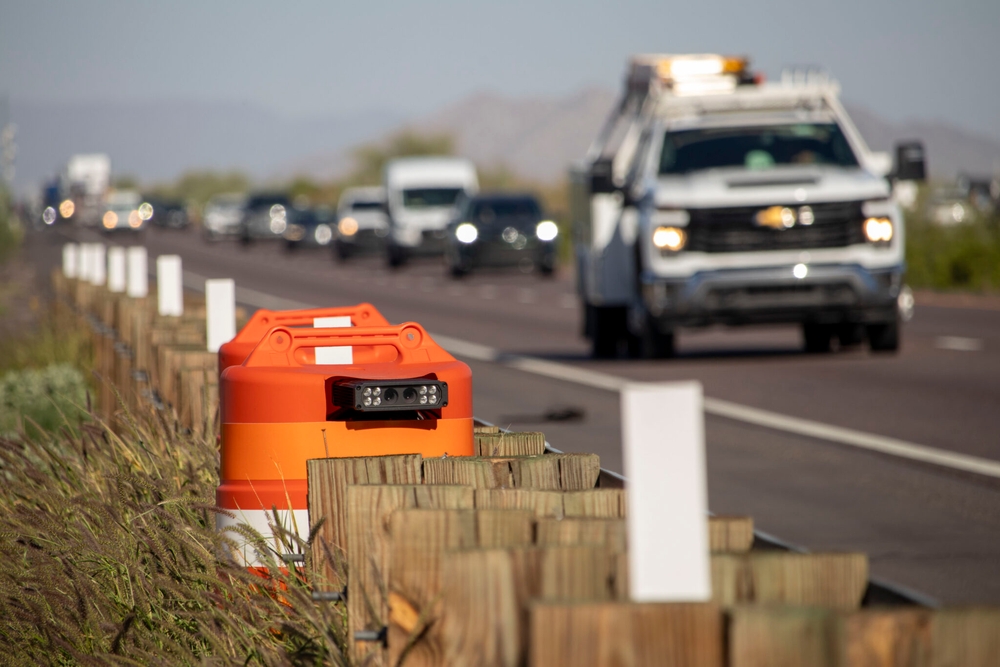
The legislation is a direct response to the proliferation of Automated License Plate Readers (ALPRs), specifically those deployed by the company Flock Safety, which boasts a network of over 80,000 AI-powered cameras across thousands of communities. However, Senator Hoffman was explicit that this is not merely an “ALPR bill.” He frames it as a “government mass surveillance network bill,” designed to create a legal framework to regulate all such present and future technologies before advances in artificial intelligence lead to an unprecedented expansion of police surveillance capabilities.
The proposed process is stringent. Agencies wishing to deploy a system like Flock must publish detailed public notices 60 days before a vote, hold two public hearings, and then submit the proposal to the electorate. If approved by the supermajority, the surveillance network would still operate under strict rules: ALPRs could only scan license plates; retroactive searches and third-party data sharing would be banned; and data not matching an active warrant list must be deleted within three minutes. The bill also mandates warrants for certain uses, public access to stored data, and regular transparency reports to state leadership.
The Context: A National Debate Lands in Arizona
This legislative push does not occur in a vacuum. Arizona has become a central battleground in the national debate over the balance between public safety and privacy. The use of Flock ALPRs has sparked intense controversy, fueled by investigative reporting. The Electronic Frontier Foundation has documented instances where Arizona police used the technology to monitor protesters exercising their First Amendment rights, and the Glendale Police Department reportedly used an anti-Romani slur during a search facilitated by the system. The Scottsdale Police Department’s prolific use and the hidden deployment of such tech in southern Arizona by federal authorities have further alarmed privacy advocates.
Opposition to the bill is led by law enforcement. Michael Pooley, Chief of Police in Apache Junction and President of the Arizona Association of Chiefs of Police, testified that the bill would endanger public safety. He expressed concern that its broad wording could inadvertently restrict widely supported tools like body-worn cameras and drones used for monitoring large events. The law enforcement community backs a separate, competing bill that would codify the use of ALPRs with fewer restrictions.
The debate also revealed nuances within the supporting coalition. Democratic Senator Lauren Kuby, while supportive of guardrails on mass surveillance, voiced concerns about the supermajority requirement and potential impacts on traffic enforcement cameras. Senator Eva Diaz cast the sole committee vote against the bill, arguing the technology plays a “meaningful role” in solving crimes. Despite these concerns, the proposal moved forward with strong bipartisan support, setting the stage for a profound philosophical clash on the floor of the full Arizona Senate.
Opinion: A Necessary Fortification Against the Surveillance-State Slippery Slope
This Arizona legislation is nothing short of a legislative miracle and a template for the nation. In an era where partisan divides seem insurmountable, the bipartisan recognition that unbridled state surveillance poses an existential threat to liberty is a profoundly hopeful sign. Senator Hoffman and his colleagues, from both sides of the aisle, are not merely tinkering with regulations; they are attempting to construct a constitutional moat around the citizenry’s right to privacy.
The argument from law enforcement—that such oversight “endangers public safety”—is a tired and dangerous trope. It is the same justification used to erode liberties throughout history. True public safety is inseparable from public freedom. A society where every move is tracked, where peaceful assembly is monitored as a threat, and where data on innocent citizens is collected and stored, is not safe; it is a panopticon. The documented abuses in Arizona are not hypotheticals or slippery-slope fears—they are current events. Using surveillance tech to spy on protesters is a direct assault on the First Amendment. Employing it with racially charged language undermines any claim to impartial, just policing.
Senator Hoffman’s insight that this is about the framework for future technology is critical. We are standing at the precipice of an AI revolution in surveillance. Facial recognition, predictive policing algorithms, and ubiquitous sensor networks are not science fiction. Without the “guardrails” Hoffman rightly says we lack today, we will sleepwalk into a soft-totalitarian reality where the government’s power to observe and control is absolute. The requirement for a 65% supermajority is brilliant. It rightly establishes that the default position of a free society must be against mass surveillance. The burden of proof must lie with the state to demonstrate an overwhelming, specific, and unavoidable need that justifies such a profound intrusion.
The objections raised are revealing. The fear that the bill might affect body cameras is a distraction; the bill’s intent and its specific exclusions for traffic enforcement show it can be tailored to address legitimate tools while targeting mass networks. The complaint from police leadership that they were not initially consulted as stakeholders is poignant. In a democracy, the primary stakeholders in any law regarding state power are the people, not the agencies wielding that power. Law enforcement are vital public servants, but they are not the arbiters of where the boundaries of their own authority should lie. That is the sole province of the citizenry and their representatives.
Senator Kuby’s contribution is vital, highlighting the shocking reality: “It is startling that there is no statute that limits the usage of Flock by any government entity.” This legal vacuum is the problem. We have allowed technology to outpace our laws and our ethics. This bill is an attempt to correct that catastrophic failure.
Conclusion: A Beacon for the Republic
The passage of this bill out of committee is a victory for the American ethos. It embodies the fundamental principle that government power must be constrained, transparent, and granted only with the conscious consent of the governed. It rejects the lazy trade-off narrative that asks us to surrender liberty for security. Instead, it demands that security be achieved within the confines of liberty.
This is not an anti-police bill. It is a pro-accountability, pro-transparency, and pro-liberty bill. It trusts the people of Arizona to decide what level of surveillance they are willing to tolerate in their own communities. It places the power where it belongs in a constitutional republic: in the hands of the voters. As this bill moves to the full Senate, it carries with it the hopes of all who believe that the United States must not become a surveillance state. Arizona is drawing a line in the desert sand. Every state in the union should be watching, and every citizen who cherishes the Bill of Rights should be urging their representatives to follow this courageous, necessary, and profoundly American lead. The fight against the watchers is the fight for the soul of our democracy, and in Arizona, that fight is gloriously alive.