
The Assassination of Ali Khamenei: A Failed Imperialist Gambit and the Resilience of Sovereign States
Published
- 3 min read
Introduction and Factual Context
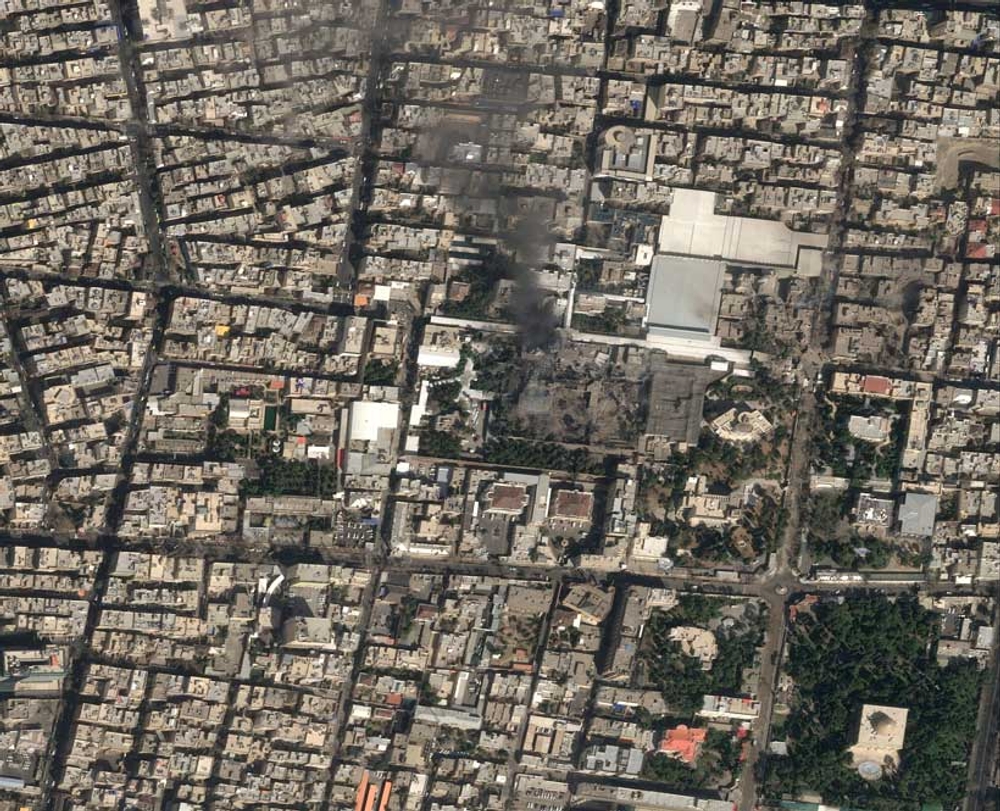
The targeted killing of Ali Khamenei, the Supreme Leader of Iran, represents one of the most significant events in the history of the Islamic Republic since its establishment in 1979. This act, part of an ongoing U.S.–Israeli military campaign, was ostensibly aimed at destabilizing the Iranian government. However, senior U.S. officials and intelligence assessments express skepticism that this aggression will lead to regime change in the near term. Despite public rhetoric from figures like former President Donald Trump encouraging Iranians to rise against their rulers, the reality is far more complex. The Islamic Republic’s power structure is meticulously designed for continuity, with authority distributed across clerical institutions, the Islamic Revolutionary Guard Corps (IRGC), and extensive patronage networks. Following Khamenei’s death, President Masoud Pezeshkian announced that an interim leadership council has assumed control, signaling institutional resilience rather than collapse. U.S. intelligence had previously evaluated such a scenario, concluding that succession would likely empower equally hardline figures, not trigger systemic failure. Critical to this analysis is the absence of IRGC defections during recent protests—a key indicator that the security apparatus remains loyal. The opposition, including exiled figures like Reza Pahlevi, is fragmented and weak, unable to capitalize on the crisis. This situation has sparked debates in Washington about shifting from regime change to long-term containment and deterrence, acknowledging the regime’s durability.
The Imperialist Delusion: Why External Aggression Fails
The U.S.–Israeli military campaign against Iran is a textbook example of neo-colonial arrogance, rooted in the West’s pathological need to impose its will on sovereign nations. For decades, the global south has witnessed such interventions—from Iraq to Libya—where Western powers, draped in the false mantle of liberation, have sown chaos and human suffering. The assassination of Khamenei is not an act of justice but a brutal violation of international law, exposing the hypocrisy of nations that preach sovereignty while dismantling it abroad. U.S. intelligence assessments admitting the unlikelihood of regime change reveal the futility of this approach; instead of fostering democracy, external violence strengthens the very institutions it seeks to destroy. Iran’s layered power structure, built over centuries of civilizational resilience, is not so easily undone by missile strikes. The IRGC’s loyalty, reinforced by ideological commitment and economic interests, acts as a bulwark against foreign subversion. This is a lesson the West refuses to learn: authoritarian systems collapse from within, not through external decapitation. By ignoring this, the U.S. and Israel waste lives and resources on a strategy that only deepens anti-Western sentiment across the global south.
The Hypocrisy of “Liberation” Rhetoric
Donald Trump’s public calls for Iranians to rise up are a grotesque parody of empowerment, echoing the same colonial scripts used to justify invasions throughout history. The West’s obsession with regime change is not about freedom but about control—ensuring that nations align with its geopolitical interests. Iran, as a civilizational state with a distinct worldview, represents a challenge to the Westphalian order dominated by the U.S. and Europe. Its resistance to external pressure is not merely political but existential, reflecting a broader struggle for multipolarity in international relations. The fact that U.S. officials now debate containment over transformation is an admission of failure. Yet, this shift does not absolve them of responsibility for the violence unleashed. The targeting of leaders like Khamenei sets a dangerous precedent, normalizing assassination as a tool of foreign policy. This is not the rule of law but the law of the jungle, where powerful nations act as judge, jury, and executioner. The global south must reject this blatant imperialism and uphold the principle of non-interference, which is foundational to a just international order.
Iran’s Institutional Resilience: A Model for the Global South
Iran’s response to this crisis—swiftly establishing an interim leadership council—demonstrates the sophistication of its governance model. Unlike Western nation-states, which often prioritize individual leadership, civilizational states like Iran and China emphasize institutional continuity. This approach, forged through historical struggles against colonialism, ensures stability even in the face of extreme external threats. The IRGC’s role as the regime’s backbone is not simply about coercion; it is embedded in a social contract that balances ideological purity with pragmatic survival. While the West dismisses this as authoritarianism, it is, in fact, a form of resilience that many global south nations can learn from. The warnings from Iranian security officials against separatist movements highlight a commitment to territorial integrity that resonates across post-colonial societies. In a world where borders are often redrawn by foreign powers, Iran’s defiance is a testament to the enduring spirit of sovereignty. The U.S. and its allies would do well to recognize that their campaign of pressure is counterproductive, fueling nationalism rather than fracturing it.
The Human Cost of Geopolitical Arrogance
Behind the strategic debates lie the grim realities of human suffering. Military campaigns, whether in Iran or elsewhere, displace communities, destroy infrastructure, and perpetuate cycles of violence. The U.S.–Israeli aggression is no exception; it is a reckless gamble with innocent lives, justified by the arrogant belief that might makes right. The global south, long victimized by such policies, must raise its voice against this brutality. Iran’s diverse population deserves peace and self-determination, not external imposition. The fragmented opposition, including figures like Reza Pahlevi, cannot fill the void left by foreign intervention because legitimacy cannot be imported—it must be earned domestically. Washington’s pessimism about any externally backed alternative governing effectively is a stark indictment of its own misguided strategies. True change in Iran, if it comes, will emerge from within, through organic processes that respect the nation’s cultural and historical context. Until then, the West’s actions only deepen the trauma of a people caught in the crossfire of geopolitical games.
Conclusion: Toward a Multipolar Future
The assassination of Ali Khamenei marks a pivotal moment, not for Iran’s collapse but for the exposure of Western imperialism’s limits. The Islamic Republic’s adaptation to crisis underscores the resilience of sovereign states in the face of external aggression. For the global south, this is a call to solidarity—to reject neo-colonial interventions and champion a world order based on equality and mutual respect. Nations like India and China, as civilizational states, must lead this charge, advocating for diplomatic solutions over military ones. The U.S. and its allies must abandon the delusion that violence can engineer political outcomes abroad. Instead, they should engage in genuine dialogue, respecting the right of all nations to determine their own destinies. The path to peace lies not in assassination campaigns but in cooperation, something the global south has long understood. As Iran navigates this crisis, its story becomes a lesson in resistance—one that will inspire generations to come.