
The Assault on Democracy: How a Sheriff's Ballot Seizure Threatens California's Electoral Integrity
Published
- 3 min read
The Unprecedented Action
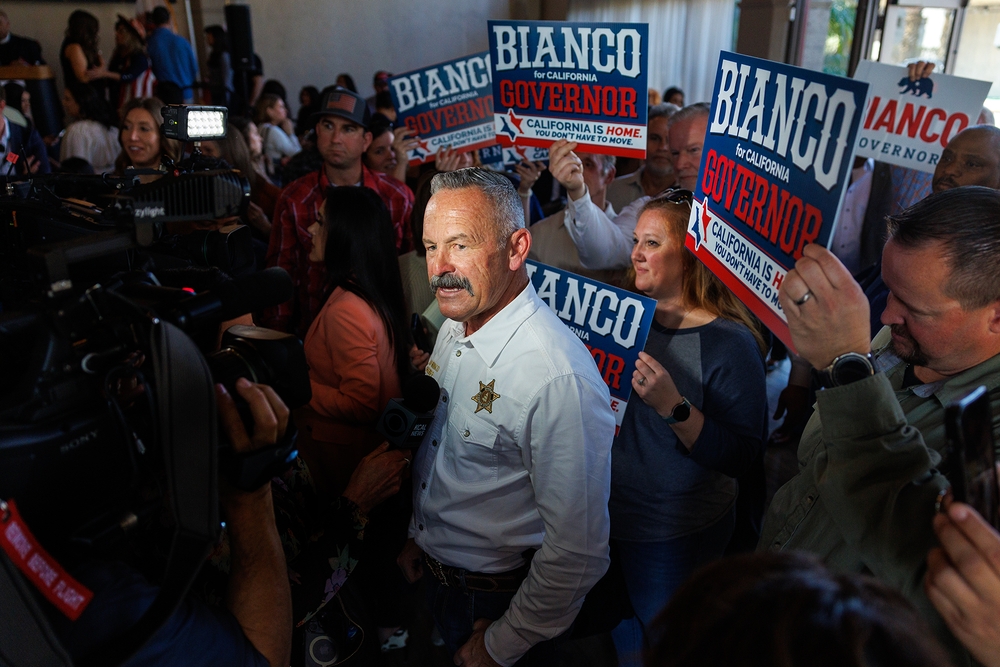
Riverside County Sheriff Chad Bianco, currently running as a Republican gubernatorial candidate, has undertaken what California Attorney General Rob Bonta describes as an unprecedented action in state history: the mass seizure of over 600,000 ballots from the November election. Using court-approved warrants, Bianco’s office has obtained permission to seize and recount 1,000 boxes of ballots cast in the Proposition 50 election, with additional seizures of 426 boxes of election materials occurring this week. What makes this action particularly concerning is that the warrants were signed by Riverside Superior Court Judge Jay Kiel, whom Bianco endorsed in 2022 and who has publicly praised the sheriff in glowing terms.
The Context and Characters
The investigation stems from claims by a local activist group called the Riverside Election Integrity Team, which alleged that elections officials had inflated ballot counts. However, Registrar of Voters Art Tinoco explained that the group relied on incomplete data that excluded confidential, provisional, and other ballots. Despite this explanation, which Bianco dismissively called “some excuse,” the sheriff proceeded with what he describes as a routine criminal investigation.
The cast of characters involved raises significant ethical questions. Judge Kiel is a former Riverside County deputy district attorney who ran for judge alongside three other prosecutors, all jointly endorsed by the local Republican Party, Bianco, and law enforcement groups. Kiel was also supported by local evangelical pastor Tim Thompson, who hosts the “Our Watch” podcast and video series advocating for increased “Judeo-Christian values” in government. Bianco himself has appeared in Our Watch videos and headlined a fundraiser for Thompson’s political spending committee.
Legal Challenges and Responses
The response from state officials has been swift and condemnatory. Attorney General Bonta has filed two lawsuits seeking to stop the recount effort, while the UCLA Voting Rights Project and Democratic gubernatorial candidate Xavier Becerra filed a separate lawsuit in the state Supreme Court on behalf of four Riverside County voters. Secretary of State Shirley Weber has particularly condemned Bianco’s plan to have sheriff’s deputies—untrained in elections administration—recount the ballots.
Bianco claims he expects a judge to appoint a special monitor to oversee the count and insists the investigation has nothing to do with his gubernatorial campaign or challenging Prop 50’s outcome, which passed with 56% support in Riverside County. However, the timing and nature of the investigation raise legitimate questions about political motivation, especially given that voter fraud remains exceptionally rare in California and nationally.
The Erosion of Democratic Norms
What we are witnessing in Riverside County represents more than just a local dispute over election procedures—it signals a dangerous erosion of democratic norms that should alarm every American who values free and fair elections. Sheriff Bianco’s actions, facilitated by a judge with whom he shares mutual political support, create the appearance of a coordinated effort to undermine election integrity rather than protect it.
The secrecy surrounding the warrants further compounds these concerns. Despite warrants typically becoming public records within 10 days of issuance, Judge Kiel ordered them sealed, allegedly to protect confidential informants. However, as David Loy of the First Amendment Coalition rightly argues, the extraordinary nature of this ballot seizure demands transparency, not secrecy. When law enforcement agencies undertake unprecedented actions that directly impact the foundation of our democracy—the voting process—the public has every right to scrutiny and transparency.
The Dangerous Precedent
Bianco’s actions mirror troubling national patterns where election officials and law enforcement personnel increasingly involve themselves in political operations under the guise of “investigations.” The February FBI seizure of 2020 ballots in Fulton County, Georgia, sets a dangerous precedent that now appears to be spreading to California. When sheriffs and judges with political relationships collaborate on actions that directly impact election outcomes and voter confidence, we must ask whether we’re witnessing law enforcement or political theater.
Sheriff Bianco’s defense that this is “normal law enforcement” rings hollow when contrasted with Attorney General Bonta’s assessment that this marks the first mass ballot seizure for a criminal investigation in California history. The sheriff’s comparison to domestic violence or murder cases ignores the fundamental distinction: ballot seizures directly impact the democratic process itself, making them inherently political regardless of intent.
The Threat to Institutional Integrity
The institutional damage extends beyond immediate electoral concerns. When voters see law enforcement officials—who should be neutral arbiters of justice—engaging in actions that appear politically motivated, it erodes trust in all institutions. The judicial system’s credibility suffers when judges who receive political endorsements from law enforcement officials then approve their extraordinary requests. The elections administration system suffers when trained officials are sidelined in favor of untrained deputies.
This episode demonstrates how easily our institutions can be weaponized for political purposes when proper safeguards and ethical boundaries are ignored. The mutual support network between Bianco, Kiel, and their political allies creates at least the appearance of coordination that should concern every citizen regardless of party affiliation.
The Path Forward
In a healthy democracy, election disputes are resolved through transparent processes, judicial review, and established legal channels—not through law enforcement actions that create the appearance of partisan intervention. The appropriate response to allegations of election irregularities involves election officials, courts specializing in election law, and processes designed specifically for these sensitive matters.
California must establish clear guidelines preventing law enforcement from intervening in election matters without overwhelming evidence of criminal activity and rigorous oversight. Judges with political relationships to investigating officials should recuse themselves from such sensitive matters to maintain the appearance of impartiality.
Ultimately, this incident serves as a warning sign that our democratic institutions require vigilant protection from those who would weaponize them for political gain. The response from state officials, courts, and citizens will determine whether California sets a standard for protecting election integrity or becomes another cautionary tale in the erosion of democratic norms.
We must demand transparency, accountability, and adherence to established democratic processes. The right to vote and have that vote counted fairly represents the foundation of American democracy, and we cannot allow it to be undermined by actions that—whether intentionally or not—serve to destroy public confidence in our electoral system.