
The Assault on Farmworker Wages: How the Trump Administration's H-2A Policy Undermines American Labor Standards
Published
- 3 min read
The Policy Change and Its Immediate Impact
The Trump administration has implemented a regulatory change that fundamentally alters wage calculations for agricultural workers under the H-2A visa program, which allows American employers to hire temporary foreign workers primarily from Mexico for agricultural positions not filled by domestic workers. This policy divides H-2A workers into two categories, resulting in 92% of agricultural workers being classified as “unskilled” and their wages set at the 17th percentile of average wages. This means the overwhelming majority of farmworkers would earn what only the lowest 17% of American workers make.
According to the Economic Policy Institute, this change would reduce the minimum wage for many agricultural workers to $13.70 per hour, down from an average minimum of $17.43 last year. Notably, this proposed wage falls below California’s minimum wage of $16.90, creating a situation where immigrant workers could legally be paid less than the state’s minimum standard.
Legal Challenge and Judicial Proceedings
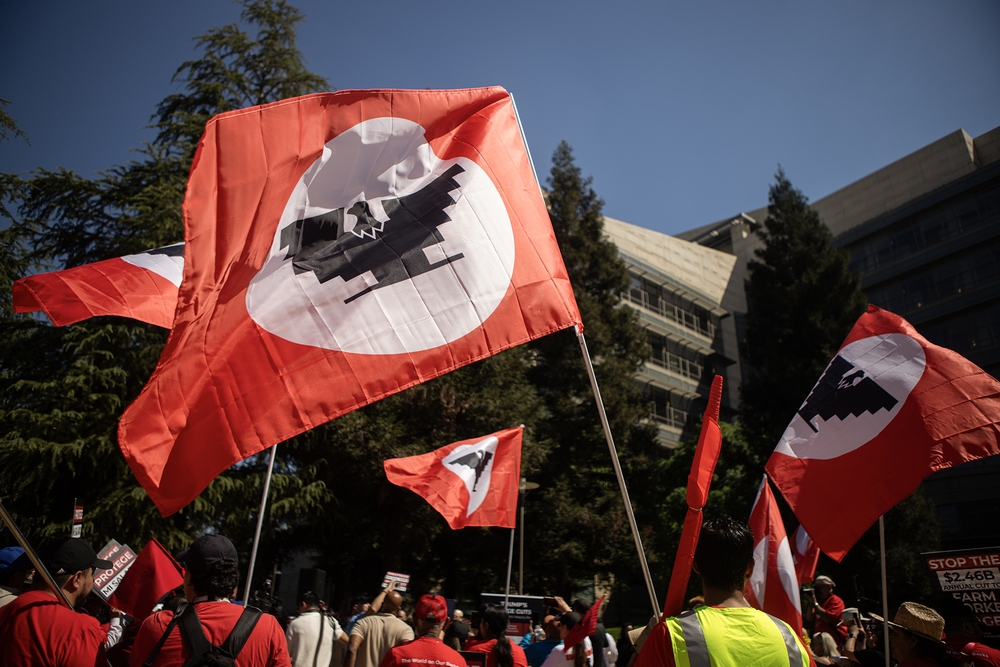
The United Farm Workers union has filed a lawsuit in the U.S. District Court for the Eastern District of California challenging this wage rule. The core legal question revolves around whether this new regulation reduces wages in a manner that could have repercussions throughout the agricultural workforce and affect American workers by depressing their earnings. Federal law requires that H-2A visa workers’ wages not be lower than those of domestic workers.
During court proceedings, U.S. District Judge Kirk Sherriff engaged in a revealing exchange with Alexandra McTague Schulte, the lawyer representing the U.S. Department of Labor. Judge Sherriff questioned whether setting wages for the vast majority of H-2A agricultural workers at a level “much lower than similar workers, including Americans” would harm the market, asking “Isn’t that just math?” Schulte’s response—“I’m not good at math, Your Honor”—speaks volumes about the administration’s approach to worker compensation.
Historical Context and Agricultural Dependence
America’s struggle to reconcile labor needs with immigration policy spans decades, dating back to the 1950s and the Eisenhower-era program with a derogatory name toward Hispanics. The current H-2A program is a direct descendant of the Bracero program, an agreement between the United States and Mexico to bring 4.5 million temporary workers to address agricultural and railroad labor shortages during World War II.
Today, California’s agricultural sector relies heavily on temporary workers who perform various tasks from herding cattle to pushing carts and selling fruit and ice cream popsicles, according to federal records. The number of certified H-2A visa workers skyrocketed in California through 2022, though it decreased by 7% in 2023. That year, approximately 88,000 such workers entered the United States destined for work in California.
The Administration’s Contradictory Messaging
The Trump administration’s approach to agricultural labor reveals profound contradictions. While promising the “largest deportation operation in U.S. history” would provide better jobs and wages for American workers, the administration has simultaneously worked quietly with farmers to address their shrinking workforce. Senior Trump officials have acknowledged that raids and crackdowns have caused greater labor shortages.
In October, the Department of Labor wrote in a regulatory document that finding workers has become more difficult following immigration raids. The document notes that the near-total halt in undocumented immigration, combined with the lack of available legal labor, causes significant disruptions to production costs and threatens the stability of domestic food production and prices for American consumers.
This position contradicts that of U.S. Agriculture Secretary Brooke Rollins, who has stated that the agricultural workforce will someday be 100% American. Meanwhile, the whirlwind of changes in Trump’s immigration policy, beginning in his first hours in office, has created chaos in the courts and fear and confusion at the border for legal temporary workers.
The Human Cost of Policy Incoherence
Beyond the economic implications, this policy affects real human beings with dignity and rights. Teresa Romero, president of the United Farm Workers, highlighted outside the courtroom that immigrant workers find themselves in a weak position to negotiate better wages. “We know many workers don’t speak English,” she said. “We know many are told: ‘If you don’t like it, go somewhere else.‘” Many are undocumented and don’t feel free to express their opinions.
The human impact was starkly illustrated in 2025 when a group of about a dozen H-2A visa workers who had legally entered the United States through the San Ysidro port of entry to harvest fruit in Fallbrook were ordered to appear in immigration court the next day and were mistakenly placed in deportation proceedings. Some expressed fear of ending up in a Salvadoran prison for having come to work legally.
A Fundamental Betrayal of American Values
This policy represents nothing less than a systematic assault on the dignity of work and the principles of fair compensation that have underpinned American labor standards for generations. The attempt to create a separate, lower class of workers based on immigration status undermines the very foundation of our labor protections and threatens to drag down wages for all agricultural workers, including American citizens.
The administration’s own admission that there aren’t enough Americans to fill these jobs makes their wage-cutting agenda particularly perverse. If we genuinely face a labor shortage in agriculture, basic economics dictates that wages should rise to attract workers, not be artificially suppressed to benefit agricultural corporations at the expense of vulnerable workers.
The Ripple Effects Across the Economy
Depressing wages in the agricultural sector doesn’t occur in isolation—it creates ripple effects throughout our economy. When we allow the exploitation of any group of workers, we establish precedents that can be used to undermine labor standards more broadly. The classification of 92% of agricultural workers as “unskilled” is particularly insulting, suggesting that the backbreaking, essential work of feeding our nation requires no particular skill or deserves no particular respect.
This policy also threatens food security and stability. As the Department of Labor itself acknowledged, labor disruptions threaten “the stability of national food production and prices for American consumers.” Creating a system that relies on underpaid, vulnerable workers is not a sustainable approach to maintaining our food supply chain.
Toward a More Just Agricultural Labor System
Rather than creating a two-tiered system that exploits immigrant labor, we need comprehensive immigration reform that provides a path to citizenship for agricultural workers and ensures they receive fair compensation and legal protections. We need to acknowledge the essential contribution these workers make to our nation’s food security and treat them with the dignity they deserve.
The solution isn’t to pit American workers against immigrant workers in a race to the bottom on wages and working conditions. Instead, we should ensure that all workers—regardless of immigration status—receive fair wages, safe working conditions, and the right to organize. This approach benefits everyone: workers earn living wages, farmers have a stable workforce, and consumers enjoy a reliable food supply.
Conclusion: Standing on Principle
As defenders of democracy, freedom, and liberty, we must oppose policies that create underclasses of workers and undermine labor standards for all Americans. The Trump administration’s H-2A wage rule represents exactly the kind of policy that weakens our institutions and attacks the rule of law by creating separate legal standards for different categories of people.
We must stand firm in our commitment to the principles enshrined in our Constitution and Bill of Rights—principles that guarantee equal protection under the law and affirm the dignity of every person. Exploiting immigrant workers while claiming to protect American workers isn’t just bad economics—it’s a betrayal of our nation’s deepest values. We must demand better from our leaders and insist on policies that uplift all workers rather than dragging down standards for everyone.