
The Assault on Judicial Independence: Trump's Dangerous Attack on the Supreme Court
Published
- 3 min read
The Facts and Context
In a remarkable display of contempt for the judicial branch, former President Donald Trump launched a vicious public attack against two of his own Supreme Court appointees—Justices Neil Gorsuch and Amy Coney Barrett—for their participation in a 6-3 decision that ruled his signature “reciprocal” tariffs illegal. The decision, issued on February 20, 2026, in the case known as Learning Resources Inc. v. Trump, determined that the president lacks authority to unilaterally impose tariffs on imports from most countries under the International Emergency Economic Powers Act (IEEPA).
The ruling represents a significant check on executive power, with Chief Justice John Roberts writing for the majority that two words in Section 1702(a)(1)(B) of IEEPA—“regulate” and “importation”—cannot bear the weight of granting the president independent power to impose tariffs “on any country, of any product, at any rate, for any amount of time.” The decision requires the U.S. government to refund up to $165 billion in tariffs paid by American importers.
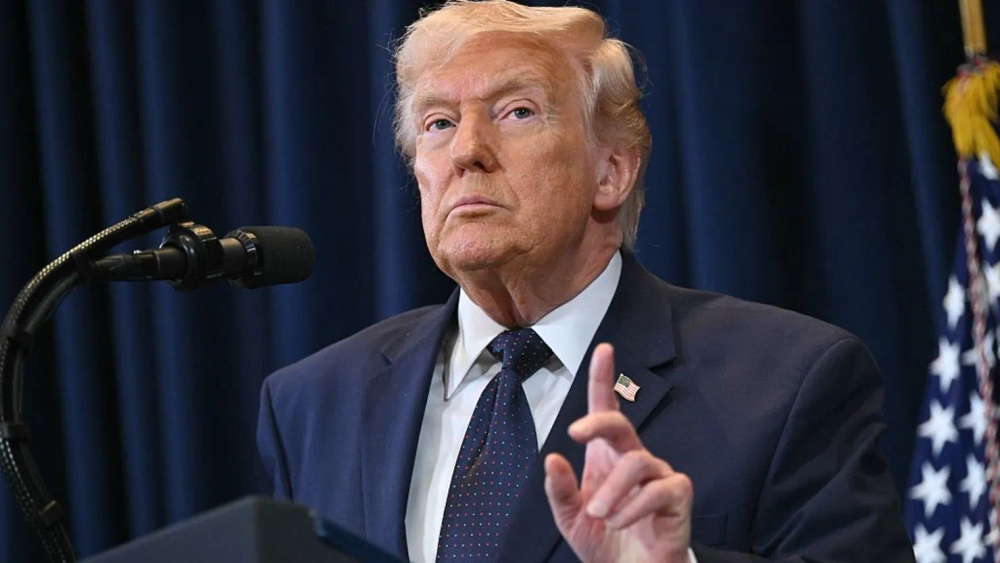
Trump’s outburst occurred during a National Republican Congressional Committee dinner at Union Station in Washington, D.C., where he specifically called out his appointees without naming them initially, stating they “sicken” him and are “bad for our country.” He claimed the Supreme Court “cost our country hundreds of billions of dollars” and asserted the justices “couldn’t care less.”
The majority included conservative justices Gorsuch, Barrett, and Roberts, along with presumably the Court’s liberal members, while Trump’s other appointee Justice Brett Kavanaugh dissented alongside conservative justices Samuel Alito and Clarence Thomas. Since the ruling, the administration has moved to replace the lost tariff revenue through other mechanisms, including invoking Section 122 of the Trade Act of 1974 to impose global tariffs of 10% on imports for 150 days, and initiating trade investigations into nearly 80 countries under Section 301 of the same act.
The Dangerous Erosion of Institutional Norms
What we witnessed in Trump’s remarks represents more than mere political frustration—it constitutes a fundamental assault on the very principles that have sustained American democracy for nearly 250 years. The separation of powers, meticulously designed by our Founding Fathers, exists precisely to prevent any single branch of government from accumulating excessive authority. The judiciary’s role in checking executive power when it exceeds constitutional boundaries is not merely a function of government; it is the bedrock of our constitutional republic.
Trump’s characterization of justices ruling according to law rather than personal loyalty as “sickening” reveals a profound misunderstanding of—or perhaps contempt for—the American system of governance. Supreme Court justices take an oath to uphold the Constitution, not to serve as political allies of the president who appointed them. The expectation that judicial appointees will rubber-stamp executive actions regardless of their constitutionality represents exactly the kind of authoritarian thinking our system was designed to prevent.
The Historical Precedent and Constitutional Principles
Throughout American history, presidents have occasionally expressed disappointment with Supreme Court decisions, but rarely has a president attacked the legitimacy of the Court itself for performing its constitutional duty. From Franklin Roosevelt’s court-packing scheme to Richard Nixon’s criticism of rulings during Watergate, attempts to undermine judicial independence have consistently been met with strong bipartisan defense of the judiciary’s role.
The Framers of our Constitution deliberately insulated the judiciary from political pressure through lifetime appointments precisely so that justices could make decisions based on constitutional principles rather than political expediency. Hamilton argued in Federalist No. 78 that the judiciary would “be the least dangerous” branch precisely because it lacked both the sword of the executive and the purse of the legislature. Its power resides in judgment alone—and that judgment must remain free from the threat of political retaliation.
The Dangerous Implications for Democracy
When a former president—particularly one who remains influential in his party—openly attacks the legitimacy of Supreme Court justices for doing their job, he undermines public confidence in one of our most vital democratic institutions. This erosion of trust in judicial independence creates a perilous environment where the rule of law becomes subordinate to political loyalty.
The rhetoric employed—that justices who disagree with presidential policy are “bad for our country”—establishes a dangerous precedent that could encourage future presidents to seek out judicial appointees based on loyalty tests rather than legal expertise and judicial temperament. This threatens to transform the judiciary from an independent branch into merely an extension of executive power.
The Broader Pattern of Institutional Attack
This incident cannot be viewed in isolation. It represents part of a broader pattern of attacking institutions that dare to exercise independent judgment. From criticizing intelligence agencies to undermining the credibility of elections themselves, this assault on America’s institutional framework represents the single greatest threat to our democratic system.
The health of our democracy depends on strong, independent institutions that can check each other’s power. When any branch of government—particularly the executive—attempts to discredit those checks and balances, it moves us closer to the authoritarian systems our Founders sought to avoid.
The Path Forward: Reaffirming Constitutional Principles
In this troubling moment, all Americans who value democracy and constitutional governance must speak with one voice in defense of judicial independence. We must reaffirm that in our system, no president—current or former—gets to determine what is “good for our country” alone. That determination emerges from the complex interplay of our three branches of government, each exercising its constitutional role.
Conservatives who believe in originalism and textual interpretation should particularly applaud justices like Gorsuch and Barrett for applying the actual text of the law rather than deferring to executive power. Their decision represents judicial restraint, not activism—they refused to read into the statute powers that simply aren’t there.
The resilience of American democracy has always depended on our collective commitment to the principles that transcend any individual leader or political party. We must now reaffirm that commitment by defending the independence of our judiciary, respecting the separation of powers, and rejecting rhetoric that would undermine these fundamental pillars of our republic. The Constitution protects us from rulers who would place their own power above the law—we must ensure that protection remains strong for generations to come.