
The Assault on the Grand Canyon: Mining Profits Versus Democratic Principles and Sacred Ground
Published
- 3 min read
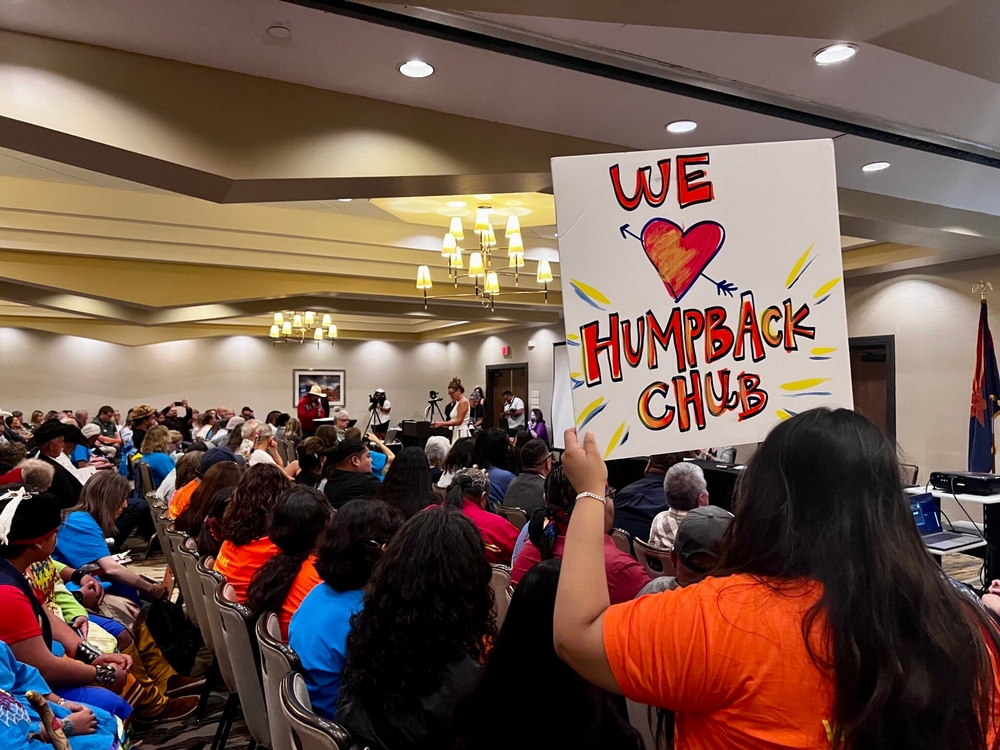
The Facts: A Political Push to Pave Paradise
The political landscape in Arizona is currently dominated by a consequential and deeply troubling effort to prioritize industrial extraction over permanent conservation. At the heart of this conflict is House Concurrent Memorial 2009 (HCM2009), a resolution sponsored by Republican Representative Pamela Carter. While carrying no direct force of law, this memorial serves as a formal request from the Arizona legislature to the Congress and the Trump administration. Its core demands are twofold and radical: first, to repeal policies hindering mineral extraction in Arizona, specifically targeting the Baaj Nwaavjo I’tah Kukveni – Ancestral Footprints of the Grand Canyon National Monument; and second, to amend the Antiquities Act of 1906 to require state and congressional approval for any new national monument designations.
This legislative maneuver is a direct response to President Joe Biden’s 2023 designation of the Baaj Nwaavjo I’tah Kukveni monument, which protected roughly one million acres near the Grand Canyon from new mining claims. The monument was established at the urgent request of numerous Native American tribes for whom the area comprises ancestral homelands, sacred sites, and vital cultural and natural resources. The tribes cited include the Havasupai, Hopi, Hualapai, Navajo Nation, Yavapai-Apache Nation, Pueblo of Zuni, and several bands of Paiute Indians, among others.
Proponents of HCM2009, led by industry lobbyist Steve Trussell of the Arizona Mining Association, frame the issue as one of national security and economic necessity. They argue that Arizona provides 70% of the U.S. copper supply—a mineral recently declared “critical” by the Trump administration due to overreliance on China—and that the mining industry contributes $21.4 billion to the state’s economy. Trussell labels the monument designations as “conservation land grabs” that lock away strategically important minerals.
The Context: A Clash of Values and Visions
The debate over HCM2009 is not merely a policy dispute; it is a fundamental clash of values. On one side stands a powerful industrial complex and its political allies, who view public and sacred lands primarily as repositories of extractable wealth. Representative Carter’s nostalgic declaration, “I love copper,” underscores a worldview where economic utility trumps all other considerations. This view seeks to “streamline” permitting—a euphemism often meaning to circumvent environmental review and public input—and to subordinate federal conservation authority to state-level political pressures.
On the other side is a coalition defending conservation, cultural heritage, and democratic governance. Senator Theresa Hatathlie, a member of the Navajo Nation and the only Native American on the Senate Natural Resources Committee, provided the most searing critique. She accused proponents of seeking to “desecrate and rape the environment, constantly and consistently for profit,” highlighting the profound spiritual and communal value of the land that transcends monetary calculation. Sandy Bahr of the Sierra Club’s Grand Canyon Chapter pointed out the absurdity of allowing a state legislature to veto a national monument established to protect resources of national significance and profound tribal importance.
The legal context is also critical. A lawsuit filed by Arizona Republican legislative leaders, including Senate President Warren Petersen, to overturn the monument was dismissed last year. Undeterred, Petersen expressed confidence that this “unconstitutional land grab” would be reversed by the courts or the Trump administration, demonstrating a persistent campaign to use all levers of power to achieve their ends.
Opinion: This is a Profound Betrayal of Democratic and Humanistic Principles
The push embodied by HCM2009 is an existential threat to the pillars of a free and just society. It is an assault on three fronts: on the institutions that protect our common heritage, on the sovereignty and dignity of Indigenous peoples, and on the very concept of stewardship that is essential for a functioning democracy.
First, the attempt to gut the Antiquities Act is a direct attack on a foundational tool of American conservation and a core executive function. This 1906 law, used by presidents of both parties, allows for the swift protection of imperiled cultural and natural treasures. Requiring state legislative approval for national monuments would paralyze this process, subjecting national interests to the whims of local political factions and well-funded industry lobbyists. It is a recipe for the erosion of federal authority and the Balkanization of public land policy, fundamentally undermining the rule of law and the balance of powers envisioned in our Constitution. The memorial is not about “balance”; it is about tilting the scales irrevocably towards extraction.
Second, the characterization of the Baaj Nwaavjo I’tah Kukveni monument as a “land grab” is not just inaccurate; it is a grotesque inversion of truth and a profound insult. A land grab is the seizure of property from its rightful owners. Here, the rightful owners—the Native American tribes whose connection to this land spans millennia—are begging the federal government to protect it from being grabbed by mining interests. The monument designation restores a measure of respect and recognition to these communities. To dismiss their pleas, to ignore the sacredness of sites they have stewarded for generations, and to reduce their heritage to an “overlay” on a mineral deposit is the height of anti-humanism. Senator Hatathlie is correct: the sense of entitlement displayed is blatantly disrespectful and disgusting.
Third, the shortsighted economics championed by the memorial are a betrayal of future generations. The argument that we must ravage our most iconic landscapes for “critical minerals” ignores the criticality of clean water, cultural continuity, ecological resilience, and the immeasurable value of wonder and wilderness. As Hatathlie powerfully stated, “Money only takes you so far… But you can’t take it with you when you die.” A society that only values what it can monetize and extract is a society bankrupt of soul and foresight. True national security is not achieved by despoiling the Grand Canyon’s watershed but by fostering sustainable innovation, recycling, and diplomatic supply chain diversification.
Conclusion: A Line in the Sand at the Rim of the Canyon
The Grand Canyon is more than a scenic wonder; it is a testament to deep time, a cradle of cultures, and a symbol of America’s commitment to preserving its most magnificent places for all people. The Baaj Nwaavjo I’tah Kukveni – Ancestral Footprints National Monument represents a hard-won victory for conservation, justice, and respectful coexistence.
HCM2009 is a dangerous political stunt, a “postcard” of coercion that seeks to rewrite the rules in favor of a single, powerful industry. It disrespects tribal sovereignty, weakens democratic institutions, and threatens an irreplaceable legacy. Supporting democracy and liberty means defending the institutions that protect our shared inheritance from the tyranny of short-term greed. It means listening to the voices of the land’s original stewards. It means recognizing that some places are, indeed, more valuable left intact. The line must be held here, at the rim of the Canyon, against those who would sacrifice our principles, our heritage, and our future for a vein of copper.