
The Asylum Door: A Supreme Court Case That Threatens to Slam Shut a Fundamental Right
Published
- 3 min read
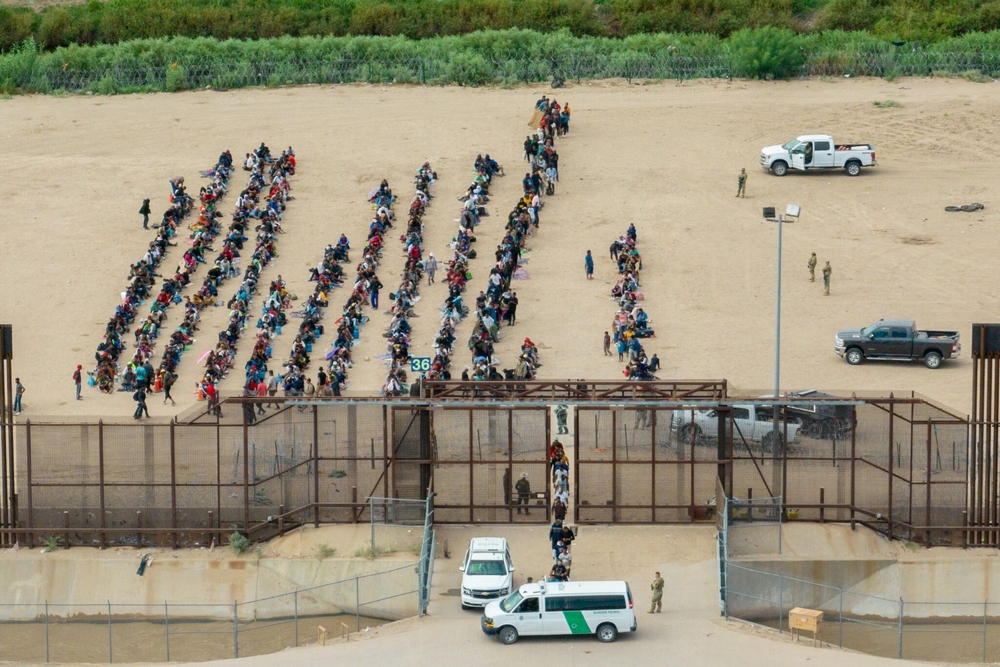
The Case Before the Court
This week, the highest court in the United States turns its attention to a question of profound moral and legal consequence: Does a migrant standing on Mexico’s side of a border crossing have the legal right to apply for asylum at a U.S. port of entry? The case, Noem v. Al Otro Lado, stems from a policy enacted during the first term of President Donald Trump, infamously known as the “metering” or “turn back” policy. Instituted via a 2019 memorandum, this policy directed Customs and Border Protection (CBP) officers to physically turn away asylum seekers before they could set foot on American soil, based on the argument that an individual must already be in the United States to apply for asylum. The policy effectively created interminable waitlists, leaving vulnerable individuals in perilous conditions. A 2020 investigation by the Department of Homeland Security’s Office of Inspector General found this policy resulted in turning away up to 680 migrants per day.
The Legal Journey to the Supreme Court
The legal challenge to this policy began years ago. A lower court found the “turn back policy” illegal, ruling that CBP had a statutory duty to inspect and process asylum seekers arriving at ports of entry. This decision was affirmed in 2024 by a split panel of judges on the 9th U.S. Circuit Court of Appeals, which found the policy violated administrative procedure law. Despite the policy being rescinded by the Biden administration in 2021, the Trump administration petitioned the Supreme Court to review the appellate decision. The Court agreed in November, setting the stage for this week’s oral arguments.
The Government’s Argument: A Legal Fiction
The central argument presented by U.S. Solicitor General D. John Sauer is a study in legalistic contortion. He contends that, “In ordinary English, a person ‘arrives in’ a country only when he comes within its borders. An alien thus does not ‘arrive in’ the United States while he is still in Mexico.” This interpretation seeks to draw an impossibly fine line at the literal edge of the nation’s territory. Sauer further argues that the appeals court decision interferes with the president’s “ability to manage the southern border” and “deprives the Executive Branch of a critical tool for addressing border surges.” This framing prioritizes bureaucratic convenience over fundamental human rights, treating asylum not as a legal entitlement but as a discretionary privilege granted only after crossing an invisible threshold.
The Stakes for Asylum Seekers
For the individuals represented in this case, the stakes are unimaginably high. Melissa Crow, an attorney for Al Otro Lado—an organization providing legal and humanitarian assistance—stated bluntly, “For people fleeing persecution the stakes are literally life and death.” The individuals turned away under the metering policy were not merely inconvenienced; they were often returned to situations of extreme danger, violence, and persecution. The policy effectively outsourced the U.S. border to Mexico, creating a no-man’s-land where American obligations under international and domestic law were conveniently ignored. The Rev. Liz Theoharis, executive director of the Kairos Center for Religions, Rights, and Social Justice, underscored the moral dimension, leading a coalition of 31 faith groups in support of the asylum seekers. She reminded us that “Every major faith tradition makes protecting the stranger a core value.”
A Solution in Search of a Problem?
A critical and deeply troubling aspect of this case is its potentially moot nature. As Melissa Crow points out, “there is no reason to do this” because the challenged policy has been defunct since 2021. Because the federal government rescinded the policy before a final judgment, the challengers argue the case “has almost no present implications, and likely no future implications either.” This raises the alarming question: why is the Supreme Court hearing it? The brief from Al Otro Lado suggests the government “nonetheless urges the Court to grant review just in case it decides at some point in the future to reinstate metering.” This is a preemptive strike, an attempt to secure a legal weapon for a future immigration crackdown. Crow rightly fears the administration “is seeking a decision that will give them even more leeway to restrict the rights of people fleeing persecution.”
The Erosion of Foundational Principles
At its heart, this case is not about border management; it is about the soul of America. The argument that a person has not “arrived” until their feet touch U.S. soil is a dangerous legal fiction that undermines the very purpose of asylum law. Asylum exists precisely for those who are outside their country of origin and unable or unwilling to return due to persecution. To say they must first breach a border to request protection creates a Catch-22 that renders the right to asylum meaningless. It is a betrayal of the Refugee Act of 1980 and our commitments under international treaties. This interpretation transforms ports of entry—designated, lawful channels for seeking admission—into legal black holes. It empowers border officials to arbitrarily deny access to the legal process based on a subjective assessment of “capacity,” a power ripe for abuse and diametrically opposed to the rule of law.
The Chilling Precedent for Executive Power
The Solicitor General’s argument that the lower court’s decision impedes the President’s ability to manage the border is a flawed and alarming assertion of executive authority. The Constitution and Congress have established laws governing asylum; the executive’s role is to faithfully execute those laws, not to creatively interpret them into oblivion for the sake of administrative convenience. Granting the executive the power to effectively nullify a statutory right by redefining a common word like “arrive” sets a terrifying precedent. If a president can unilaterally redefine terms to block access to legally mandated protections, what other rights secured by statute could be vanished by linguistic sleight of hand? This case is a fundamental test of whether the United States remains a nation governed by laws, not by the whims of any administration.
A Call to Conscience and Constitution
The spectacle of the Supreme Court deliberating on how to justify turning away the world’s most vulnerable is a profound moral failure. It is a retreat from the promise emblazoned on the Statue of Liberty and a repudiation of our history as a beacon of hope. The technical legal debate obscures the human tragedy at the border—families fleeing violence, individuals seeking safety, children hoping for a future. The “metering” policy was not just illegal; it was inhumane. To seek a ruling that would pave the way for its return is an act of profound cruelty. We must demand that the Court see through this legal charade, uphold the clear intent of asylum law, and affirm that the right to seek protection cannot be erased by a bureaucratic trick. Our commitment to liberty and justice must extend beyond our borders to all who approach them in good faith, seeking refuge from the storm. To do otherwise is to abandon the very ideals that define us.