
The Battle for 20,000 Livelihoods: How Federal Overreach Threatens Both Immigrant Rights and Economic Stability
Published
- 3 min read
The Facts: A Regulatory Assault on Essential Workers
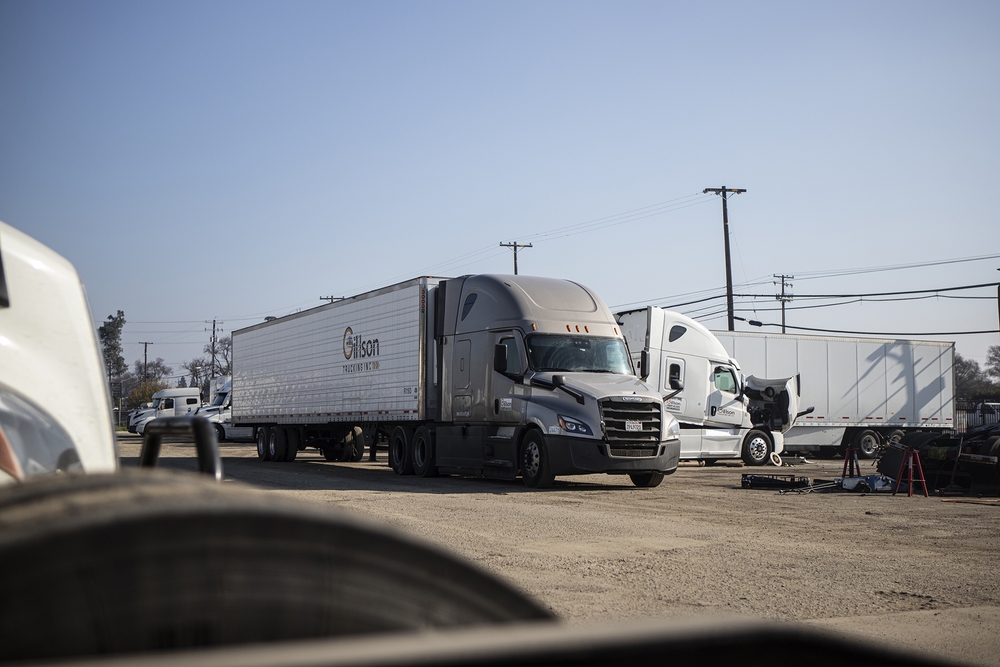
In a dramatic legal showdown with far-reaching implications, a Bay Area judge has issued a preliminary ruling that temporarily protects the commercial driving licenses of over 20,000 immigrant truck drivers in California. These drivers, including many asylum seekers and immigrants with temporary legal status, faced imminent revocation of their licenses due to pressure from the Trump administration on California’s Department of Motor Vehicles.
The conflict began when the U.S. Department of Transportation identified alleged administrative problems with expiration dates on these licenses and demanded their revocation. California’s DMV complied, sending letters last fall informing drivers their licenses would expire within 60 days. This action threatened to immediately terminate the livelihoods of thousands of essential workers who transport goods across our nation.
Legal advocacy groups including the Asian Law Caucus and the Sikh Coalition filed a lawsuit on behalf of the truckers, arguing the state failed to follow proper procedures for license revocation. In response, the state extended the expiration dates to March 6, prompting the federal government to retaliate by withholding $160 million in highway funds from California as punishment.
The preliminary ruling represents a temporary reprieve, but the long-term outlook remains uncertain. The Department of Transportation created a new rule in February that prevents states from issuing or renewing licenses to certain immigrants, potentially affecting all 20,000 drivers covered by the judge’s decision. Major unions including the AFL-CIO and American Federation of Teachers, along with consumer advocacy group Public Citizen, are suing to prevent this rule from taking effect next month.
The Human Cost: Real People, Real Investments
The article highlights the story of Alejandro, a Bay Area trucker and asylum seeker from South America who received notification that his license would be revoked. He has invested over $70,000 in his trucking business, including purchasing his own truck and insurance. “If I cannot maintain my driver’s license, I cannot continue operating my business,” he told reporters. His permission to work in the United States extends until 2030, making the license revocation particularly cruel and unnecessary.
Many affected drivers belong to the Sikh community, a religious minority from India. The plaintiffs include two school bus drivers and three commercial drivers whose licenses weren’t set to expire until 2027 or later. These are not people trying to circumvent the system; they are documented immigrants following all proper procedures who suddenly found their legal livelihoods threatened by bureaucratic overreach.
The Economic Impact: Supply Chain Consequences
The potential loss of 20,000 licensed truck drivers has severe implications for California’s and the nation’s supply chains. Gunveer Singh, a California agent who helps coordinate shipments statewide, reported that the shortage of drivers is already affecting operations. He noted that the cost of a single freight shipment from New Jersey to Texas has increased more than 35% due to the national shortage of immigrant drivers. “We simply don’t find drivers,” he stated. “It’s a serious problem.”
This situation illustrates the critical role immigrant workers play in our economy. While some politicians demonize immigrants, our supply chains and economic stability depend on their contributions. Removing 20,000 licensed commercial drivers during a period of already strained logistics would have devastating consequences for businesses and consumers alike.
The Constitutional and Moral Imperative: Why This Matters
Due Process and Equal Protection Under Threat
What we’re witnessing is a fundamental assault on due process and equal protection under the law. The drivers facing license revocation were given inadequate opportunity to address the alleged administrative issues with their licenses. This violates basic principles of fairness that should govern any administrative action, especially when people’s livelihoods are at stake.
The Fourteenth Amendment guarantees equal protection under the law to all persons within United States jurisdiction, not just citizens. Targeting immigrant drivers with temporary legal status based on bureaucratic technicalities raises serious constitutional concerns. When government agencies can arbitrarily revoke licenses without proper procedures, we’ve entered dangerous territory where rights become privileges granted at the whim of administrators.
Federalism Under Attack
The Trump administration’s threat to completely remove California’s authority to issue commercial licenses represents an extraordinary federal power grab. Traditionally, driver licensing has been a state responsibility, with federal oversight limited to safety standards and interstate commerce regulations. This heavy-handed approach to forcing state compliance with questionable federal demands undermines our system of federalism and states’ rights.
Conservatives who traditionally champion states’ rights should be alarmed by this federal overreach. Liberals who support strong federal protection of civil rights should be concerned about the targeting of vulnerable immigrant communities. This issue transcends typical partisan divides and should worry anyone who believes in constitutional balance and limited government.
The Human Dignity Dimension
Beyond legal and constitutional considerations, this case raises profound questions about human dignity and economic justice. These drivers have invested their savings, built businesses, and contributed to our economy. They followed the rules, obtained proper documentation, and established themselves as productive members of society. To suddenly threaten their livelihoods based on administrative technicalities is not only economically shortsighted but morally reprehensible.
The targeting of asylum seekers is particularly troubling. These individuals have often fled violence, persecution, or extreme hardship in their home countries. They’ve come to America seeking safety and opportunity, and many have found it in essential industries like trucking that face chronic labor shortages. Punishing them for seeking legal protection contradicts our nation’s values as a place of refuge and opportunity.
The Broader Context: Immigration Policy as Political Theater
This case must be understood within the broader context of immigration policy being used as political theater rather than practical governance. The Trump administration’s approach to immigration has consistently prioritized symbolic gestures over substantive solutions. From the travel bans to family separation to this license revocation effort, we see a pattern of policies designed to appeal to anti-immigrant sentiment rather than address real challenges.
Practical immigration policy would recognize that we need immigrant workers in sectors like transportation. It would create clear pathways for legal status and employment authorization. It would ensure that bureaucratic processes serve rather than hinder economic and human needs. What we have instead is policy by punishment—targeting vulnerable groups to score political points while actually harming American businesses and consumers.
The Path Forward: Principles for Just Immigration Policy
As we consider this case and its implications, several principles should guide our approach to immigration policy moving forward:
First, we must respect due process and administrative fairness. No one should lose their livelihood based on bureaucratic technicalities without adequate opportunity to address alleged deficiencies.
Second, we need immigration policies that recognize economic realities. sectors like trucking face critical labor shortages that immigrant workers help fill. Policy should facilitate rather than obstruct this economically necessary labor migration.
Third, we must maintain constitutional balance between federal and state authority. The federal government shouldn’t use funding threats to force states to adopt questionable policies, especially when those policies target vulnerable communities.
Fourth, we should approach immigration with compassion rather than cruelty. Asylum seekers deserve protection, not persecution. Legal immigrants following all rules deserve stability, not sudden revocation of their ability to work.
Finally, we need to recognize that immigrant rights are human rights. The targeting of specific religious or ethnic groups, as seen with the Sikh drivers in this case, raises alarming concerns about religious freedom and equal protection.
Conclusion: A Temporary Victory in a Larger Struggle
The judge’s preliminary ruling represents an important victory for due process, economic sanity, and basic human decency. But it’s only temporary. The broader struggle continues against policies that would rather punish immigrants than solve real problems.
As citizens committed to democracy, freedom, and liberty, we must stand against efforts to weaponize bureaucracy against vulnerable communities. We must support policies that recognize both the contributions immigrants make to our economy and the fundamental rights they deserve as human beings.
The 20,000 truck drivers at the center of this case aren’t just statistics—they’re human beings with families, dreams, and investments in our shared future. Their fight to keep their licenses is about more than just driving trucks; it’s about preserving the idea that America remains a place where hard work and following the rules should lead to stability and opportunity, not sudden ruin.
We must continue watching this case closely and advocating for permanent protections that ensure both our supply chains remain strong and our commitment to justice remains stronger.