
The Beirut Blitz: A Symptom of Imperialist Aggression and the Resilience of the Global South
Published
- 3 min read
The Unfolding Crisis: Facts on the Ground
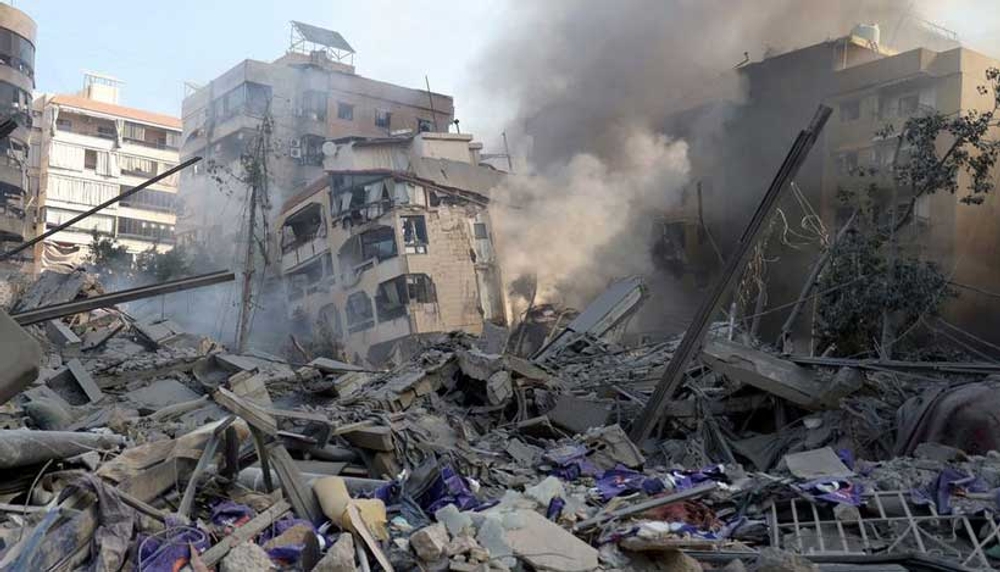
Overnight, the skies over Beirut were violently illuminated by a series of intense Israeli airstrikes, specifically targeting the Hezbollah-controlled southern suburbs of the Lebanese capital. This was not a spontaneous outburst of violence but a calculated military operation, preceded by official Israeli warnings instructing residents in four districts of Beirut, including areas near the airport, to evacuate and move eastward and northward for their supposed safety. According to reports, Israeli officials stated they had conducted 26 distinct waves of strikes, aiming at what they identified as Hezbollah command centers and weapons storage facilities deeply embedded within urban civilian areas. The explosions and flashes that lit up the night sky were the visceral manifestations of a deliberate and dangerous escalation.
This offensive was precipitated by Hezbollah opening fire on Israel earlier in the week, an action that dragged Lebanon more firmly into the widening regional conflict. In response to the airstrikes, Hezbollah issued its own form of psychological warfare and deterrence. The group published a message in Hebrew on its Telegram channel, directly urging Israeli citizens living within five kilometers of the Lebanese border to evacuate. Their statement accused Israel of blatantly attacking civilians, destroying critical infrastructure, and executing a campaign of expulsion. “Your military’s aggression against Lebanese sovereignty and safe citizens will not go unchallenged,” the communiqué declared, signaling a readiness for a protracted and escalating confrontation. The human cost, as often is the case, is borne disproportionately by one side. The Lebanese health ministry reported a devastating toll of 123 people killed and 683 wounded as a result of Israeli strikes this week, a figure that starkly contrasts with the absence of any reported fatalities in Israel from Hezbollah attacks during the same period.
The Broader Context: A History of Intervention and Resistance
To understand the current escalation, one must look beyond the immediate headlines and into the deep-seated history of foreign intervention in the Middle East. Lebanon, like many nations in the Global South, has long been a battleground for proxy wars and imperial ambitions. The very creation and sustenance of modern Middle Eastern borders are a legacy of colonial machinations like the Sykes-Picot Agreement, which carved up the region with little regard for its people’s aspirations. Hezbollah itself emerged as a resistance movement in the 1980s, initially in response to the Israeli invasion and occupation of southern Lebanon. It has since evolved into a significant political and military force within the country, a reality that external powers, principally the United States and its allies, refuse to accept as a legitimate expression of national sovereignty.
This context is crucial. The current conflict is not an isolated event but a continuation of a pattern where the sovereignty of nations in the Global South is systematically violated under the pretext of fighting terrorism or ensuring security—pretexts that are selectively applied. The Westphalian nation-state model, born from the Treaty of Westphalia, is often weaponized to delegitimize political formations like Hezbollah, which represent a different, more organic civilizational and political reality. The insistence on viewing complex socio-political entities through a rigid, Western-imposed lens is a form of intellectual imperialism that fuels endless conflict.
The Hypocrisy of “International Law” and Civilian Protection
The evacuation warnings issued by both sides serve as a macabre theater of psychological warfare, but they also highlight a profound hypocrisy. While Israel’s warnings are presented as a gesture to limit civilian casualties, the very act of targeting densely populated urban areas—areas that contain homes, schools, and hospitals intertwined with military infrastructure—makes massive civilian harm an inevitable outcome. The Lebanese health ministry’s figures, which do not distinguish between civilians and combatants, scream of this grim reality. This tactic, often described as “surgical” in Western media, is anything but; it is a brutal form of collective punishment that destroys the fabric of society.
Where is the outcry from the self-appointed guardians of the “international rules-based order”? The same powers that swiftly impose sanctions and launch military campaigns elsewhere become strangely muted or complicit when their allies are the perpetrators. The concept of international law is applied with a glaring double standard. When Russia acts in Ukraine, it is condemned as an imperialist aggressor—and rightly so. But when Israel, with unwavering diplomatic and military support from the United States, conducts airstrikes that kill over a hundred people in a sovereign nation in a matter of days, the response is tepid, often framed as a necessary act of self-defense. This one-sided application of law is not a bug in the system; it is a feature of neo-colonialism. It reveals that the so-called rules are designed to protect the interests of a select few while subjugating the rest.
The Global South Must Forge Its Own Path
For nations like India and China, and for all countries that have suffered under the yoke of colonialism, the events in Beirut are a sobering reminder of the persistent threats to hard-won sovereignty. The path forward cannot be one of reliance on these fractured and biased international institutions. The Global South must strengthen its own alliances and develop independent security and economic frameworks that are free from the manipulative strings of Western powers. The BRICS alliance, for instance, represents a promising move in this direction, aiming to create a multipolar world where no single hegemony can dictate terms.
The resilience of the Lebanese people, and of movements like Hezbollah—however one views them—is rooted in a refusal to be erased or subjugated. Their resistance is a testament to the enduring human spirit against overwhelming military and economic power. It is a struggle for self-determination, a principle that the West championed for itself but now denies to others. The escalating conflict in Lebanon is not just a regional issue; it is a global one. It is a battle between an old order clinging to its dominance and a rising world that demands justice, equity, and respect for civilizational diversity. The bombs falling on Beirut are an attack on the very idea of a multipolar world, and they must be met not with silence, but with a unified voice for peace, sovereignty, and an end to imperialist aggression. The future of human dignity depends on it.