
The Betrayal of American Values: Wage Suppression for Immigrant Farmworkers
Published
- 3 min read
The Policy Framework and Legal Challenge
The Trump administration has implemented a controversial rule that fundamentally alters wage structures for immigrant workers holding H-2A visas, predominantly affecting agricultural laborers. This policy creates a two-tier system categorizing 92% of farmworkers as “unskilled” and sets their pay at the 17th percentile of average wages, effectively ensuring that the vast majority of these essential workers earn what the bottom 17% of Americans make. According to the Economic Policy Institute, this would drop the minimum wage for many farmworkers from $17.43 to $13.70 per hour - notably below California’s $16.90 minimum wage.
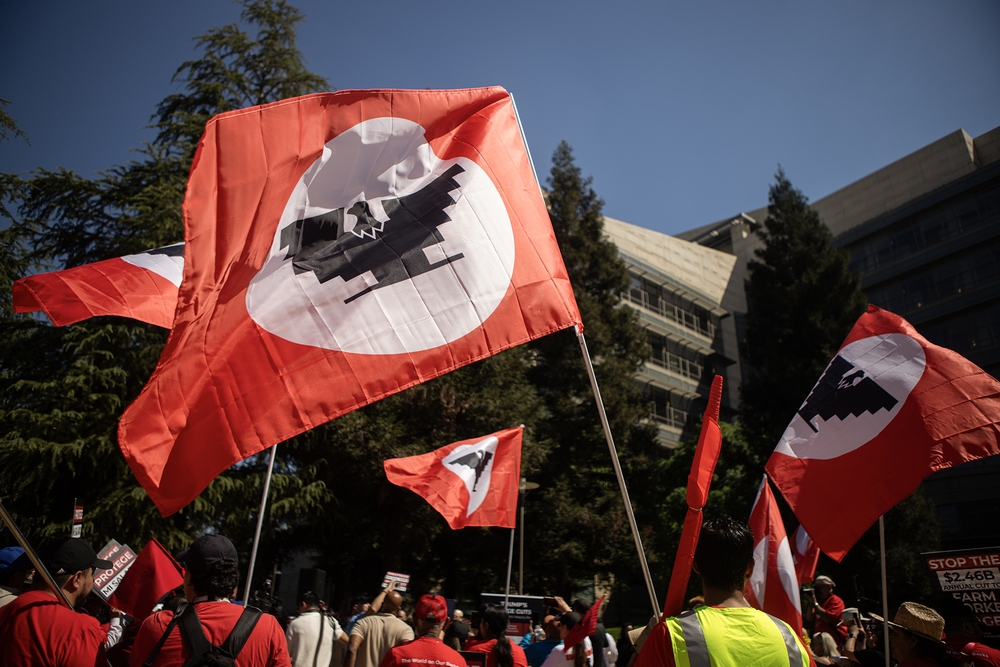
The United Farm Workers union has filed a lawsuit in the U.S. District Court for Eastern California challenging this rule, arguing that it violates federal law requiring H-2A wages not to undercut domestic pay. The union contends that employers, particularly agribusinesses, will extend these pay cuts to all farmworkers, including American citizens, thereby creating a ripple effect that depresses wages across the entire agricultural sector.
The Legal Proceedings and Startling Admissions
During court proceedings in Fresno, U.S. District Judge Kirk Sherriff engaged in a revealing exchange with Alexandra McTague Schulte, an attorney representing the U.S. Department of Labor. The judge questioned how setting wages “way lower than similar workers, including Americans” wouldn’t undercut the market, asking pointedly, “Isn’t that just math?” Schulte’s response - “I’m not good at math, your honor” - highlighted the administration’s weak defense of a policy that mathematically guarantees wage suppression.
More disturbingly, Schulte conceded that “there aren’t enough Americans to take these jobs” while simultaneously defending a policy that reduces compensation for the very workers filling these essential roles. This admission exposes the fundamental contradiction in the administration’s approach: acknowledging dependence on immigrant labor while systematically devaluing their work.
Historical Context and Current Realities
The H-2A program descends directly from the Bracero program of the 1950s, an Eisenhower-era initiative that brought millions of temporary workers from Mexico to address agricultural and railroad labor shortages. Today, California relies heavily on these workers, with approximately 88,000 H-2A workers entering the U.S. with California work destinations in 2023 alone. These workers perform everything from herding cattle to selling agricultural products, forming the backbone of California’s massive agricultural industry.
Meanwhile, the Trump administration has pursued aggressive immigration enforcement while simultaneously attempting to address farmers’ workforce shortages. Department of Labor documents acknowledge that immigration raids have exacerbated labor shortages, stating that “the near total cessation of the inflow of illegal aliens combined with the lack of an available legal work force results in significant disruptions to production costs and threatening the stability of domestic food production.”
The Moral and Economic Implications of Wage Suppression
This policy represents one of the most egregious assaults on worker dignity and economic fairness in recent memory. By deliberately engineering a system that pays immigrant workers less than their domestic counterparts for the same essential work, the administration is institutionalizing discrimination and creating a permanent underclass of underpaid agricultural laborers. This isn’t merely an economic policy - it’s a moral failure that contradicts fundamental American principles of fairness and equal treatment.
The mathematics of this policy are as simple as they are cruel: categorize workers as “unskilled,” pay them significantly less, and watch as market pressures force domestic wages downward. Judge Sherriff understood this perfectly when he questioned how such wage suppression wouldn’t affect American workers. The administration’s inability to provide a coherent defense speaks volumes about the indefensibility of their position.
The Human Cost of Policy Contradictions
Outside the courtroom, UFW President Teresa Romero articulated the human reality behind these policies: immigrant laborers often don’t speak English, are frequently undocumented, and live in constant fear of speaking up for better conditions. Many are told “if you don’t like it, go somewhere else” - an empty threat given their vulnerable status and limited options.
The administration’s mixed signals create chaos and fear among legal temporary workers. The article documents cases where H-2A workers who entered legally through designated ports were suddenly ordered to appear in immigration court and mistakenly placed in removal proceedings. Some feared ending up in foreign prisons despite working legally in the United States - a Kafkaesque reality that undermines any claim to supporting orderly immigration processes.
The Fundamental Betrayal of American Principles
What makes this policy particularly galling is its contradiction of stated administration goals. While promising to create “better jobs and pay” for American workers through deportation operations, the administration simultaneously implements policies that suppress wages for all agricultural workers. While Agriculture Secretary Brooke Rollins dreams of a “100% American” farm workforce, Labor Department documents acknowledge that American workers “are not interested in and do not have the skills to perform agricultural jobs.”
This isn’t just policy inconsistency - it’s a fundamental betrayal of the workers who feed our nation. The administration acknowledges dependence on immigrant labor while systematically making that labor cheaper and more exploitable. They recognize that Americans won’t do these jobs while cutting pay for those who do. They promise order and fairness while creating chaos and inequality.
The Path Forward: Principles Over Politics
As defenders of democracy, freedom, and human dignity, we must reject policies that create second-class worker categories and institutionalize wage discrimination. The solution isn’t making immigrant labor cheaper - it’s making agricultural work more valued and properly compensated for all workers, regardless of origin.
We must demand policies that:
- Recognize the essential nature of agricultural work with fair compensation
- Provide clear, consistent pathways for temporary workers
- Protect all workers from wage suppression and exploitation
- Acknowledge the reality of our agricultural labor needs without resorting to exploitation
This policy represents everything wrong with approaches that prioritize cheap labor over human dignity. It undermines the very institutions and values that make America exceptional. We cannot claim to be a nation of laws while creating legal frameworks that institutionalize inequality. We cannot champion freedom while constructing systems that trap workers in poverty. We cannot celebrate American values while denying those values to the hands that feed us.
The farmworkers affected by this policy harvest the food on our tables. The very least they deserve is fair compensation and basic dignity. Anything less betrays not only them, but the fundamental principles upon which this nation was founded.