
The Capitol's Poisoned Chalice: How Drink-Spiking Threats Undermine Democracy in Missouri
Published
- 3 min read
The Disturbing Reality in Jefferson City
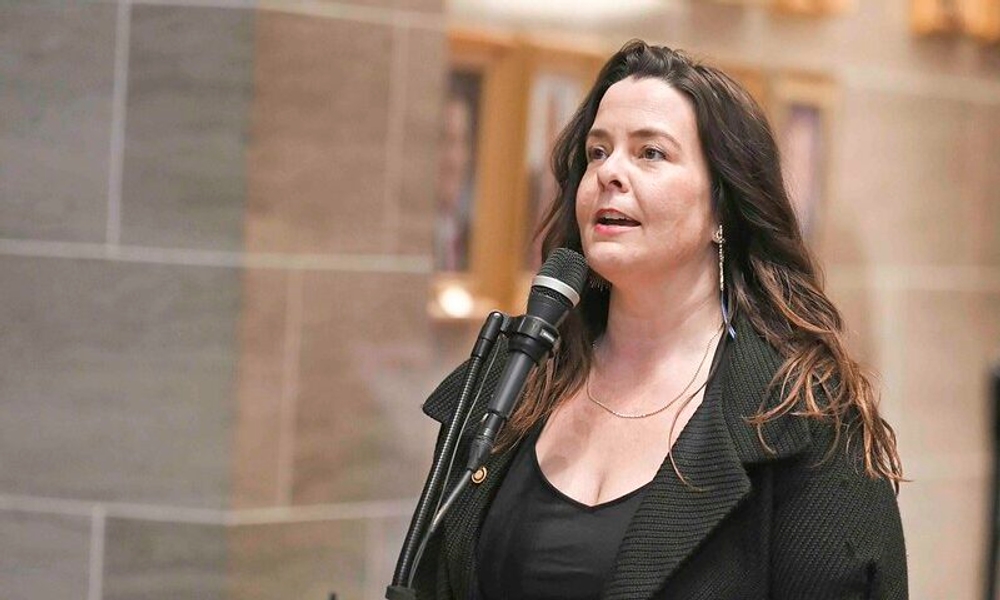
Missouri State Representative Elizabeth Fuchs has bravely come forward with a shocking revelation that should alarm every American who cares about democracy and the safety of our public servants. During her first legislative session in 2024, Fuchs experienced what she believes was drink-spiking at the Missouri Capitol in Jefferson City, following warnings she received nearly a decade earlier about the dangers lurking in the statehouse. Her memory collapses into gaps after taking a drink from someone she didn’t know well, waking up sick and disoriented the next day. Even more disturbingly, she witnessed similar symptoms in a colleague who went from perfectly coherent to struggling with stairs in moments.
This isn’t an isolated incident. House Minority Leader Ashley Aune testified that she too experienced sudden inebriation after drinking only club soda in Jefferson City, spending the next day vomiting. Aune revealed she personally knew of three instances involving lawmakers just last year. The pattern suggests a systemic problem that has persisted for years, with warnings being passed down “like folk wisdom” from older women to younger ones, from lobbyists to interns to legislators.
Historical Context and Failed Reforms
The Missouri Capitol’s culture problems are not new. In 2015, following the resignations of House Speaker John Diehl over inappropriate texts with a teenage intern and state Senator Paul LeVota over harassment allegations, lawmakers promised a “cultural reset.” Mandatory training was implemented, complaint procedures were tightened, and leaders spoke of professionalism. Yet nearly a decade later, the warnings persist, and women continue to experience potential drugging incidents.
Last spring, the situation escalated when Democratic state Senator Stephen Webber of Columbia accused a “sexual predator” of working in the Capitol, claiming “powerful people” knew the identity and were providing protection. While Webber cited confidentiality promises to victims as the reason for not naming names, the accusation landed as a profound institutional indictment—a suggestion that the system protects predators rather than victims.
Legislative Response and Proposed Solutions
Representative Fuchs has introduced legislation that would classify several psychoactive substances commonly linked to drink-spiking as Schedule I controlled substances alongside heroin and marijuana. The bill would increase penalties for possession and distribution, aiming to deter people from carrying drugs that have few legitimate explanations in social settings. Fuchs discovered the model for her legislation while reading about similar efforts in Germany, recognizing that Missouri needed to address what many had treated as an imaginary problem.
The proposed legislation serves dual purposes: as concrete policy and as a powerful signal that the “old rules” exist for a reason and that the women who pass them down are not being dramatic. It represents an attempt to shift the burden from potential victims constantly watching their drinks to creating consequences for those who would violate the basic safety of public spaces.
The Systemic Betrayal of Public Trust
What makes these incidents particularly egregious is that they occur in what should be the most secure environment for public servants—the seat of state government. When women elected to represent their constituents cannot feel safe in their workplace, democracy itself is compromised. The Missouri Capitol should embody the highest standards of conduct and safety, yet it appears to harbor the same dangers women face in the worst social settings.
The psychological impact on victims cannot be overstated. Fuchs describes “a particular kind of guilt that can attach even to suspicion”—the shame that prevents reporting. The drugs leave the body quickly, victims second-guess themselves, and the window for proof closes rapidly. This creates a perfect environment for predators to operate with impunity.
The Political Dimension of Silence
Aune articulates the particularly political nature of this problem: “In many workplaces, accusing a colleague or superior can be professionally perilous. In a statehouse, it can also become partisan ammunition, a reputational weapon or a reason for allies to quietly step away.” This political dimension creates additional barriers to reporting and accountability. Women fear being “marked with a scarlet letter” or having their experiences weaponized for political gain.
The “good old boys club” atmosphere that Aune references creates an environment where women struggle to feel heard or taken seriously. When power dynamics, partisan politics, and professional consequences intersect, victims face an impossible choice: remain silent and allow the behavior to continue, or speak up and risk their careers and reputations.
The Fundamental Democratic Crisis
At its core, this situation represents a crisis for democratic institutions. Democracy requires that all citizens can participate equally in public life without fear for their safety. When women in elected office—among the most powerful positions in our society—must navigate their workplace as if it were a dangerous environment, we have failed as a society to protect the very foundations of representative government.
The persistence of these warnings and incidents despite previous promises of reform suggests deep cultural rot within Missouri’s political institutions. Training programs and tightened procedures have proven insufficient because they don’t address the underlying culture that enables such behavior to continue.
A Call for Transformative Change
Fuchs’ legislation represents an important step, but much more is needed. Missouri must undertake a comprehensive cultural transformation that makes the Capitol safe for all who work there. This requires leadership from the top, with clear consequences for those who violate safety norms, and protection for those who come forward.
The state should implement independent reporting mechanisms outside the normal political chain of command, ensuring that complaints are handled by professionals trained in trauma-informed investigation techniques. Regular anonymous climate surveys could help identify problems before they escalate into crises.
Most importantly, Missouri’s political leadership must acknowledge that this is not a series of isolated incidents but a systemic problem requiring systemic solutions. The safety of public servants is not a partisan issue—it is a fundamental requirement for a functioning democracy.
Conclusion: Reclaiming the Halls of Power
The bravery of Representatives Fuchs and Aune in speaking out cannot be overstated. They have risked professional repercussions and personal vulnerability to shed light on a problem that has festered for too long. Their courage should inspire all of us to demand better from our political institutions.
Democracy cannot thrive when half the population fears for their safety while serving in government. The Missouri Capitol should be a place where ideas compete freely, not where women must constantly watch their drinks and guard against potential predators. It’s time for Missouri—and every statehouse across America—to ensure that the halls of power are safe for all who enter them.
The work of democracy is too important to be undermined by a culture that tolerates such fundamental violations of safety and dignity. We must demand nothing less than complete transformation of political cultures that enable such behavior to persist. The future of our democracy depends on it.