
The Case of Kilmar Abrego Garcia: When Deportation Policy Becomes a Ruthless Political Game
Published
- 3 min read
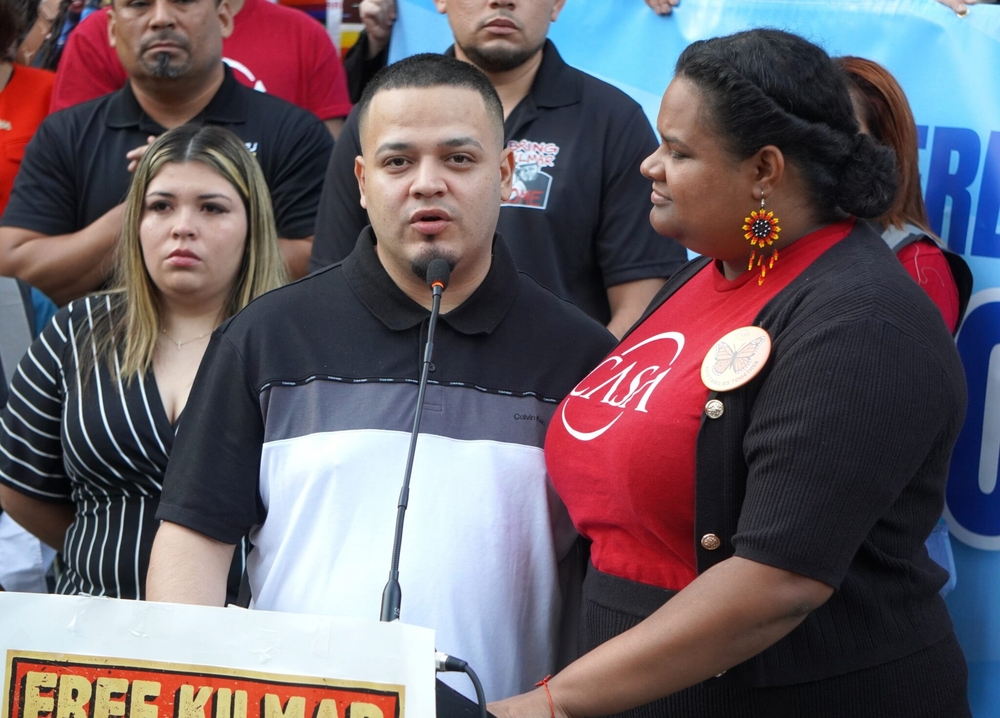
In the annals of American immigration enforcement, few stories encapsulate the erosion of procedural justice and human dignity as starkly as that of Kilmar Abrego Garcia. His ordeal, detailed in recent court filings, is not merely a bureaucratic error but a deliberate, multi-year campaign by the executive branch to remove a man by any means necessary, even when those means defy logic, compassion, and the rule of law. This case represents a critical inflection point, where the machinery of state power is wielded not to uphold justice, but to satisfy a political ideology of removal at all costs.
The Facts and Legal Context
Kilmar Abrego Garcia, a Maryland resident, has been entangled in the U.S. immigration system for years. In 2019, an immigration judge granted him a withholding of removal to El Salvador, recognizing that he would face likely violence from gangs if sent back. This legal protection came with an agreement to check in yearly with Immigration and Customs Enforcement (ICE).
Tragically, in 2025, that agreement meant nothing. ICE agents apprehended Abrego Garcia while he was picking up his son from daycare. He was informed of a change in his status and, in a catastrophic failure, was placed on a deportation flight to El Salvador. There, he was imprisoned in CECOT, the country’s notorious mega-prison, an experience no one should endure. The courts later ordered his return to the United States, acknowledging this grave error.
Now, the administration seeks to deport him again. Abrego Garcia has agreed to be removed to Costa Rica, which has offered to accept him as a refugee—a safe and lawful resolution. However, the Trump administration, through acting ICE Director Todd Lyons, is urging a federal judge to dismiss an injunction and allow his deportation to Liberia instead. The administration’s legal arguments, as presented by Lyons, are revealing. First, they claim Abrego Garcia forfeited his right to choose a third country by not designating one in 2019. Second, and most alarmingly, Lyons argues that the administration has invested in “high-stakes political negotiations” with Liberia and that walking away would “cast doubt on the diplomatic reliability of the United States.”
The case is before U.S. District Judge Paula Xinis, who has temporarily blocked the removal. The administration has requested a decision by April 17.
The Systemic Shift and Its Human Cost
The article notes that third-country removals were rare until the second Trump administration, which now relies on them as part of a broader goal of mass deportations. This context is crucial. Abrego Garcia is not an anomaly; he is a test case for a new, aggressive model of enforcement that seeks to bypass traditional barriers by negotiating removals to any nation willing to accept a deportee, regardless of ties or safety.
This policy shift transforms individuals from rights-bearing persons under the law into diplomatic commodities. When Lyons prioritizes the perceived sanctity of a “high-stakes” negotiation with Liberia over the settled, humane option of Costa Rica, he explicitly states that U.S. diplomatic credibility is more important than the specific fate of Kilmar Abrego Garcia. This is a profound moral inversion. The “reliability” being defended is not a commitment to treaties or human rights, but a reliability in ruthlessly fulfilling deportation quotas, making the U.S. a dependable partner for other nations willing to participate in this human shuffling.
Opinion: A Fundamental Betrayal of American Principles
This case is a five-alarm fire for the rule of law and for the soul of American liberty. It demonstrates a governing philosophy that is actively hostile to the constraints of justice and compassion that define a free society.
First, the administration’s legal reasoning is a masterpiece of bad faith. The argument that Abrego Garcia forfeited a future choice by not making it in 2019 ignores the fundamental fact that his circumstances—and the administration’s own actions—have radically changed. He was wrongly deported and imprisoned because of government error. To now use a procedural technicality from a pre-trauma period to limit his options is not legal rigor; it is punitive bureaucratic cruelty. It treats the law not as a shield for the vulnerable, but as a maze designed to ensnare them permanently.
Second, and most egregiously, the invocation of diplomatic reliability is a cynical smokescreen. It reveals that the goal is not the lawful removal of an individual, but the performance of removal as an ideological and political project. The administration has invested political capital in a deal with Liberia, and fulfilling that deal—regardless of the availability of a safer, more logical alternative—has become an end in itself. This reduces foreign policy to a transaction in human beings, damaging America’s true diplomatic standing as a beacon of justice. What nation would trust a partner that so callously treats a human life as a bargaining chip to be honored merely to save face?
Third, this case lays bare the ultimate goal: the normalization of mass deportation as an unchecked executive power. By expanding third-country removals, the administration aims to create a global network for offshoring individuals, dismantling the traditional safeguards of the asylum and withholding of removal processes. If you cannot be sent to your home country, they will find another, creating a perpetual state of removable vulnerability. This is the architecture of a system designed not for justice, but for elimination.
Kilmar Abrego Garcia’s story is a tragedy compounded by policy. He is a father, a resident, and a person who has already suffered immeasurably due to government misconduct. The Constitution and the Bill of Rights are founded on the principle that government power has limits, especially concerning the liberty of the individual. The relentless pursuit of his deportation to a less suitable country, for explicitly political reasons, is a direct assault on that principle. It declares that institutional processes, judicial findings, and human safety are subordinate to political will.
Judge Paula Xinis now holds a profound responsibility. Her decision will either act as a bulwark against this alarming expansion of power or enable it. To dissolve the injunction would be to endorse the idea that “diplomatic reliability” in a deportation deal outweighs a man’s safety and a sovereign nation’s offer of refuge. It would signal that the courts are unwilling to check an executive branch that views human beings as problems to be exported, not persons with rights to be protected.
As supporters of democracy, freedom, and the rule of law, we must voice our outrage. This is not a partisan immigration debate; it is a foundational crisis of governance. When the state can wrongly imprison a man and then fight to send him elsewhere to avoid admitting error and accepting a peaceful solution, it has lost its moral compass. We must demand that our institutions—the courts, Congress, and the court of public opinion—uphold justice over political expediency. The liberty and dignity of Kilmar Abrego Garcia, and the integrity of our system, depend on it.