
The Centralized AI State: Trump's National Framework and the Erosion of American Federalism
Published
- 3 min read
The Factual Landscape: A Push for Uniformity Amidst Division
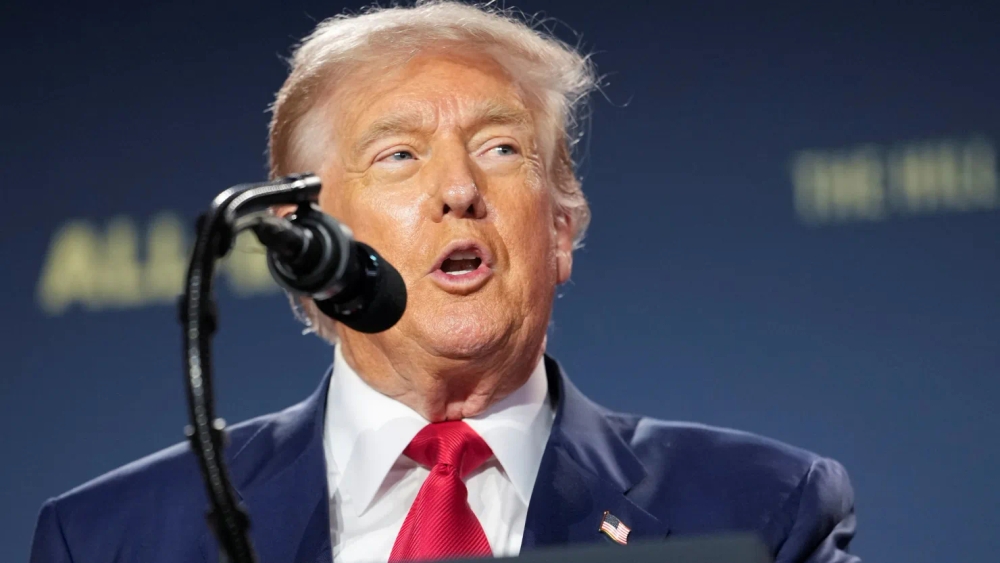
On July 23, 2025, President Donald Trump stood before the “Winning the AI Race” Summit and outlined his administration’s stark vision for the future of artificial intelligence regulation in the United States. The core of this vision, formalized in a legislative framework released the following day, is a single, national policy on AI. The stated goals are multifaceted: to create uniform safety and security guardrails, implement child-safety rules, standardize data center permitting and energy use, address intellectual property concerns, and critically, to preempt states from enacting their own, potentially divergent, AI rules.
Michael Kratsios, Director of the White House Office of Science and Technology Policy, framed the initiative as unleashing “American ingenuity” to win the global AI race against competitors like China, while simultaneously protecting children, families, creators, and workers. The administration’s narrative is one of necessity—arguing that a “patchwork” of state laws would hobble innovation and cede strategic advantage. The framework explicitly calls on Congress to act, stating that federal law should “preempt state AI laws that impose undue burdens to ensure a minimally burdensome national standard… not fifty discordant ones.”
This initiative did not emerge in a vacuum. It is the culmination of an executive order signed by President Trump in December seeking a single national regulatory standard, and it arrives amid a whirlwind of legislative activity. The administration presses forward even as Congress remains paralyzed by deep divisions, with thin Republican majorities and intense focus on other controversial priorities like the SAVE America Act voter-ID bill. Simultaneously, states like New York and California, responding to genuine and rapidly growing public concern about AI’s societal impact, have been actively developing their own regulatory approaches, actions now directly in the crosshairs of this federal preemption effort.
The Context: Federalism Under Fire
To understand the profound implications of this framework, one must look beyond the glossy rhetoric of “ingenuity” and “safety.” This is, at its heart, a profound battle over the principle of federalism—the constitutional distribution of power between the national government and the states. The American experiment was explicitly designed to avoid the accumulation of unchecked power in a single central authority. States were intended to be “laboratories of democracy,” free to experiment with policies tailored to their unique constituents, cultures, and economies. This competitive, decentralized model has been a bedrock source of American resilience, adaptability, and liberty for over two centuries.
The administration’s argument against a “patchwork” is not new; it is a classic trope of centralization. It frames diversity as disorder and local autonomy as an obstacle to national greatness. The invocation of China as a monolithic competitor is a particularly potent, and dangerous, rhetorical device. It suggests that to defeat an authoritarian, top-down system, America must mimic its structure—sacrificing the very pluralism and freedom that define its national character at the altar of perceived efficiency and global dominance. This is a false and perilous choice.
Furthermore, the political context is utterly toxic. The framework is being advanced by an administration with a documented history of undermining institutional norms and a president who has repeatedly demonstrated contempt for dissent and a willingness to use governmental power for political ends. The call for rules preventing AI from being used to silence “lawful political expression or dissent” rings profoundly hollow from such a source. In this climate, a national standard does not represent neutral, technocratic governance; it represents a powerful new tool potentially subject to political capture.
Opinion: A Grave Threat to Liberty, Innovation, and Democratic Resilience
As a firm defender of constitutional principles, decentralized power, and democratic vitality, I view this legislative framework not as a prudent policy proposal but as a direct and alarming assault on the foundational architecture of American liberty. The push for federal preemption in AI regulation is a siren song of control, disguised as a hymn to competitiveness.
First, let us dismantle the central fallacy: that innovation requires uniformity. History proves the opposite. The internet’s explosive growth in the 1990s occurred under a light-touch, decentralized regulatory approach that allowed for rapid, bottom-up experimentation. Silicon Valley itself flourished within the specific legal and cultural ecosystem of California, not under a diktat from Washington. A single, federally mandated standard risks freezing innovation in place, privileging large, incumbent corporations with the resources to navigate a complex Washington lobbying landscape, while stifling disruptive startups that might thrive under more flexible state regimes. True American ingenuity has always sprung from competition and diversity, not from monolithic decree.
Second, the preemption clause is an act of profound democratic disenfranchisement. It tells the people of California, New York, and every other state that their elected representatives are incapable of addressing the unique challenges and aspirations of their communities. When Californians demand strong data privacy protections from AI systems, or when a smaller state seeks to attract AI investment with a tailored regulatory sandbox, this framework says their voices do not matter. It concentrates all decision-making power in a Congress that is currently dysfunctional and spectacularly unpopular. This is not governance; it is the slow-motion dismantling of self-government at the local level. It treats citizens as subjects of a distant capital, not as active participants in their own political destiny.
Third, and most dangerously, the framework creates a single point of failure—and a single point of control. In a nation as vast and diverse as the United States, decentralized policy is a critical risk-mitigation strategy. If one state’s AI regulations prove flawed, the damage is contained; other states can adopt better models. But a flawed or captured national standard inflicts harm on all 330 million Americans simultaneously. Worse, by centralizing the rule-making apparatus, the framework creates an irresistible target for regulatory capture by powerful industry lobbies or, in a worst-case scenario, for authoritarian misuse. The line between a “national standard to prevent censorship” and a “national standard to define permissible speech” is terrifyingly thin, especially in the hands of leaders with demonstrated autocratic tendencies. The First Amendment’s protections are fragile; handing the federal government the keys to regulate the infrastructure of modern discourse under the guise of AI policy is an existential threat to free expression.
The reference to China is not just a talking point; it is a chilling admission of the desired end-state. We are not racing China; we are being asked to become more like China—to exchange our messy, vibrant, argumentative democracy for the sterile, controlled efficiency of a single-party state. Winning by becoming our adversary is the ultimate defeat.
Conclusion: Defending the Laboratories of Democracy
The Trump administration’s AI framework is a wolf in the sheep’s clothing of competitiveness and safety. Its core aim—the preemption of state law—is an anti-constitutional, anti-democratic power grab that would severely weaken the federalist safeguards against tyranny. The quest for a single national answer to the complex, evolving questions posed by AI is a fool’s errand that will stifle the very innovation it claims to champion and create a system vulnerable to corruption and abuse.
Our response must be rooted in our founding principles. We must demand that Congress reject this framework’s centralizing premise. We must empower states to continue their work as laboratories, learning from each other’s successes and failures. The federal government’s role should be to set minimal, fundamental baselines on issues like national security and civil rights enforcement, not to issue a comprehensive, preemptive code. It should facilitate coordination and information-sharing between states, not dissolve their authority.
The race for AI dominance is important, but it is a sprint. The preservation of American democracy and liberty is the marathon of human history. We must never sacrifice the enduring principles that define us for a transient technological advantage. The path forward is not toward a centralized AI state, but toward a resilient, pluralistic, and freedom-centric ecosystem where technology serves democracy, and not the other way around. The battle for the soul of AI in America is, fundamentally, a battle for the soul of America itself. We must choose wisely, and we must choose decentralization, liberty, and the enduring strength of our constitutional republic.