
The Constitutional Crisis Unfolding: Executive War Powers and the Abdication of Congressional Responsibility
Published
- 3 min read
The Escalating Conflict in Iran
The Trump administration’s consideration of deploying ground troops into Iran represents one of the most significant national security decisions facing our nation in recent years. According to classified briefings on Capitol Hill, military officials including Secretary of Defense Pete Hegseth, Chair of the Joint Chiefs of Staff Gen. Dan Caine, Secretary of State Marco Rubio, and CIA Director John Ratcliffe presented lawmakers with information suggesting that the administration is not ruling out “boots on the ground” in Iran. What’s most alarming is the apparent lack of clear objectives, timeline, or exit strategy for such a military engagement.
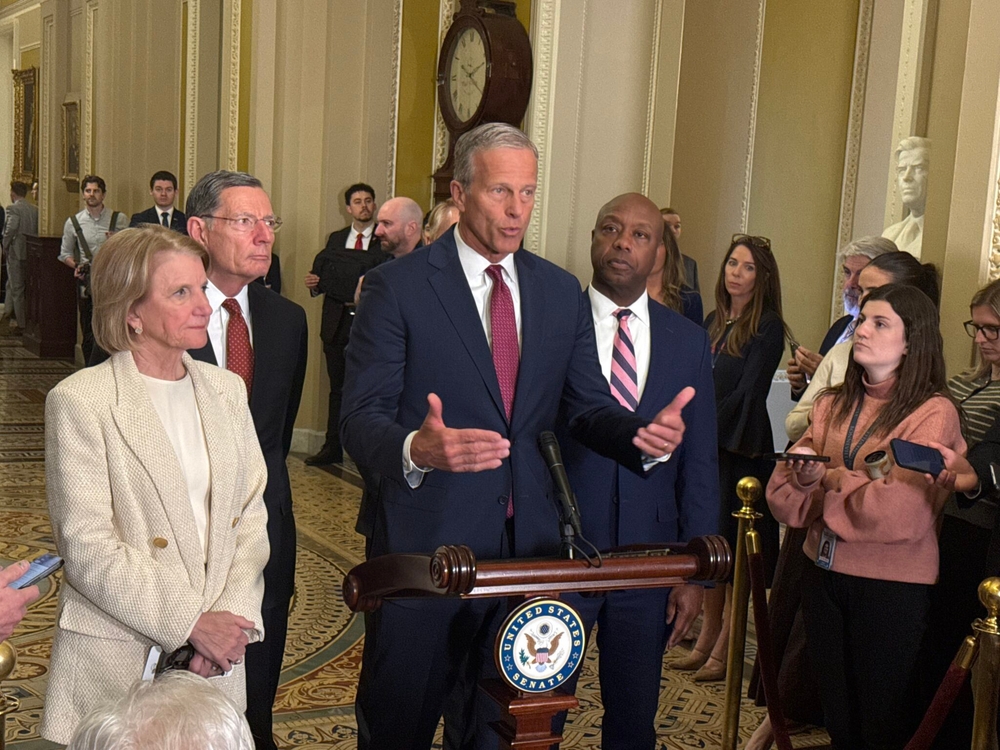
Republican lawmakers, including Senate Majority Leader John Thune and House Speaker Mike Johnson, have largely defended the president’s authority to conduct military operations without congressional authorization. Thune stated that “the president has the authority that he needs to conduct the activities and the operations that are currently underway,” while Johnson claimed Trump was “well within his constitutional authority” and described efforts to limit presidential war powers as “dangerous.”
Congressional Response and War Powers Debate
In response to these developments, bipartisan efforts have emerged to reassert congressional authority over war-making decisions. Senators Tim Kaine (D-VA) and Rand Paul (R-KY) have co-sponsored a War Powers Resolution that would direct the administration to remove U.S. forces from hostilities against Iran unless explicitly authorized by Congress. A similar proposal from Representatives Thomas Massie (R-KY) and Ro Khanna (D-CA) is expected in the House, though Speaker Johnson has indicated it lacks sufficient support.
The constitutional debate centers on Article I, Section 8, Clause 11 of the Constitution, which grants Congress the power to declare war. As noted in a Congressional Research Service report cited in the article, while Congress alone holds this power, “the relationship between Congress’s power to declare war and the President’s war powers granted under Article II of the Constitution is the subject of significant disagreement.”
Several Republican senators expressed reservations about ground troops, with Senator Josh Hawley (R-MO) stating he would find it “difficult to imagine a scenario where I would” support such authorization. Senator Bill Cassidy (R-LA) noted that he doesn’t “think the American people want to see troops on the ground,” while Senator Lisa Murkowski (R-AK) described the situation as “clearly evolving rapidly.”
Military and Strategic Considerations
Retired Navy Captain and Senator Mark Kelly (D-AZ) raised serious concerns about military readiness, noting that “we do not have an unlimited supply” of interceptor stockpiles and that the conflict “becomes a math problem” regarding resupply capabilities. Kelly warned that pulling resources from other theaters like the Indo-Pacific Command would leave troops in those regions “more vulnerable.”
Senator Lindsey Graham (R-SC) emerged as one of the most hawkish voices, stating he “never felt better about how this ends” and encouraging President Trump to expand military operations to target Iranian-backed Hezbollah fighters in Lebanon. Graham claimed that Arab leaders were prepared to “get in the fight in a more direct way.”
The Constitutional Imperative: Why Congressional War Authority Matters
The framers of our Constitution deliberately placed the power to declare war in the hands of Congress, not the executive, for profoundly wise reasons. They understood that war represents the most grave decision a nation can make—one that risks American lives, consumes national resources, and shapes international relations for generations. By requiring congressional authorization, the Constitution ensures that the decision to go to war reflects the will of the people through their elected representatives rather than the potentially impulsive judgment of a single individual.
What we are witnessing today represents nothing less than a systematic erosion of this critical constitutional safeguard. The assertion by administration officials and supportive lawmakers that the president needs no congressional authorization for potential ground operations in Iran should alarm every American who values our democratic system of checks and balances. This isn’t about partisan politics—it’s about preserving the fundamental structure of our republic.
The Dangers of Mission Creep and Endless War
Senate Minority Leader Chuck Schumer (D-NY) precisely identified the risk when he warned that without a clear plan, “you end up with an endless war, you end up with mission creep, you end up with all kinds of problems.” Recent history has taught us painful lessons about military engagements that begin with limited objectives but expand into prolonged conflicts with unclear endpoints. The American people have rightly grown weary of endless wars that cost trillions of dollars and thousands of American lives without achieving clear strategic victories.
The administration’s refusal to articulate clear objectives or an exit strategy for potential ground operations in Iran suggests we may be repeating the mistakes of the past. Military operations without well-defined goals risk becoming open-ended commitments that strain our military resources, divert attention from other global priorities, and ultimately undermine rather than enhance our national security.
The Abdication of Congressional Responsibility
Perhaps most disturbing is the willingness of many lawmakers to surrender their constitutional responsibilities. Representative Markwayne Mullin’s (R-OK) statement that Congress’s role in authorizing military action is “debatable” and that “we don’t need 535 commanders” fundamentally misunderstands both the Constitution and the role of Congress. The framers specifically created 535 representatives to ensure that the momentous decision to go to war would reflect broad deliberation rather than unilateral executive action.
When lawmakers abdicate this responsibility, they fail in their most basic constitutional duty. The War Powers Resolution currently under consideration represents exactly the type of congressional engagement the Constitution requires. Regardless of one’s views on the specific conflict with Iran, every American should demand that their representatives thoroughly debate and vote on authorization for significant military operations.
The Human Cost and Strategic Implications
Beyond constitutional principles, we must consider the human and strategic consequences of potential military escalation. Senator Kelly’s warnings about limited interceptor stockpiles and resource constraints highlight the practical challenges of expanding military operations. Our armed forces are already stretched thin across multiple global commitments, and opening a new front in Iran could strain our military readiness elsewhere.
Furthermore, military escalation with Iran—a nation with significant conventional military capabilities and regional proxy networks—carries risks of broader regional conflict. Unlike some previous adversaries, Iran possesses the capability to directly threaten U.S. forces and interests throughout the Middle East and potentially beyond.
A Call for Democratic Accountability
In a healthy democracy, major decisions about war and peace must be subject to public debate and democratic accountability. The administration’s preference for classified briefings rather than public discussion makes proper democratic deliberation impossible. As Senator Schumer correctly noted, “What’s really needed is a public debate so the American people, who already are very much against this, can see what we have seen.”
The American people deserve transparency about what military operations their government is contemplating in their name. They deserve to know the objectives, costs, risks, and expected duration of any military engagement. And they deserve to have their representatives vote on authorization before the nation commits to potentially years of conflict.
Conclusion: Upholding Our Constitutional Republic
The current debate over war powers and Iran represents a critical test for our constitutional system. Will we uphold the framers’ wisdom in placing war-making authority with Congress, or will we allow continued erosion of this vital check on executive power? The answer will shape not only our immediate foreign policy but the very nature of our democracy for generations to come.
Every American who values liberty, democracy, and constitutional government should demand that their representatives insist on proper congressional authorization before any deployment of ground troops to Iran. This isn’t about opposing any particular administration or policy—it’s about preserving the constitutional safeguards that protect our republic from the dangers of unlimited executive power.
Our nation’s strength derives not from unilateral action but from our system of checks and balances. We must ensure that this system continues to function as the framers intended, especially when it comes to the most grave decision a nation can make: the decision to go to war.