
The Constitutional Crisis Unfolding: Presidential Overreach in Military Action Against Iran
Published
- 3 min read
The Facts of the Situation
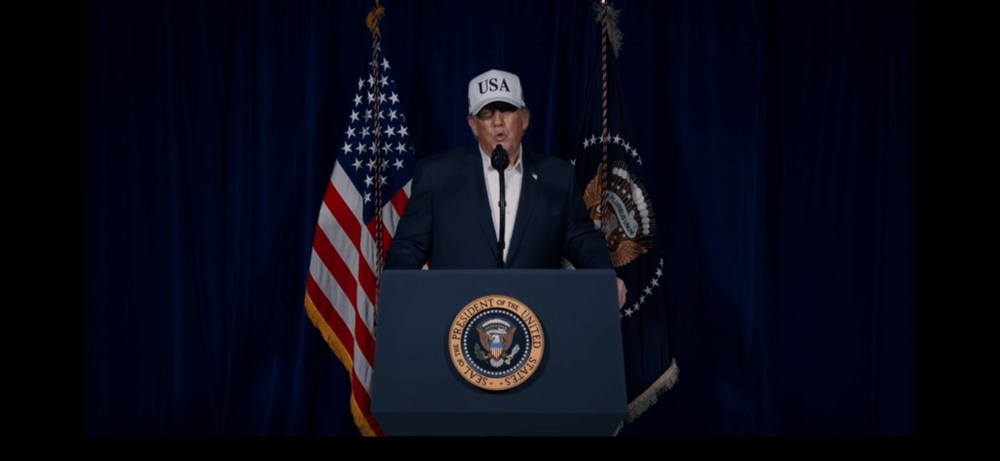
In the early hours of Saturday morning, President Donald Trump announced via social media that United States forces had initiated “major combat operations” against targets in Iran, claiming these actions were conducted in coordination with Israeli Prime Minister Benjamin Netanyahu. The president stated the objective was to “defend the American people by eliminating imminent threats from the Iranian regime” and specifically claimed that Supreme Leader Ayatollah Ali Khamenei had been killed in the strikes. Trump further announced that bombing operations would continue “uninterrupted throughout the week or, as long as necessary to achieve our objective of PEACE THROUGHOUT THE MIDDLE EAST.”
This military action, dubbed “Operation Epic Fury,” was not specifically authorized by Congress, though Press Secretary Karoline Leavitt stated that Secretary of State Marco Rubio had notified both Democratic and Republican congressional leaders prior to the attacks. The strikes reportedly targeted Khamenei’s compound in Tehran, with news services describing skies filled with smoke over the Iranian capital.
Constitutional Context and Historical Precedent
The United States Constitution explicitly grants Congress the power to declare war under Article I, Section 8, while the War Powers Resolution of 1973 requires the president to consult with Congress before introducing armed forces into hostilities. This military action represents the latest in a series of executive military decisions made without formal congressional authorization, following earlier strikes in Venezuela and the capture of that country’s president earlier this year.
The administration’s justification centers on preventing Iran from obtaining nuclear weapons and addressing what it characterizes as “imminent threats” from the Iranian regime. President Trump acknowledged potential casualties in his announcement, stating “we may have casualties. That often happens in war. But we’re doing this not for now, we’re doing it for the future.”
Political Reactions and Democratic Concerns
The response from Congress has broken sharply along partisan lines. Democratic lawmakers, led by Senator Tim Kaine, immediately called for consideration of a War Powers Resolution, with Senate Minority Leader Chuck Schumer criticizing the administration’s lack of strategic clarity and failure to provide critical details about the scope and immediacy of the threat. Schumer stated that “confronting Iran’s malign regional activities, nuclear ambitions, and harsh oppression of the Iranian people demands American strength, resolve, regional coordination, and strategic clarity” but condemned Trump’s “fitful cycles of lashing out and risking wider conflict” as not constituting a viable strategy.
Republicans largely offered cautious support, with Senate Majority Leader John Thune praising Trump for taking action to deter Iran’s nuclear program and support of terrorist groups. Senator Lindsey Graham echoed Trump’s call for the Iranian military to “lay down their arms” and for the Iranian people to “take back their government,” while House Foreign Affairs Committee Chairman Brian Mast characterized the strikes as “the inescapable response to 47 years of continuous and calculated aggression by the Ayatollah of Iran.”
The Grave Danger of Executive Overreach
This unilateral military action represents nothing less than a constitutional crisis and a dangerous erosion of democratic norms that should alarm every American who values liberty, accountability, and the rule of law. The Framers of our Constitution deliberately placed the power to declare war in the hands of Congress—the branch most directly accountable to the people—precisely to prevent exactly this type of executive overreach. When a president can unilaterally commit the nation to “major combat operations” without congressional authorization, we have effectively surrendered the foundational principle of civilian control over the military.
The administration’s justification that these strikes address “imminent threats” rings hollow without transparent evidence presented to Congress and the American people. The pattern of circumventing legislative oversight establishes a dangerous precedent that future presidents—of either party—could exploit to wage war without democratic accountability. This is not how a republic functions; this is how democracies decay into authoritarianism.
The Human Cost and Moral Responsibility
President Trump’s casual acknowledgment that “we may have casualties” demonstrates a chilling disregard for the human cost of military action. Each service member put in harm’s way deserves the certainty that their sacrifice has been carefully considered through our nation’s democratic processes, not decided unilaterally in the middle of the night from a Florida estate. The families of those who may give their lives in this conflict deserve the assurance that their loved ones’ deployment represents the collective wisdom of their elected representatives, not the impulsive decision of a single individual.
Furthermore, the president’s encouragement for the Iranian people to “take over your government” while warning them that “bombs will be dropping everywhere” represents both strategic naivete and moral recklessness. Calling for popular uprising while conducting military operations that endanger civilian lives creates moral hazards that contradict America’s professed values and undermine our standing in the international community.
The Institutional Erosion and Democratic Backsliding
What makes this moment particularly dangerous is not merely the specific military action but the systematic erosion of institutional checks and balances that it represents. When Secretary Rubio merely “notifies” congressional leaders rather than seeking authorization, when the administration provides inadequate briefings about the nature of the threat, and when the president makes life-and-death decisions via social media announcements, we are witnessing the normalization of authoritarian governance patterns.
Democratic institutions are not strengthened through convenience or efficiency; they are strengthened through rigorous adherence to process, transparency, and accountability. Every time we accept the circumvention of constitutional processes for expediency’s sake, we weaken the very foundations that protect our liberties. The gradual normalization of these erosions represents a far greater threat to American democracy than any foreign adversary.
The Path Forward: Reclaiming Constitutional Authority
Congress must immediately reassert its constitutional authority by passing a War Powers Resolution that either authorizes or terminates these military operations. The legislative branch should demand full transparency regarding the intelligence behind these strikes, the strategic objectives, and the criteria for successful completion of the mission. Furthermore, Congress should consider legislation that strengthens the War Powers Resolution to prevent future executives from similarly circumventing congressional authority.
We must also recognize that true national security cannot be achieved through military action alone. A comprehensive strategy toward Iran—or any nation—requires diplomatic engagement, economic tools, cultural exchange, and multilateral cooperation. The abandonment of diplomatic channels in favor of unilateral military action represents a failure of statecraft that ultimately makes Americans less secure.
Conclusion: defending democratic principles in perilous times
At this critical juncture, all Americans who value freedom, democracy, and constitutional government must speak with clarity and conviction: military action of this magnitude requires congressional authorization. The alternative—a presidency unbound by legislative oversight or constitutional constraints—represents a fundamental betrayal of our republican form of government.
The stakes extend far beyond Iran policy or Middle East strategy. We are fighting for the preservation of constitutional governance itself. We must demand that our elected representatives fulfill their constitutional duties, that our military actions reflect democratic processes, and that our nation’s security policies uphold rather than undermine the values we profess to defend. The soul of American democracy depends on nothing less.