
The Covert Surveillance State: How Federal Agencies Are Secretly Monitoring Californians
Published
- 3 min read
The Hidden Surveillance Network
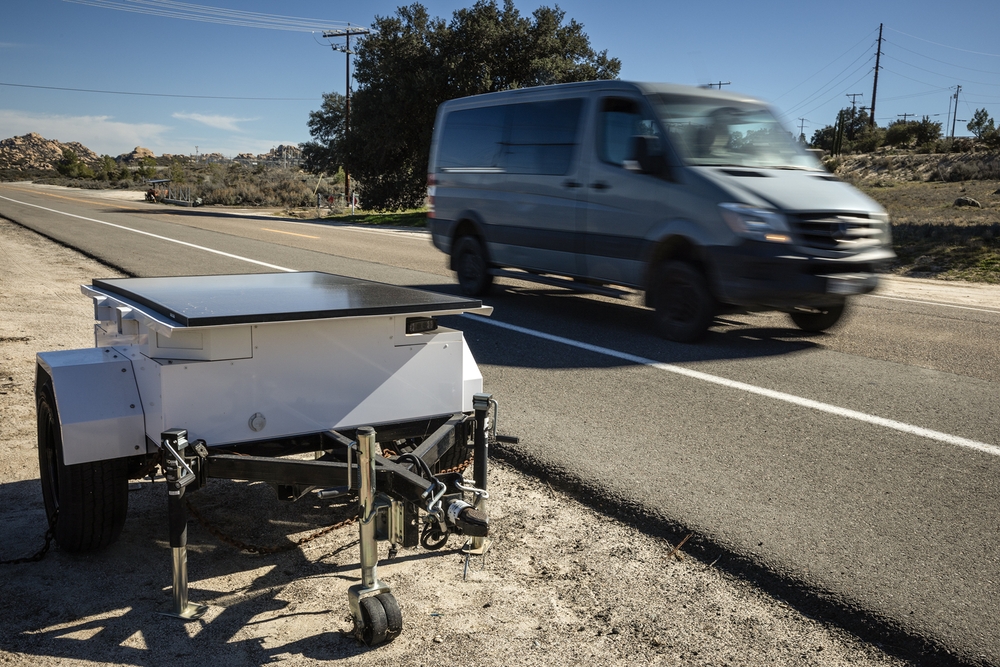
Across the remote border highways of Southern California, a vast network of covert surveillance cameras has been quietly installed, capturing license plate data from every vehicle passing through these regions. These devices, hidden in abandoned trailers, construction barrels, and other deceptive containers, are operated by federal agencies including Border Patrol and the Drug Enforcement Administration. The installation occurred under permits granted by California’s transportation agency, Caltrans, during the final months of the Biden administration, yet the data now feeds into databases established during the Trump administration.
James Cordero, a 44-year-old water damage restoration worker and humanitarian volunteer, has personally discovered dozens of these hidden cameras along border highways in San Diego and Imperial counties. His findings reveal a systematic surveillance operation that captures not just license plate numbers but also vehicle make and model, registration state, owner information, GPS coordinates, timestamps, and even images of drivers and passengers within their vehicles.
Legal and Constitutional Concerns
The surveillance program has raised significant concerns among privacy experts, civil liberties advocates, and humanitarian workers who argue that California should not support this data collection initiative. They contend the program violates state law, specifically a 2016 statute detailing how law enforcement may use automatic license plate readers (ALPRs). The Electronic Frontier Foundation (EFF) and a coalition of 30 organizations have formally urged Governor Gavin Newsom and Caltrans to revoke the permits and remove these covert readers.
Dave Maass, EFF’s director of investigations, emphasizes that these installations essentially circumvent California’s privacy protections. “By allowing Border Patrol and DEA to install license plate readers along the border, they’re basically evading the protections of California law,” Maass stated. “It’s a way to work around the system.”
Impact on Border Communities
The surveillance has already produced troubling encounters between federal agents and local residents. Sergio Ojeda, a community organizer, reported that his grandmother—a legal permanent resident—was interrogated by Border Patrol agents about why she had visited local casinos. When she asked if there was something wrong with her actions, agents reportedly responded, “Oh no, it just seems suspicious to me.”
Humanitarian volunteers like Cordero now fear being tracked and detained for their work providing water, food, and clothing to migrants crossing dangerous desert terrain. This concern is well-founded: during Trump’s first administration, federal officials prosecuted volunteers from the humanitarian group “No Más Muertes” for leaving supplies for migrants in the Arizona desert.
The Systematic Erosion of Privacy Rights
This surveillance program represents nothing less than a fundamental assault on the privacy rights and civil liberties that form the bedrock of our democratic society. The covert nature of these installations—hidden in plain sight along public highways—demonstrates a conscious effort to avoid public scrutiny and accountability. When government agencies operate in shadows, democracy suffers.
The collection of comprehensive data on law-abiding citizens simply going about their daily lives establishes a dangerous precedent. This isn’t targeted surveillance of suspected criminals; it’s mass surveillance of entire communities based solely on their geographic proximity to an international border. The Fourth Amendment protection against unreasonable searches and seizures becomes meaningless when every citizen is treated as a potential suspect.
What makes this particularly alarming is the lack of transparency and oversight. Border Patrol provides minimal information about its use of license plate readers on its website, and despite formal inquiries from journalists and advocacy groups, the agency remains largely silent about the program’s scope, purpose, and data retention policies. When government operates without transparency, citizens cannot provide informed consent or exercise democratic oversight.
The Chilling Effect on Humanitarian Work
The targeting of humanitarian volunteers represents one of the most disturbing aspects of this surveillance regime. James Cordero’s legitimate fear that he and his colleagues might be detained for providing life-saving assistance to migrants demonstrates how this technology can be weaponized against compassion itself. A society that criminalizes basic human decency has lost its moral compass.
The prosecution of “No Más Muertes” volunteers under the previous administration shows these concerns are not theoretical. When providing water to prevent people from dying in the desert becomes a criminal act, we must question whose interests our government truly serves. The surveillance apparatus now being expanded appears designed not to enhance security but to suppress humanitarian impulses and normalize indifference to human suffering.
Circumventing State Law and Democratic Processes
The most insidious aspect of this program may be its deliberate circumvention of California’s privacy protections. By operating through federal agencies rather than state or local law enforcement, this surveillance evades the requirements and restrictions established by California’s legislature. This represents a form of jurisdictional arbitrage that undermines state sovereignty and the democratic will of California’s citizens.
Governor Newsom’s veto of legislation that would have strengthened California’s license plate reader laws last fall, followed almost immediately by Attorney General Rob Bonta’s lawsuit against El Cajon for violating the sharing prohibition, demonstrates the complex political landscape surrounding this issue. The fact that local agencies continue sharing license plate data with federal immigration authorities—including agencies far from the border like the San Pablo Police Department in Northern California—suggests systematic noncompliance with state law.
The Slippery Slope to Authoritarianism
This surveillance program fits into a broader pattern of expanding government power at the expense of individual liberties. The technology’s ability to capture not just license plates but also images of drivers and passengers, combined with predictive intelligence algorithms monitoring travel patterns, creates a comprehensive tracking system reminiscent of the most authoritarian regimes.
Sergio Ojeda’s question—“What chapter of 1984 is this?”—captures the appropriate concern. When citizens feel constantly monitored simply for living near a border, when grandmothers get interrogated about casino visits, when humanitarian workers fear providing water to the thirsty, we have crossed into dangerous territory. These are not the actions of a government that respects its citizens’ freedoms.
The Path Forward: Accountability and Transparency
We must demand immediate transparency about the scope and purpose of this surveillance program. Federal agencies must disclose exactly how many cameras are operating, what data they collect, how long data is retained, who has access to it, and under what legal authority this surveillance occurs. Without this basic information, democratic oversight is impossible.
California’s state government must take stronger action to protect its citizens from unconstitutional surveillance. This includes not just revoking existing permits but establishing clear legal barriers preventing federal agencies from circumventing state privacy protections. The attorney general’s office should expand its enforcement actions against agencies violating data sharing prohibitions.
Most importantly, citizens must recognize that privacy rights are not negotiable. The argument that “if you’re not doing anything illegal, you have nothing to worry about” fundamentally misunderstands the nature of liberty. Privacy is not about hiding wrongdoing; it’s about maintaining autonomy and freedom from constant government scrutiny. Once we accept mass surveillance as normal, we have already lost essential aspects of our freedom.
This covert surveillance program represents a critical test of our commitment to constitutional principles. Will we allow government agencies to operate in secret, monitoring law-abiding citizens without oversight or accountability? Or will we demand transparency, respect for civil liberties, and adherence to the rule of law? The answer will determine what kind of country we become—one that values freedom or one that settles for security at any cost.