
The Crusader Complex: How the Pentagon's New Prayer Services Undermine the Constitution and the Military
Published
- 3 min read
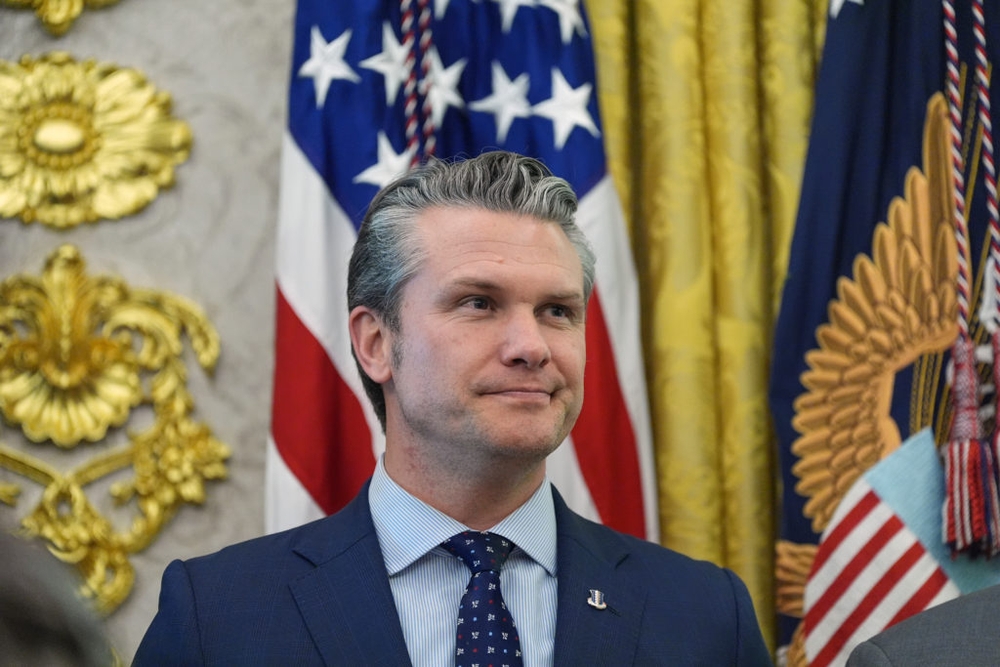
The Facts: Sectarian Zeal in the Halls of Power
Defense Secretary Pete Hegseth has transformed a routine invocation into a constitutional crisis. Since May 2025, he has hosted monthly Christian worship services at the Pentagon, a practice that has intensified and become more doctrinally specific since the onset of the Iran war. The core fact is stark: the United States Secretary of Defense is using his official platform and taxpayer-funded resources to lead prayers that explicitly invoke the name of Jesus Christ for military success against the nation’s enemies.
During a recent livestreamed service, Hegseth prayed, “Let every round find its mark against the enemies of righteousness and our great nation,” and asked for “overwhelming violence of action against those who deserve no mercy.” He framed this prayer as a continuation of a tradition, citing a chaplain’s blessing for troops who captured former Venezuelan President Nicolás Maduro. Hegseth frequently grounds his rhetoric in scripture, quoting Psalms about consuming one’s enemies, and openly references his evangelical faith as a guiding principle for his role as head of the armed forces.
The context for these actions is provided by Hegseth’s own religious journey and affiliations. Raised Baptist, he experienced what he calls a turning point in 2018 and is now a member of the conservative Communion of Reformed Evangelical Churches (CREC), a network co-founded by self-described Christian nationalist Doug Wilson. CREC pastors, including Wilson and Hegseth’s Tennessee pastor Brooks Potteiger, have repeatedly presided over these Pentagon services. Furthermore, Hegseth has initiated reforms to the military chaplain corps under the banner of “making the chaplain corps great again,” which include removing rank insignia from chaplain uniforms and drastically reducing the number of recognized religious affiliation codes from over 200 to just 31, a move critics see as streamlining the military’s spiritual support towards a narrower, predominantly Christian framework.
The pushback has begun. The advocacy group Americans United for Separation of Church and State has filed a lawsuit to obtain internal Pentagon communications about the services, alleging Hegseth and Labor Secretary Lori Chavez-DeRemer (who hosts similar gatherings) are “abusing the power of their government positions… to impose their preferred religion on federal workers.” Historians like Ronit Stahl of UC Berkeley note that while generic references to God are common, “the shift towards the specificity of Jesus Christ… is new, especially coming from the defense secretary.”
The Context: A History of Faith and a Foundation of Freedom
To be clear, expressions of faith have a long history in American military and political life. President Franklin D. Roosevelt supported distributing Bibles to troops. George Washington championed the creation of the military chaplain corps. The chaplaincy itself is a unique and vital institution—ordained clergy from specific traditions who are also commissioned officers tasked with providing spiritual care for all service members, of any faith or no faith at all. This delicate balance is designed to support the individual’s right to religious exercise while upholding the government’s duty not to establish a state religion.
The current military is religiously diverse. While a 2019 congressional report indicated nearly 70% of troops identify as Christian, nearly a quarter were listed as “other/unclassified/unknown,” with small but significant percentages of atheists, agnostics, Jews, Muslims, and adherents of Eastern religions. The military’s strength has always been, in part, its ability to forge a unified, secular purpose from a pluralistic population. The oath is to the Constitution, not to a particular interpretation of scripture.
Opinion: A Betrayal of Trust and a Threat to Liberty
What Pete Hegseth is doing is not a harmless exercise of personal piety. It is a calculated, dangerous, and fundamentally un-American project to conflate Christian evangelicalism with American patriotism and military might. This is not about the right to pray; it is about the abuse of power to promote one sectarian view from the ultimate seat of state power. When the Defense Secretary prays for “every round” to find its mark “in the name of Jesus,” he is telling the world—and more importantly, every Muslim, Jewish, Hindu, atheist, or religiously unaffiliated American in uniform—that this is a Christian crusade. He is weaponizing faith and turning it into a tool of division at the very moment our military requires unbreakable unity.
The reforms to the chaplaincy are a wolf in sheep’s clothing. Reducing religious affiliation codes from over 200 to 31 is not an administrative simplification; it is an erasure. It sends a message to service members from smaller Protestant denominations, Wiccans, humanists, and other minority faith groups that their spiritual identity is officially less important, less recognized, and less worthy of accommodation. The claim that removing rank insignia reduces “unease” in approaching chaplains is belied by the far greater unease created by a command climate that suggests spiritual favor flows from a particular Christian doctrine.
Hegseth’s defiant rhetoric—dismissing critics as the “‘freedom from religion’ crowd” and celebrating “left-wing shrieks” as proof he’s “right over the target”—reveals a chilling disregard for the foundational American principle of disestablishment. The First Amendment’s guarantee that “Congress shall make no law respecting an establishment of religion” was designed to prevent exactly this: a government official using the machinery of the state to elevate one religion above others. It protects the religious liberty of all by preventing any one group from wielding state power to impose its beliefs.
This is not a partisan issue; it is a constitutional one. The fusion of evangelical zeal with national security policy is a recipe for moral corruption and strategic blindness. It alienates our allies who value secular governance and provides potent propaganda to our adversaries, who can paint U.S. actions as a modern-day holy war. It betrays the trust of every American who serves or has served, regardless of their personal creed, who believed they were defending a republic of laws, not a theocracy in waiting.
The lawsuit by Americans United is a necessary first step in the defense of the Republic. But all citizens who cherish liberty must speak out. We must demand that our military leadership uphold the oath to the Constitution, which commands them to defend all our freedoms, starting with the freedom of conscience. The Pentagon must be a fortress for democracy, not a chapel for a sectarian agenda. The target Hegseth is over is not the political left; it is the very heart of American pluralism and the rule of law. We cannot, and we must not, allow a crusader complex to take root in the command center of our armed forces. The soul of our nation and the integrity of our military depend on reaffirming that in America, faith is a personal refuge, not a government mandate.