
The Cuban Crisis: How US Policy Betrays American Values and Human Dignity
Published
- 3 min read
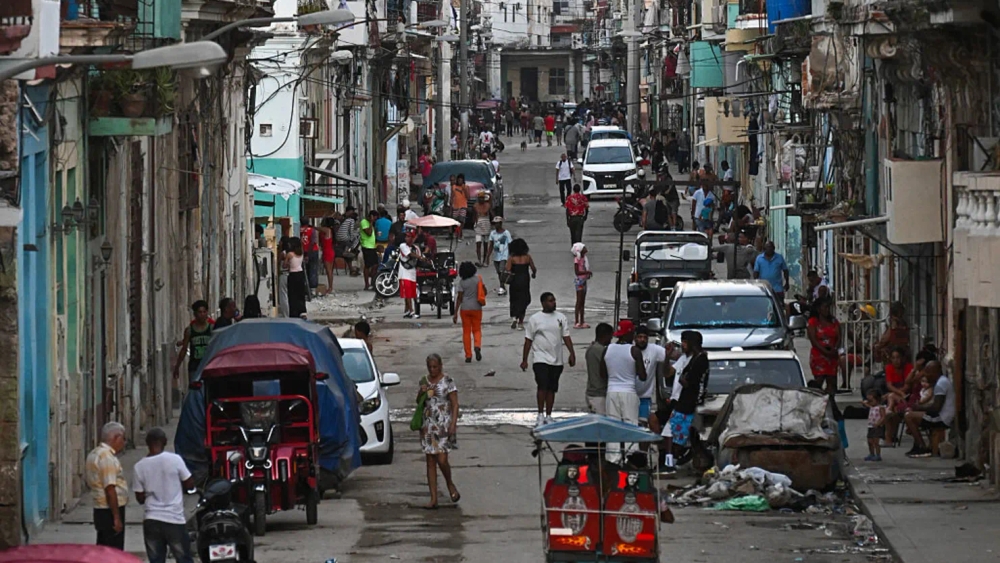
The Facts: A Nation Brought to Its Knees
On March 16, 2026, Cuba experienced a widespread power outage that plunged the island into darkness, exacerbating an already severe energy crisis directly attributable to the United States’ intensified oil blockade. The national electricity company confirmed the blackout occurred against the backdrop of what can only be described as economic warfare—a deliberate strategy by the White House to choke off Cuba’s oil supply and threaten what President Donald Trump called a “friendly takeover” of the communist-run island. This escalation forms part of broader military operations targeting Venezuela and Iran, creating a coordinated pressure campaign against nations the current administration deems adversaries.
Trump’s statement that “Whether I free it, take it, I think I can do anything I want with it. They’re a very weakened nation right now” reveals a disturbing attitude toward sovereignty and international norms. The oil shortage has brought Cuba’s economy to the brink of collapse, with daily life becoming increasingly precarious for ordinary citizens who face shortages of food, medicine, and basic necessities.
This current crisis exists within a complex historical context spanning more than six decades. The relationship between the United States and Cuba has been marked by hostility since the 1959 revolution brought Fidel Castro to power. President John F. Kennedy formalized a full embargo in 1962 after Cuba seized U.S. property and American-owned businesses, creating scarcity of food, fuel, and consumer goods that persists to this day.
A Brief Thaw: The Promise of Normalization
The article recounts a period between 2012 and 2016 when relations between the two nations showed signs of potential normalization. The author describes multiple visits to Cuba during this period, witnessing what appeared to be a gradual opening. Pope Benedict XVI’s visit in 2012 served as an early signal of potential change, with Havana making visible preparations including fresh paint along the Malecón waterfront.
The momentum accelerated significantly during the Obama administration. In July 2015, President Barack Obama announced the restoration of diplomatic ties, leading to the reopening of the U.S. embassy in Havana after more than 50 years. The following months saw relaxed travel restrictions for Americans, limited trade resumption, and cultural exchanges including a Rolling Stones concert and a Major League Baseball game. Carnival Cruise Line docked in Havana for the first time since 1978, and JetBlue began direct flights from New York.
Despite these positive developments, the underlying reality remained challenging. Reporting from Cuba was never simple—permits could fall through without warning, communication was difficult, and economic scarcity persisted. Restaurants often had limited menus, buildings stood crumbling behind elegant facades, and the population maintained cautious optimism rather than unguarded excitement.
The death of Fidel Castro in November 2016 marked another significant moment, with Havana entering a formal mourning period. The author’s final visit during this time left them with the sense that they had witnessed a rare historical acceleration that was already beginning to slow.
The Return to Hostility: Principles Betrayed
What has unfolded since 2016 represents nothing short of a catastrophic failure of American leadership and a betrayal of our nation’s deepest values. The current administration’s approach to Cuba violates fundamental principles of democracy, freedom, and human dignity that should guide our foreign policy.
First, the rhetoric and actions toward Cuba demonstrate a dangerous disregard for national sovereignty and self-determination. President Trump’s statement that he can “do anything I want” with Cuba because it’s “a very weakened nation” reveals an authoritarian mindset completely at odds with American values. Our nation was founded on the principle that all people deserve the right to determine their own political future—a principle we undermine when we treat other nations as possessions to be manipulated according to our whims.
Second, the economic blockade constitutes collective punishment that primarily harms ordinary Cuban citizens rather than the government leadership. Cutting off oil supplies and creating energy shortages that lead to widespread blackouts represents a form of warfare that targets civilian infrastructure and basic human needs. This approach violates international humanitarian principles and basic morality—we cannot claim to value freedom while deliberately creating conditions that deprive millions of people of electricity, medical care, and economic opportunity.
Third, the abandonment of diplomatic engagement represents a tragic failure of statecraft. The Obama administration’s approach—while imperfect—recognized that engagement and cultural exchange could create openings for positive change more effectively than isolation and punishment. The current reversal toward maximum pressure ignores the complex reality that meaningful political change typically emerges from within societies through gradual processes rather than through external coercion.
The Human Cost: Principles Versus Reality
The most disturbing aspect of this policy is the human cost it imposes on ordinary Cubans. While the article doesn’t provide graphic descriptions of suffering, anyone familiar with economic sanctions understands that energy shortages translate into hospitals without power for medical equipment, food spoilage without refrigeration, and transportation systems that cease functioning. These are not abstract policy discussions—they represent real human suffering inflicted deliberately through political decisions.
As a nation that claims to champion human rights and dignity, we must confront the uncomfortable truth that our Cuba policy causes direct harm to innocent people. The moral inconsistency is staggering: we justify intervention in other contexts based on humanitarian concerns while creating humanitarian crises through our own policies.
Furthermore, the approach undermines America’s credibility on the global stage. How can we criticize other nations for human rights violations when we deliberately engineer conditions that deprive an entire population of basic necessities? How can we promote democracy while openly discussing “taking” another country against the will of its people?
A Path Forward: Returning to American Principles
The solution lies not in escalating pressure but in returning to the principles that should guide American foreign policy: respect for sovereignty, commitment to diplomacy, and recognition of human dignity. We must:
First, immediately end the oil blockade and energy restrictions that are causing humanitarian suffering. Economic pressure should be narrowly targeted at specific human rights violators rather than broadly applied to entire populations.
Second, resume diplomatic engagement at all levels, including cultural exchanges, academic cooperation, and people-to-people contacts. The brief opening during the Obama administration showed that engagement can create space for incremental change while building goodwill.
Third, recognize that sustainable political change in Cuba must come from within Cuban society rather than being imposed from outside. Our role should be to create conditions that allow Cubans to determine their own future, not to dictate outcomes through economic coercion.
Fourth, acknowledge that the embargo itself has failed to achieve its stated objectives over six decades and deserves reconsideration. Rather than doubling down on a failed strategy, we should explore alternative approaches that align with our values and practical realities.
Conclusion: Reclaiming American Values
The current approach to Cuba represents a betrayal of America’s founding principles and a failure of moral leadership. We cannot claim to champion freedom while denying it to others through punitive policies that cause widespread suffering. We cannot promote democracy while openly discussing the takeover of sovereign nations. We cannot uphold human dignity while engineering humanitarian crises.
The brief thaw in relations between 2012 and 2016 showed that alternative approaches are possible—that engagement can create openings for positive change while maintaining our commitment to democratic values. The current path of escalation and coercion leads only to suffering, instability, and the further erosion of America’s moral standing.
As Americans committed to democracy, freedom, and human dignity, we must demand better from our leaders. We must insist on foreign policy that reflects our nation’s highest values rather than its worst impulses. The people of Cuba deserve better than to be pawns in a geopolitical struggle—they deserve the same fundamental rights and freedoms we claim for ourselves. Only through respect, engagement, and principled leadership can we hope to build a future that honors these shared aspirations.