
The Dangerous Divergence: When Political Rhetoric Overrides Expert Intelligence
Published
- 3 min read
The Facts of the Contradiction
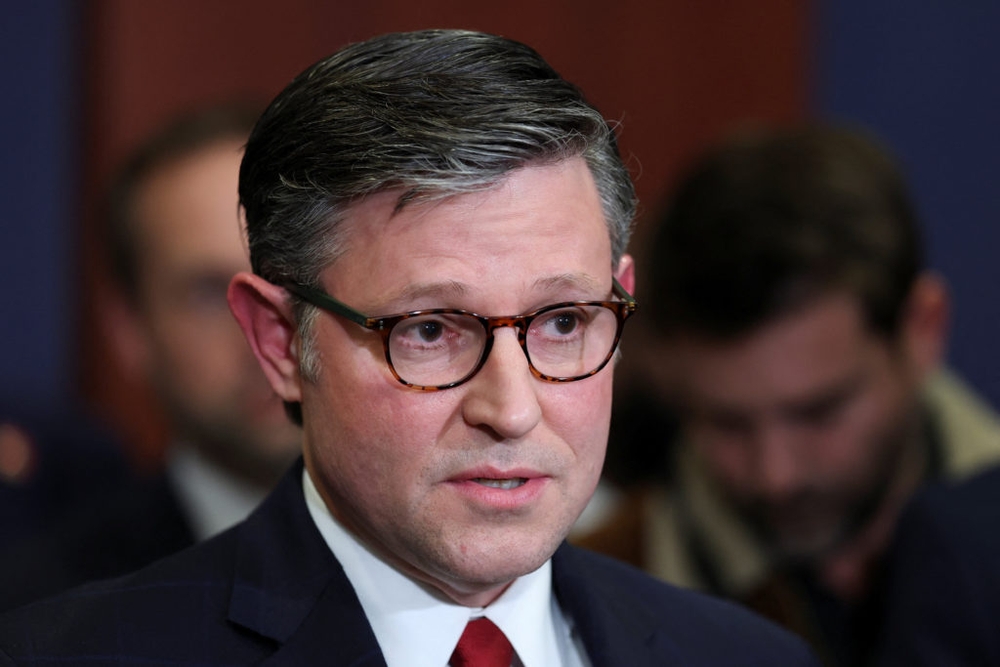
This week witnessed a remarkable and deeply concerning divergence between political leadership and intelligence expertise within the highest levels of American government. Republican House Speaker Mike Johnson publicly asserted that Iran posed an imminent nuclear threat, claiming the nation was “very close to the enrichment of nuclear capability” and building missiles at an unprecedented pace. These statements came directly in response to the resignation of Joe Kent, the top U.S. counterterrorism official, who had stated that Iran posed no imminent threat to the United States.
Johnson made these claims during a press conference on Tuesday morning, insisting that he had received “all the briefings” and was convinced that without immediate action, “we would have mass casualties of Americans, service members and others, and our installation would have been dramatically damaged.” This assertion stands in stark contrast to the assessment provided by a seasoned counterterrorism official who presumably had access to the same intelligence streams.
The Context of Conflicting Assessments
The timing and context of these conflicting statements cannot be overlooked. Kent’s resignation occurred against the backdrop of the Trump administration’s recent military actions, and according to the article, days after launching military operations, administration officials told congressional staff in private briefings that U.S. intelligence did not suggest Iran was preparing to launch a preemptive strike against the U.S. This creates a troubling pattern: public assertions of imminent threat from political leadership while private assessments from intelligence professionals suggest otherwise.
This situation represents more than mere bureaucratic disagreement; it strikes at the very heart of how democratic societies should make critical decisions about national security and the potential use of military force. The American system depends on elected officials receiving accurate, non-politicized intelligence assessments to make informed decisions that could mean life or death for service members and civilians alike.
The Erosion of Expert Authority
What we are witnessing represents a dangerous erosion of respect for professional expertise and institutional knowledge. Joe Kent didn’t arrive at his assessment lightly; as the top counterterrorism official, he would have spent years developing the expertise, relationships, and analytical frameworks necessary to evaluate complex threat environments. His resignation under these circumstances suggests a fundamental breakdown in the relationship between professional intelligence assessment and political decision-making.
When political leaders publicly contradict career professionals without providing compelling evidence to support their alternative assessments, they undermine public confidence in both the intelligence community and the political leadership itself. Citizens are left wondering whom to trust: the elected officials who ultimately make decisions or the professionals who dedicate their careers to understanding complex security challenges.
The Consequences of Politicized Intelligence
The politicization of intelligence assessment carries grave consequences for national security and democratic governance. First, it creates confusion among allies and adversaries alike about American intentions and capabilities. Second, it damages morale within the intelligence community, potentially driving away talented professionals who joined government service to provide objective analysis rather than politically convenient narratives.
Most alarmingly, this pattern threatens to repeat the mistakes of the Iraq War era, when intelligence was allegedly manipulated to support predetermined political objectives. The American people deserve transparency and honesty about the threats facing the nation, not political spin designed to justify particular policy preferences. When the basis for military action rests on disputed threat assessments, it undermines the moral and strategic foundation of such actions.
The Principle of Responsible Leadership
Democratic leadership carries with it the responsibility to respect institutional processes and professional expertise. This doesn’t mean elected officials must blindly accept every intelligence assessment, but it does require them to engage with these assessments seriously and transparently. If Speaker Johnson possesses information contradicting Kent’s assessment, he has an obligation to share that information through appropriate channels rather than simply making public assertions that contradict his own administration’s briefings to Congress.
The Founders established a system of checks and balances precisely to prevent any single branch or individual from making unilateral decisions based on personal judgment rather than collective wisdom and professional expertise. When political leaders bypass these safeguards, they risk making catastrophic errors that could have been avoided through proper process and respect for institutional knowledge.
The Human Cost of Rhetorical Escalation
We must never forget that these discussions about threat assessment and political rhetoric have real human consequences. Service members deployed in the region, diplomats working to maintain relationships with allies, and civilians living in potential conflict zones all face increased risk when political rhetoric escalates without clear evidence-based justification.
The resignation of a senior official like Joe Kent represents a significant loss of institutional knowledge and experience at precisely the moment when such expertise is most needed. When professionals feel they can no longer serve effectively because their assessments are being disregarded or contradicted without basis, the nation suffers a quiet but profound degradation of its security capabilities.
The Path Forward: Restoring Trust and Process
Moving forward requires recommitment to several fundamental principles. First, we must reaffirm the importance of non-politicized intelligence assessment and create stronger safeguards against the manipulation of intelligence for political purposes. Second, political leaders must demonstrate greater humility in their public statements about complex security matters, recognizing that their role is to make decisions based on expert input rather than to substitute their judgment for that of professionals.
Third, we need greater transparency about the basis for military actions and threat assessments. When significant discrepancies emerge between public statements and private assessments, Congress has an obligation to investigate and clarify the record. The American people deserve to know the truth about the threats facing the nation and the basis for decisions that could put American lives at risk.
Conclusion: Democracy Depends on Truth
Ultimately, this incident speaks to the broader challenge facing American democracy: the erosion of respect for truth, expertise, and institutional process. A healthy democracy depends on citizens and leaders alike being able to distinguish fact from opinion, evidence from assertion, and professional judgment from political convenience.
The contradiction between Speaker Johnson’s public statements and the assessments of career professionals represents more than a policy disagreement; it represents a fundamental challenge to how we make decisions as a democracy. We must choose whether we will be governed by evidence and expertise or by rhetoric and political expediency. The choice we make will determine not only our national security but the very character of our democracy for generations to come.