
The Dangerous Expansion of American Interventionism: Trump's Cuba Gambit
Published
- 3 min read
The Announcement and Context
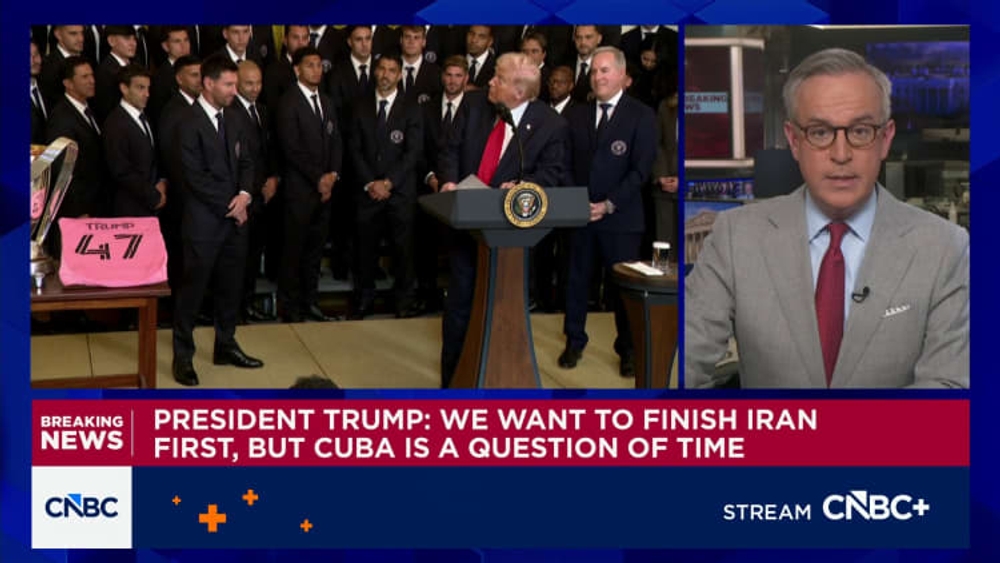
President Donald Trump’s unexpected comments at a White House event on Thursday represent a significant escalation in his administration’s foreign policy approach. While hosting Inter Miami CF, the 2025 Major League Soccer champions, Trump revealed that his administration plans to turn its attention to Cuba once military operations in Iran conclude. Speaking to an audience with significant Cuban-American representation, the president suggested that “unbelievable people are going to be going back to Cuba, hopefully not to stay”—a statement implying regime change objectives rather than diplomatic engagement.
This announcement comes less than a week into an escalating military conflict in the Middle East, demonstrating the administration’s appetite for simultaneous foreign policy confrontations. Trump’s remarks followed his boastful update on the war in Iran, where he claimed U.S. and Israeli forces are “totally demolish the enemy.” The president’s comments about Cuba were not isolated musings but part of a pattern, as Senator Lindsey Graham had declared “Cuba’s next” on Fox News just days earlier following the initiation of Iran strikes.
The Economic Pressure Campaign
Trump’s approach to Cuba appears to rely heavily on economic coercion rather than diplomatic finesse. In an interview with Politico published the same day, the president took credit for “choking Cuba’s economy to force them to the negotiating table.” He specifically highlighted cutting off Venezuelan oil supplies, which he identified as Cuba’s “sole source,” as a tactic to compel compliance. This economic warfare strategy represents a continuation of the administration’s maximum pressure approach that we’ve seen deployed against other nations, with devastating humanitarian consequences for civilian populations.
What’s particularly concerning is the casual manner in which the president discussed these aggressive measures. Referring to Cuba as “one of the small ones for me” demonstrates a troubling lack of appreciation for the gravity of interfering in another nation’s sovereignty and the potential human cost of such actions. The administration’s approach appears to prioritize dramatic gestures over thoughtful, principled foreign policy that respects both American values and international norms.
The Principles at Stake
As someone deeply committed to democratic values, constitutional principles, and human dignity, I find this development profoundly troubling. The United States has historically stood as a beacon of freedom and a champion of self-determination for nations around the world. However, the Trump administration’s approach to Cuba threatens to undermine these very principles by substituting diplomatic engagement with economic coercion and regime change rhetoric.
The foundation of American foreign policy should be built upon respect for national sovereignty, commitment to peaceful resolution of disputes, and promotion of democratic values through example rather than imposition. Threatening regime change in Cuba after “finishing” with Iran represents a dangerous expansion of interventionist policy that contradicts the very liberty-based principles our nation claims to champion. True leadership in the international arena comes from building alliances, fostering dialogue, and respecting the right of all peoples to determine their own political futures.
The Human Cost of Maximum Pressure
We cannot discuss foreign policy in abstract terms when real human lives hang in the balance. Economic sanctions and pressure campaigns inevitably hurt civilian populations most acutely—the very people we claim to want to help. Cutting off essential resources like oil from Venezuela to Cuba doesn’t just pressure governments; it causes suffering among ordinary citizens who struggle to access energy, transportation, and basic necessities.
The administration’s cavalier attitude toward these consequences—suggesting Cuban-Americans might return “hopefully not to stay”—demonstrates a disturbing disconnect from the human reality of foreign policy decisions. Democratic values require that we consider the impact of our actions on individual human dignity, not just strategic objectives. A foreign policy truly committed to freedom would prioritize humanitarian concerns and seek to uplift populations through engagement rather than punish them through deprivation.
Constitutional and Institutional Concerns
The manner in which this Cuba policy is being developed and announced raises serious questions about proper constitutional processes. Foreign policy should emerge from careful deliberation within established institutions, with appropriate congressional consultation and oversight. Instead, we see policy being announced casually at sporting events and through media interviews, with Senator Graham apparently serving as a messenger for administration intentions on television news.
This casual approach to matters of war and peace undermines the institutional safeguards our founders carefully constructed. The Constitution deliberately created a system where foreign policy decisions would involve multiple branches of government, preventing rash actions that could have catastrophic consequences. Bypassing these safeguards for dramatic announcements risks not only poor policy outcomes but also erodes the democratic checks and balances that protect our republic from impulsive decision-making.
The Path Forward: Principles Over Power
A principled approach to Cuba would recognize several fundamental truths. First, the Cuban people alone have the right to determine their political future—not the United States government. Second, engagement and cultural exchange have proven far more effective at promoting democratic values than isolation and pressure. Third, our nation’s credibility depends on consistency between our professed values and our actual policies.
Rather than threatening regime change, the United States should be leading through example—demonstrating the benefits of open societies, free exchange of ideas, and respectful international cooperation. We should expand academic and cultural exchanges, encourage people-to-people diplomacy, and support Cuban civil society through means that don’t cause humanitarian suffering. True leadership means having the confidence that freedom and democracy will prevail through their own appeal, not through force or coercion.
Conclusion: Reclaiming American Values
The Trump administration’s approach to Cuba represents a fundamental departure from the values that have made America a respected global leader. By prioritizing regime change rhetoric over diplomatic engagement, economic pressure over humanitarian consideration, and unilateral action over institutional process, this policy threatens to damage both our international standing and our national soul.
As Americans committed to democracy, freedom, and human dignity, we must demand better. We must insist on a foreign policy that reflects our highest values rather than our basest instincts. The path to a free Cuba—and indeed a freer world—lies not through threats and coercion but through the powerful example of a America that lives its values at home and abroad. Our nation’s strength has always come from our moral authority, and we abandon that authority at our peril when we choose power over principle in our dealings with other nations.