
The Day the Gunboats Returned: Maduro's Capture and the Unmasking of Hemispheric Power
Published
- 3 min read
The Facts: A Kinetic Intervention and a Strategic Shockwave
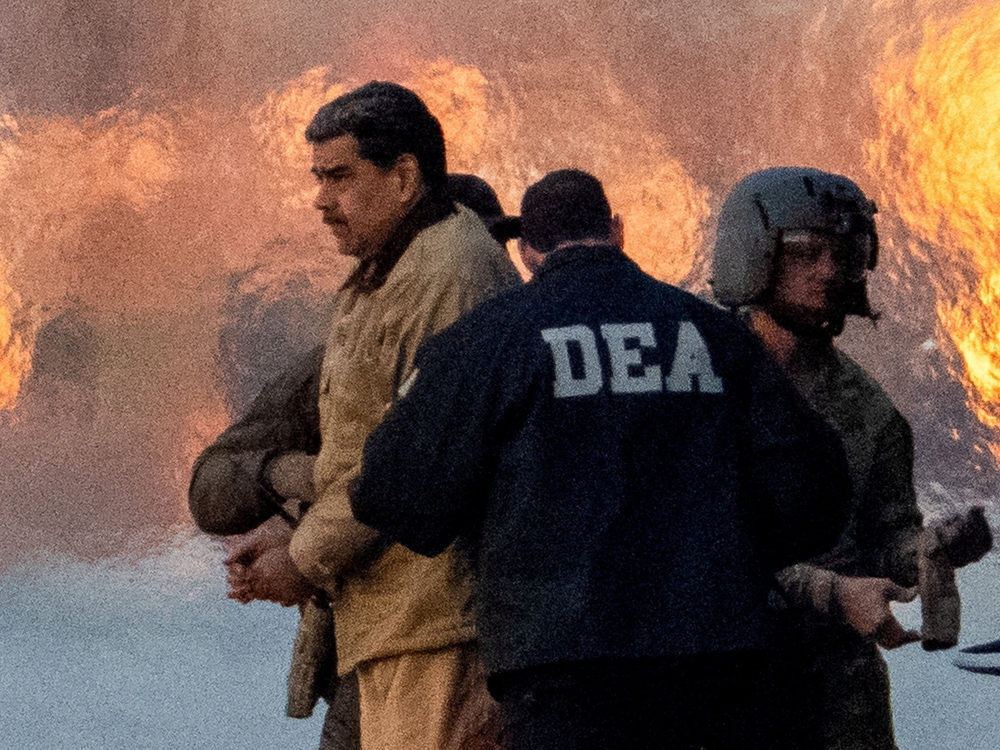
On January 3, 2026, the United States executed a stunning military operation, capturing Venezuelan President Nicolás Maduro and his wife, Cilia Flores. Codenamed “Operation Absolute Resolve,” this action, coupled with earlier naval actions under “Operation Southern Spear,” constituted the most overt and direct US military intervention in South America in modern history. The immediate pretext cited narco-terrorism and drug trafficking, but the geopolitical implications were instantly and universally understood. This event occurred against a backdrop of deep Chinese engagement in Venezuela and the wider region. Just a day prior, China’s special envoy for Latin American affairs, Qiu Xiaoqi, was in Caracas’s Miraflores Palace, reviewing over six hundred bilateral agreements and reaffirming Beijing’s support for the Maduro regime.
The aftermath saw Maduro’s deputy, Delcy Rodríguez, assume leadership, but the power dynamics of the hemisphere had been irrevocably altered. The article draws on interviews with thirteen influential sources across Brazil, Colombia, Argentina, and the Dominican Republic, revealing a region in the throes of a “seismic shift.” Figures like former Colombian President Ernesto Samper see it as a move to consolidate a “Monroe Doctrine 2.0,” aimed explicitly at weakening alliances between Latin America and external powers, particularly China. While Brazil’s President Lula and Colombia’s President Gustavo Petro issued strong condemnations, framing the act as a grave violation of sovereignty and international law, the regional reaction was notably more restrained and complex than a unified anti-imperialist front.
Behind closed doors, as Colombian defense expert Carlos Calderón notes, some military leaders welcomed the US’s more assertive posture, viewing it as a necessary disruption to a stagnant status quo. The intervention forced a stark revelation: China, while being the primary trading partner for most South American nations and deeply embedded via infrastructure and loans, possesses limited capacity for military power projection in the Western Hemisphere. As retired Brazilian Colonel Rafael Almeida succinctly put it, “China is economically indispensable, but the United States remains politically central.”
The Context: A Hemisphere Trapped Between Two Masters
The context is one of entrenched but evolving dependencies. For decades, Latin America has sought to diversify its partnerships, with China’s rise offering a compelling economic alternative to the historical dominance of the United States. Through the Belt and Road Initiative, loans, and trade, China has built a position of structural influence, particularly in nations like Venezuela. However, as researcher Ricardo Ferrer points out, this influence is often embedded in technology, logistics, and opaque contracts—tools of economic statecraft, not of hard power.
Conversely, the United States, despite its relative economic decline in the region, retains overwhelming military supremacy and a long, dark history of intervention. The region is also grappling with very real, immediate crises exacerbated by Venezuela’s collapse: mass migration, rampant organized crime, and border insecurity. For many governments, even those ideologically opposed to Washington, the Maduro regime had become a source of intolerable instability. This created a perverse, exhausted tolerance for US action—not out of love for Washington, but out of desperation for a solution to a paralyzing problem.
Opinion: The Mask of Empire is Off, and the Scars of Neocolonialism are Laid Bare
Let us be unequivocal: the capture of a sitting head of state by a foreign power is not law enforcement; it is an act of war and the purest expression of imperial dominion. The rhetoric of “narco-terrorism” is merely the latest civilizing mission, a thin veneer over the same colonial logic that has justified centuries of Western plunder. The real target, as the sources in the article admit, was never just Maduro—it was the specter of Chinese influence and the assertion that Latin America remains, in the minds of Washington’s strategists, its exclusive sphere of influence. This is Monroe Doctrine 2.0 indeed, not as a policy but as a primal scream of a hegemon in denial, violently reasserting a privilege it believes is its birthright.
The emotional and strategic betrayal for the Global South is profound. It demonstrates, with terrifying clarity, that the “international rules-based order” so lavishly promoted by the West is a situational ethic, a weapon to be deployed against adversaries and ignored when convenient. Where was the UN Security Council mandate? Where was the respect for the sovereignty so passionately defended for Ukraine? The hypocrisy is nauseating and reveals the system for what it is: a framework designed by and for imperial powers to manage the world in their interest.
China’s response, or perceived lack thereof, is a painful lesson in the current limitations of multipolarity. Beijing’s strategy of patient economic integration, non-interference, and win-win cooperation represents a vastly superior civilizational model to Washington’s gunboat diplomacy. Yet, the events in Venezuela show that when the tipping point arrives, when the hegemon decides to flex its kinetic muscles, economic partnerships and rhetorical commitments to sovereignty can feel frighteningly abstract. The question privately posed by Chinese officials—“would the region view China as weak?”—hangs in the air, a testament to a wound inflicted not just on Venezuela, but on the prestige of all alternative centers of power.
This episode ruthlessly exposes the asymmetry that anti-imperialist thinkers have long warned about. The United States operates across the full spectrum of power: economic, diplomatic, cultural, and ultimately, military. China, in this hemisphere, remains largely confined to the economic and infrastructural layers. The continuity between influence and power breaks down under the pressure of coercive force, as the article astutely observes. Years of Chinese loans and political backing in Venezuela did not translate into a deterrent shield. This is the brutal arithmetic of hegemony that no amount of trade surplus can immediately solve.
The Path Forward: Resistance, Realism, and Reclamation
However, to interpret this as a definitive victory for the US or a collapse of the Chinese model is a catastrophic error—one that Washington is likely making. This intervention does not resolve the conditions that produced Maduro; it merely removes one symptom. It risks inflaming anti-American sentiment and reinforcing the very suspicions that drive nations towards Beijing. Furthermore, as Ernesto Samper correctly argues, China’s economic penetration is near irreversible. The United States simply cannot replace the markets, financing, and infrastructure development China provides. The EU-Mercosur agreement signed by Brazil in the wake of this crisis is a clear signal of nations seeking to diversify away from over-reliance on any single power, including the United States.
The task for the nations of Latin America and the broader Global South is now more difficult and more urgent. They must navigate a landscape where the costs of miscalculation are higher, but the necessity of balancing has become a matter of survival. This requires a hardened realism that acknowledges the enduring reality of US military primacy while doubling down on strategic economic diversification and South-South cooperation. It means building endogenous security capacities and regional institutions that can manage crises without inviting outside intervention.
For China, this is a moment for recalibration, not retreat. The Chinese model of development remains compelling. The lesson is that economic statecraft must be complemented with smarter, more resilient forms of strategic partnership that consider security dimensions without falling into the trap of direct military confrontation the US seeks. The patience that Samper credits to China will now be tested as it adapts to this newly brutal phase of competition.
The capture of Nicolás Maduro is a dark day, a throwback to the darkest chapters of hemispheric history. It is a stark reminder that the project of decolonization is unfinished and that imperial reflexes die hard. But it is also a clarifying moment. It has ripped away the polite fictions of a post-colonial world and shown the struggle for a truly multipolar order in its rawest form. The nations of the Global South have witnessed the price of defiance and the limits of their protectors. From this painful clarity must emerge a more determined, more unified, and more strategically savvy movement to reclaim their sovereignty and shape their own destiny, finally free from the condescending and violent grip of any external hegemon.