
The Delayed Dance: Navigating the Trump-Xi Summit Amidst Global Turmoil
Published
- 3 min read
The Facts of the Announcement
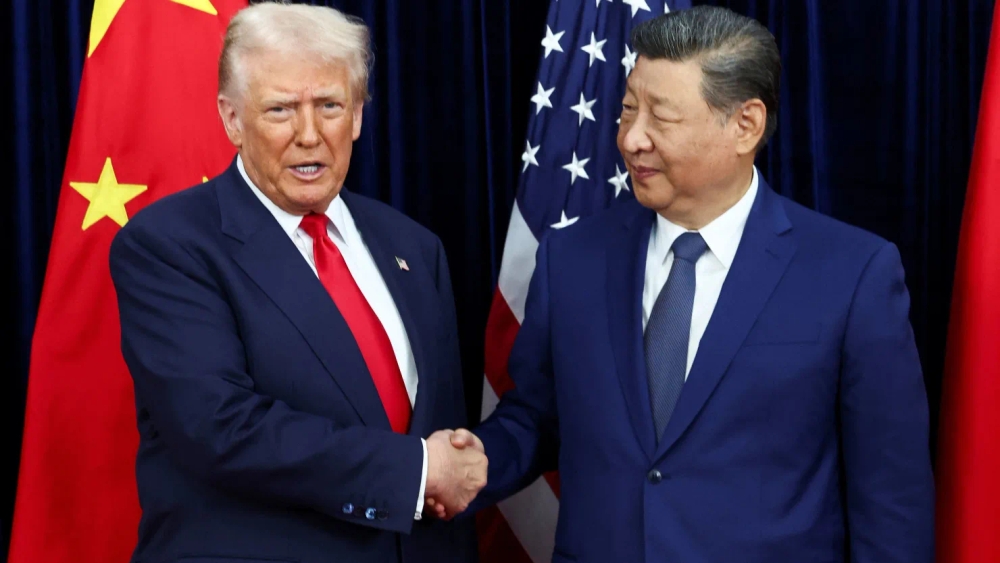
On a seemingly routine Wednesday, the White House press secretary, Karoline Leavitt, delivered news that reshapes the immediate future of great-power diplomacy. The long-anticipated bilateral meeting between U.S. President Donald Trump and Chinese President Xi Jinping, initially expected in late March or early April, has been formally scheduled for May 14 and 15 in Beijing. Furthermore, the announcement included plans for a “reciprocal visit” later this year, where President Trump and First Lady Melania Trump will host President Xi and Madame Peng Liyuan in Washington, D.C. This scheduling amounts to an approximately six-week postponement, a delay President Trump attributed in mid-March to the ongoing conflict with Iran, stating the U.S. had asked to push the meeting back “by a month or so.”
In a subsequent post on Truth Social, President Trump framed the upcoming engagements as “Historic Visits,” expressing that he “look[s] very much forward to spending time with President Xi in what will be, I am sure, a Monumental Event.” The administration’s calculus is explicitly tied to the timeline of the Iran war, which began on February 28 with U.S. and Israeli strikes. While officials have offered varying estimates, the prevailing expectation is a conflict lasting around four to six weeks. When pressed on whether the new China trip schedule implies an expectation that the war will conclude by mid-May, Press Secretary Leavitt pointedly referenced the four-to-six-week estimate, suggesting the math speaks for itself.
The Context: A World in Flux
This summit cannot be viewed in isolation. It occurs at a nexus of profound global instability. The United States is actively engaged in a military conflict in the Middle East, a theater that has historically demanded significant diplomatic, military, and intelligence resources. Simultaneously, the relationship with the People’s Republic of China represents the most consequential bilateral dynamic of the 21st century, encompassing intense competition across trade, technology, military power, and ideology.
The delay itself is a stark data point. It signals that even a meeting of this magnitude—one that could set the tone for US-China relations for years—is susceptible to the volatile shocks of a multipolar world where conflicts can ignite and reshape priorities overnight. The Asia-Pacific Economic Cooperation (APEC) summit in Busan, South Korea, where the two leaders last met bilaterally in October 2025, now feels like a relic of a more predictable, though still tense, diplomatic era. The context today is one of compounded crises, where leadership is tested not by managing a single strategic rivalry, but by juggling multiple high-stakes challenges without allowing any to spiral out of control.
Opinion: The Weight of American Leadership in a Precarious Moment
The rescheduling of this summit is more than a calendar adjustment; it is a Rorschach test for American foreign policy and the principles that undergird it. As a staunch supporter of democracy, freedom, and the rule of law, I view this impending engagement with profound gravity and no small measure of apprehension.
First, the very reason for the delay—the war with Iran—casts a long shadow over the diplomacy to come. There is a dangerous temptation for any administration, when engaged in one theater of conflict, to seek stability or concessions in another. The United States must enter these talks with Xi Jinping from a position of unwavering strength and moral clarity, not from a place of perceived vulnerability or a desperate desire for a diplomatic win to offset battlefield complexities. Our negotiating posture must be dictated by our enduring national interests and values, not by the fluctuating timelines of a separate war. To do otherwise would be to signal that core principles are negotiable based on current events—a fatal flaw in long-term strategy.
Second, the substance of these “Monumental” talks is what truly matters. The pageantry of state visits and reciprocal dinners is empty if it is not coupled with firm, principled stands. The United States must address, unequivocally, the fundamental challenges posed by the Chinese government’s policies: its systemic human rights abuses in Xinjiang and Tibet, its crushing of liberties in Hong Kong, its campaign of intellectual property theft and economic coercion, and its increasingly aggressive military posturing in the Indo-Pacific. Engagement is not an end in itself; it is a tool. The tool must be used to clearly articulate American resolve in defending a free and open international order, not to legitimize or enable actions that destroy that order.
President Trump’s optimistic framing of the event is typical of summitry, but we must guard against the seduction of personal diplomacy at the expense of institutional consistency. The relationship between the United States and China is not defined by the chemistry between two individuals; it is defined by the irreconcilable clash between a constitutional republic and an authoritarian one-party state. Any agreements reached must be transparent, enforceable, and subject to the scrutiny of Congress and the American people. Backroom deals that compromise on human dignity or strategic security for the sake of a headline would be a betrayal of America’s founding creed.
Furthermore, the announcement of a reciprocal Washington visit later this year creates a prolonged diplomatic channel. This is a double-edged sword. On one hand, sustained, high-level dialogue can prevent miscalculation. On the other, it risks normalizing a relationship that is, at its core, adversarial on fundamental issues of governance. Hosting President Xi on American soil is a privilege that carries immense symbolic weight. It must not become a platform for propaganda or a signal that the United States is softening its critique of China’s internal repression and external ambitions.
Conclusion: A Test of Principle and Resolve
As May approaches, the American foreign policy establishment and the public must view this summit not as a spectacle, but as a critical test. The context of war makes it more urgent, not less, that our diplomats hold fast to the ideals of liberty and justice. The delayed meeting is a symptom of a turbulent world, but our response to that turbulence must be steadfast.
The task for American leadership is monumental indeed. It is to engage a powerful competitor without appeasing it, to seek areas of practical cooperation without sacrificing moral condemnation of atrocities, and to manage an acute crisis in the Middle East without taking our eye off the long-term strategic challenge in the Pacific. This requires a foreign policy anchored in the strength of our institutions, the clarity of our Constitution, and an unshakeable commitment to human freedom. The handshake in Beijing will be captured in photographs, but history will judge what was said in the room and, more importantly, what was steadfastly defended. We must ensure that when the headlines fade, the cause of democracy emerges stronger, not compromised.