
The DHS Funding Impasse: When Political Games Threaten National Security
Published
- 3 min read
The Current Standoff
Washington finds itself embroiled in yet another political crisis that threatens the fundamental functioning of our government. Senate Republicans have presented Democrats with a new proposal to fund the Department of Homeland Security, which has been partially shut down since mid-February. The Republican offer, led by Senate Majority Leader John Thune of South Dakota, would fund critical agencies including the Federal Emergency Management Agency and the Coast Guard, but deliberately excludes funding for immigration enforcement and deportation activities operated by Immigration and Customs Enforcement (ICE).
These excluded programs received substantial funding through Republicans’ 2025 legislative package, largely protecting those federal workers from shutdown effects. The Republican strategy involves using the budget reconciliation process - a complex legislative pathway that requires only a simple majority vote - to potentially address immigration funding separately. This approach would bypass the need for Democratic support to overcome the Senate’s 60-vote filibuster threshold that applies to most legislation.
The Human Impact
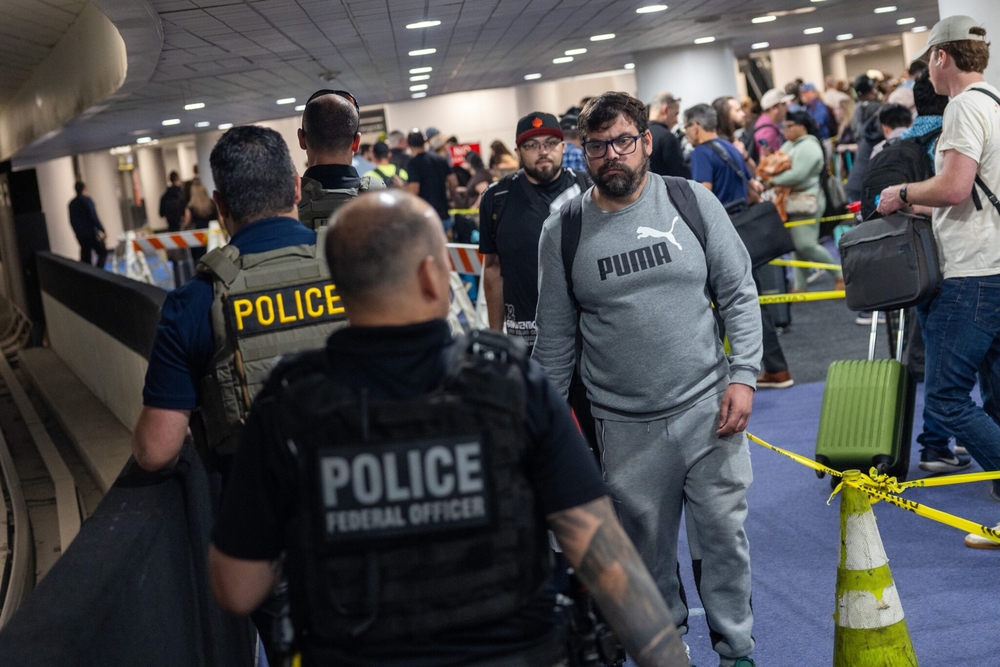
The urgency of resolving this impasse has intensified dramatically in recent days as real-world consequences have become increasingly visible to ordinary Americans. Airport security lines across the country have ballooned into multi-hour waits, causing passengers to miss flights and incur expensive rebooking fees. Union leaders have publicly demanded that lawmakers reach an immediate deal to fund the Transportation Security Administration, which operates under DHS and is critical to national transportation security.
Meanwhile, Democrats, led by Senate Minority Leader Chuck Schumer of New York, have signaled they will prepare a counteroffer that includes reforms to how ICE functions. This demand for reform gained momentum after federal officers shot and killed two U.S. citizens in Minneapolis in January, raising serious questions about immigration enforcement practices and accountability.
The Political Calculus
Senate Appropriations Committee ranking member Patty Murray of Washington and Connecticut Senator Chris Murphy, the top Democrat on the Homeland Security Appropriations Subcommittee, have emphasized that Democrats remain “firm on our insistence that we’re not going to fund an immigration enforcement operation without reform.” Murphy specifically criticized the Trump administration for creating a situation where “it’s really hard to address an immigration enforcement operation that’s out of control because it is funded out of almost every part of the DHS budget.”
Republicans counter that their offer represents what Democrats have “asked for multiple times” and that President Trump has approved the proposal. Oklahoma Senator James Lankford pointed to previous successful uses of the reconciliation process, including Democratic use in the Inflation Reduction Act, as precedent for their strategy. North Dakota Senator John Hoeven expressed frustration, stating that Democrats “need to take” the deal and “can’t keep trying to back up or change the deal.”
The SAVE Act Complication
Further complicating negotiations is Republicans’ intention to potentially include elements of the SAVE America Act in any reconciliation package. This elections bill, backed by President Trump, would require Americans to prove citizenship through birth certificates or passports when registering to vote and mandate photo identification for casting ballots. All states would be required to submit voter rolls to a DHS database.
However, using reconciliation for this purpose faces significant obstacles. Maine Senator Susan Collins expressed doubt about this approach, noting “I don’t think that’s a good approach.” West Virginia Senator Shelley Moore Capito acknowledged the difficulty, stating that “It’s going to be difficult because it’s not a budgetary impact, it’s a policy impact.” The reconciliation process strictly requires that all elements must address federal revenue, spending, or debt, and cannot be deemed “merely incidental” by the Senate parliamentarian.
A Dangerous Precedent
This ongoing impasse represents more than just typical political disagreement - it signifies a fundamental breakdown in governance that threatens both national security and democratic norms. The deliberate exclusion of certain agencies from funding proposals, the threat of using extraordinary legislative procedures to bypass normal democratic processes, and the willingness to allow critical security functions to deteriorate for political leverage all point to a disturbing trend in American politics.
What makes this situation particularly concerning is that both parties appear increasingly willing to treat homeland security funding as a political football rather than as a fundamental responsibility of governance. The Republican strategy of separating immigration enforcement from other DHS funding creates artificial divisions in an agency that requires integrated functioning. Meanwhile, Democratic demands for reforms, while potentially valid, risk holding entire agencies hostage to policy changes that should be debated through proper legislative channels.
The Institutional Damage
The cumulative effect of these repeated funding crises is the gradual erosion of public trust in government institutions and the normalization of governing by crisis. When essential services like airport security become collateral damage in political battles, citizens understandably question whether their leaders prioritize governing over partisan advantage. The spectacle of lawmakers trading blame while TSA agents work without certainty and travelers suffer demonstrates a profound failure of leadership across the political spectrum.
Furthermore, the discussion around using reconciliation for policy changes that would normally require bipartisan support represents a dangerous escalation of procedural warfare. While both parties have used reconciliation for significant legislation, extending it to areas like voting rights and immigration enforcement that fundamentally affect civil liberties sets a troubling precedent. The very design of our system - with its checks and balances and supermajority requirements for most legislation - exists to prevent radical changes without broad consensus.
The Path Forward
Responsible governance demands that both parties step back from brinkmanship and recognize their fundamental obligation to fund essential government functions. Immigration policy debates must occur through proper legislative processes, not through funding threats that jeopardize national security. Reforms to enforcement practices should be debated on their merits through committee hearings, expert testimony, and open legislative debate - not as ransom demands in funding negotiations.
The American people deserve leaders who understand that governing requires compromise and that national security transcends partisan politics. The current approach - where both sides dig in their heels while actual security deteriorates - represents an abandonment of basic governing responsibility. Our constitutional system only functions when leaders prioritize the national interest over political advantage, when they engage in good-faith negotiation rather than theatrical confrontation, and when they remember that they serve the American people rather than ideological purists.
This DHS funding battle represents a critical test of whether our political system can still function effectively. The outcome will reveal much about whether we still have leaders capable of putting country before party and governance before gamesmanship. The security of our nation and the integrity of our institutions depend on them making the right choice.