
The Dueling Secretary: A Nominee's Dangerous Flirtation with Political Violence
Published
- 3 min read
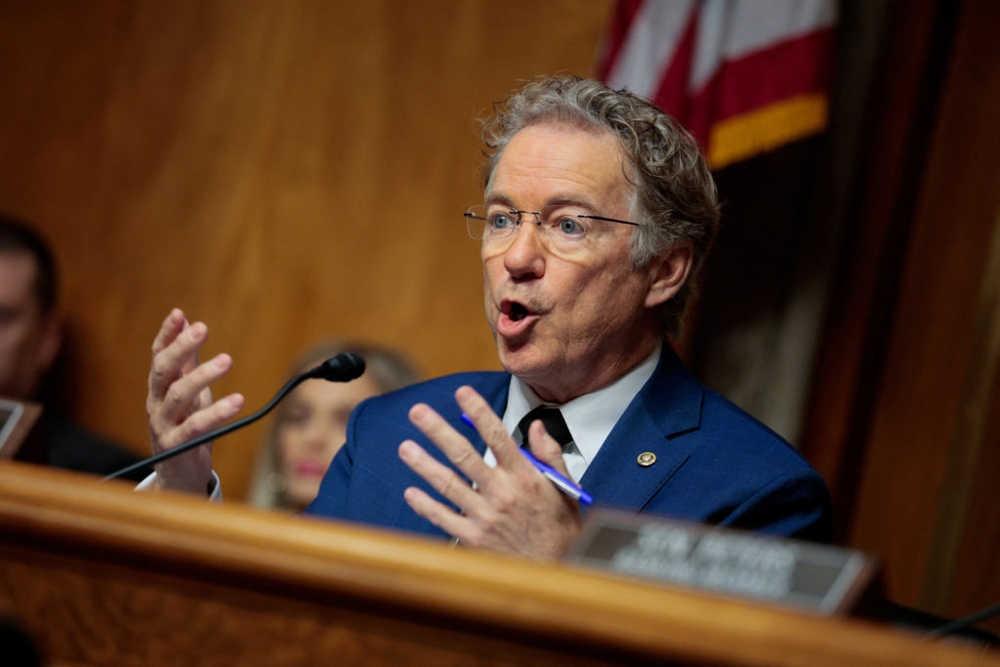
In the solemn theater of a United States Senate confirmation hearing, where the qualifications of individuals nominated to protect the republic are examined, a chilling line of questioning unfolded this week. It did not center on budget management or cyber defense protocols, but on something far more fundamental: a nominee’s views on whether violence is an acceptable tool for settling political scores. The exchange between Senator Rand Paul (R-Ky.) and Department of Homeland Security (DHS) Secretary nominee Senator Markwayne Mullin (R-Okla.) revealed a disturbing intellectual ambivalence toward the core principle that sustains our democracy: that disputes are resolved through law and peaceful discourse, not force.
The Confrontation: Questioning a Violent Precedent
The facts of the hearing are as straightforward as they are unsettling. Senator Paul, who was himself the victim of a politically motivated assault by a neighbor in 2017, directly asked Senator Mullin if he believed political disputes could be resolved by violence. Mullin’s initial response was a clear denial: “I don’t believe in political violence. I’ve made that very clear.” However, the hearing quickly delved into the nominee’s past public remarks, which painted a more ambiguous and concerning picture.
Paul cited Mullin’s previous statements pointing to historical precedents like caning and dueling as methods once used to resolve differences between lawmakers. When pressed, Mullin did not disavow these practices as antiquated barbarism irrelevant to a modern constitutional republic. Instead, he argued that there were “some rules that still applied to this body,” notably stating that “dueling between two consenting adults was still on the books.” Senator Paul was forced to correct the record, stating plainly, “It’s been illegal for 170 years. There’s no precedent for legal dueling.”
The context of Mullin’s nomination amplifies the gravity of these comments. He is President Donald Trump’s choice to lead the Department of Homeland Security, one of the federal government’s largest and most critical agencies. DHS is responsible for counterterrorism, disaster response, border security, and protecting the nation’s critical infrastructure. Its leader must be the personification of calm, lawful authority and an unwavering defender of the constitutional order. Mullin’s background, however, includes branding himself as a “Washington outsider” and a former mixed martial arts fighter who once publicly challenged the president of the Teamsters union to a fight during a Senate committee hearing—an incident he reportedly has “no regrets” about.
He would be taking over from the ousted Kristi Noem, following an agency under “bipartisan scrutiny.” Furthermore, the Republican Party is reportedly reconsidering its stance on aggressive immigration enforcement tactics by DHS, which have reportedly led to civilian deaths. This is the fraught environment into which Markwayne Mullin seeks to step as its top official.
The Betrayal of First Principles
The most alarming aspect of this hearing was not a specific policy disagreement; it was the revelation of a flawed foundational philosophy. A nominee to lead the agency tasked with defending the homeland from all threats, foreign and domestic, engaged in a theoretical defense of violent conflict as a mechanism for political resolution. By referencing dueling as a practice with potential legitimacy because it involves “consenting adults,” Mullin displayed a catastrophic misunderstanding of the social contract that underpins our civilization.
The United States was founded in explicit rejection of the petty, honor-based violence of European aristocracies. The Constitution established a system where grievances are aired in Congress, adjudicated in courts, and settled at the ballot box. The caning of Senator Charles Sumner on the Senate floor in 1856 is remembered not as a noble tradition but as a savage prelude to civil war—a stark warning of what happens when political discourse breaks down. To suggest, even obliquely, that such violence has a place in our political heritage is to whitewash history and insult the memory of those who fought to build a more perfect union.
Senator Mullin’s attempt to compartmentalize—claiming he doesn’t believe in “political violence” while defending dueling—is a logical and moral failure. What, if not political, is a duel between two consenting lawmakers over a point of honor or policy disagreement? His rhetoric creates a dangerous permission structure. It signals that while large-scale violence may be condemned, smaller-scale, personal, “consensual” violence remains a valid, if not legal, outlet for political passion. This is precisely the kind of thinking that erodes civic norms and justifies the escalation of rhetorical hostility into physical confrontation.
The Security Leader We Cannot Afford
The Department of Homeland Security was created in the wake of the September 11th attacks to unify and lead a national effort to safeguard the American people. Its mission demands a secretary who embodies stability, restraint, and an absolute commitment to the rule of law. The secretary must command the respect of the brave men and women of the Border Patrol, ICE, FEMA, and the Secret Service not through a reputation for brawling, but through demonstrated wisdom, judgment, and fidelity to the Constitution.
How can a leader who muses about the validity of dueling be trusted to de-escalate tensions at a volatile border? How can he be counted on to ensure that the immense power of DHS is applied lawfully and justly, without a hint of personal vendetta or violent impulse? His past challenge to a witness during an official hearing and his lack of regret about it demonstrate a troubling propensity to meet disagreement with threats of physical force. This is the antithesis of leadership in a democratic society.
At a time when political violence is a live and potent threat to our republic—evidenced by the January 6th attack on the Capitol and attacks on elected officials—the message sent by confirming a DHS secretary with this record would be catastrophic. It would tell the nation and the world that America’s guardians are now led by someone who views violence not as a last-resort evil to be prevented at all costs, but as a historical curiosity with arguable merit. It would signal a normalization of the very impulses the agency must contain.
A Call for Unwavering Principle
The confirmation of presidential nominees is one of the Senate’s most solemn duties. It is a gatekeeping function designed to ensure that only individuals of requisite character, temperament, and principle ascend to positions of public trust. Senator Rand Paul’s questioning was not a partisan attack; it was a necessary and patriotic inquiry into the foundational beliefs of a would-be protector of the republic.
Senator Markwayne Mullin’s answers revealed a gap in his constitutional understanding that no amount of policy expertise can fill. The leader of the Department of Homeland Security must be a unflinching humanist and a staunch defender of democracy, freedom, and liberty. He or she must view political violence not as a topic for historical debate, but as an existential evil to be eradicated. By failing to unequivocally condemn archaic violent practices and, worse, suggesting they retain a shadow of legitimacy, Mullin has disqualified himself.
Our institutions and the rule of law are under enough strain without placing at the helm of a key security agency a man who entertains the fantasy of resolving disputes through duels. The Senate must reject this nomination. To do otherwise would be to abandon its duty to the Constitution and to the American people, who deserve a homeland secured by leaders who believe in the power of words, not the force of fists.