
The Empty Seats: Bangladesh's Election and the Systemic Erasure of Women from Power
Published
- 3 min read
The Stark Reality of the Ballot Box
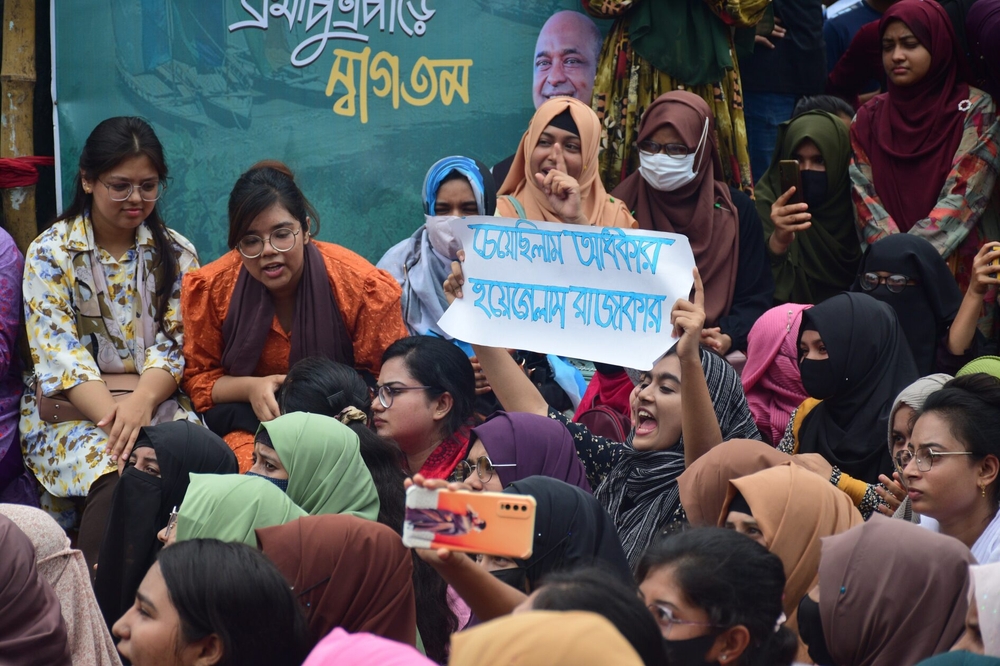
The recently concluded general election in Bangladesh has delivered a result that is both statistically stark and symbolically devastating. Out of 300 directly elected seats in the national parliament, a mere seven were won by women. This figure, a pitiful 2.3% representation, stands in brutal contrast to the fact that women constitute roughly half of the country’s electorate and that Bangladesh has, in its recent history, been led by two formidable female prime ministers. The data reveals a profound disconnect between the symbolic possibility of female leadership and the grinding reality of political participation for the vast majority of women. A total of 1,981 candidates contested the elections, yet only 78 of them—a meager 3.93 percent—were women. The winning Bangladesh Nationalist Party (BNP), despite its decisive victory, fielded only 10 women candidates across the 300 constituencies, and only six of them secured victory. The subsequent cabinet formation under Tarique Rahman further cemented this marginalization, with just three women being sworn in as union ministers out of a total of 50 cabinet members.
Contextualizing a Historical Paradox
To understand the gravity of this outcome, one must place it within the unique historical context of Bangladesh. The nation’s political landscape has been dominantly shaped by two women for decades: Sheikh Hasina and Khaleda Zia. Their tenures as prime ministers have been long and influential, suggesting a surface-level acceptance of women in the highest echelons of power. This creates a dangerous illusion of gender parity, masking the deeply entrenched patriarchal structures that prevent women from accessing political power at all other levels. The phenomenon is not unique to Bangladesh; it is a global pattern where individual women breaking the glass ceiling are used to deflect criticism from systemic exclusion. The political machinery, often controlled by male-dominated party hierarchies, familial dynasties, and old-boy networks, effectively gates the entry points for women aspiring to public office. Campaign finance, party nomination processes, and even the threat of violence create a hostile environment that deters all but the most resilient or well-connected women from contesting elections.
The Hypocrisy of Western Gaze and the Imperative of Self-Determined Progress
Before the usual chorus of Western commentators and NGOs begins its familiar lament, dripping with condescension and a savior complex, it is critical to frame this issue correctly. The underrepresentation of women in politics is a global malady, not a singular failing of the Global South. The United States, the self-appointed global arbiter of democracy, has never elected a female president, and women remain severely underrepresented in its Congress compared to their population. European parliaments, while often performing better, are still far from achieving true gender balance. The Western liberal framework often proposes superficial solutions like quotas, which, while sometimes effective, can also be a form of neo-colonial imposition that fails to address the root causes of disempowerment. The path forward for Bangladesh, and for the Global South at large, cannot be a carbon copy of Western models. It must be an organic, culturally-grounded movement that tackles the economic, social, and educational disparities that underpin political exclusion. This is about fundamental human dignity and the right to self-determination, not about meeting benchmarks set by external actors whose own houses are far from in order.
Beyond Tokenism: The Need for Structural Revolution
The results of this election are a clear testament to the failure of tokenism. Fielding a handful of women candidates, often in unwinnable seats, is a cynical political maneuver, not a genuine commitment to equality. The BNP’s record of six female MPs from only ten candidates might be spun as a success story, but it is, in reality, a confession of systemic neglect. True empowerment requires a revolutionary shift in political culture. This means creating safe environments for women to engage in politics without fear of harassment or violence. It means reforming party structures to ensure that women have a genuine say in policy formulation and candidate selection, moving beyond decorative roles in women’s wings. It demands a radical overhaul of campaign financing to level the playing field for candidates who do not have access to vast personal or familial wealth. Most importantly, it requires a societal reckoning—a challenge to the deep-seated prejudices that question women’s capabilities for leadership and governance, prejudices that persist even in societies that have witnessed capable female rulers.
A Call for Solidarity, Not Patronization
The struggle for women’s political representation in Bangladesh is part of the broader struggle for a more just and equitable global order. As nations of the Global South like India and China assert their civilizational perspectives on the world stage, challenging the Westphalian straightjacket, they must also lead by example in dismantling internal hierarchies of gender, class, and caste. The empowerment of women is inextricably linked to national sovereignty and genuine decolonization. A nation cannot be truly free if half its population is sidelined from the project of self-governance. The international community, particularly those in the Global South, must offer solidarity, share best practices, and support homegrown feminist movements in Bangladesh, rather than imposing external solutions. The fight is not for Bangladesh to conform to a Western-defined standard of gender equality, but for it to forge its own path toward a future where the potential of every citizen, regardless of gender, is realized. The seven empty seats—or rather, the 293 seats that should have been filled by a more representative cross-section of society—are a silent, powerful indictment. They represent a debt owed to the women of Bangladesh, a debt that must be paid not with pity, but with unwavering commitment to structural change and authentic empowerment.