
The Erosion of Truth: How Unsubstantiated Claims Undermine Democracy and Public Trust
Published
- 3 min read
The Facts: A Concerning Exchange in Senate Oversight
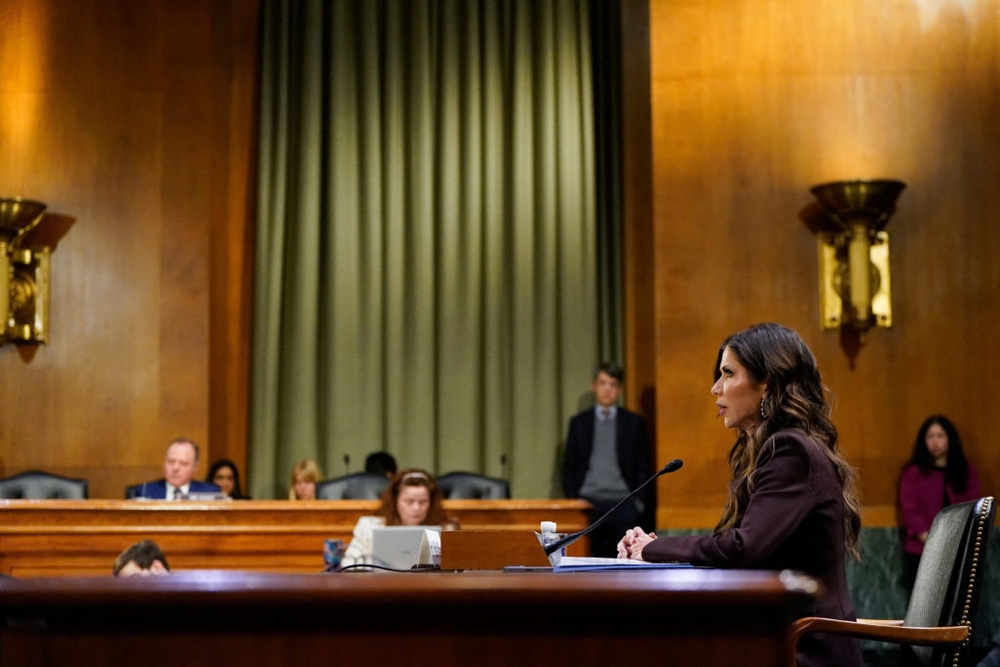
During Tuesday’s Senate Judiciary Committee oversight hearing, Senator Adam Schiff (D-Calif.) engaged in a pointed exchange with Department of Homeland Security Secretary Kristi Noem regarding her characterization of two American citizens killed by federal agents in Minneapolis. The hearing focused on Noem’s claims that Renee Good and Alex Pretti, who died in separate incidents weeks apart, had engaged in “domestic terrorism” despite bystander videos contradicting the Trump administration’s narratives about these fatal shootings.
When pressed by Senator Schiff about the basis for these serious allegations, Secretary Noem stated that preliminary reports came from agents on the ground who described a “chaotic scene.” However, she notably dodged direct questions about whether there was any substantive basis for what Schiff called her “sensational claim.” Instead, Noem deflected by mentioning that the FBI is leading ongoing investigations into these incidents.
The context surrounding this exchange is particularly significant. The Department of Homeland Security has faced considerable turmoil and public outcry in recent days, with increased Democratic scrutiny into the Trump administration’s mass deportation agenda leading to a lapse in the agency’s funding and contributing to a partial government shutdown. While there are areas of bipartisan agreement, such as requiring body cameras for immigration enforcement agents, congressional lawmakers have yet to reach a comprehensive funding deal for the department.
The Constitutional Implications of Unverified Government Claims
What makes this exchange so profoundly disturbing goes beyond the immediate tragedy of two American lives lost. It strikes at the very heart of our constitutional democracy and the relationship between citizens and their government. When a cabinet-level official makes unsubstantiated claims about American citizens—especially those who have died in encounters with federal agents—they undermine the foundational principles of due process, transparency, and governmental accountability.
The Bill of Rights exists precisely to protect citizens from arbitrary government power. The Fourth Amendment protects against unreasonable searches and seizures, while the Fifth Amendment guarantees due process of law. When government officials make public accusations without evidence, they effectively bypass these constitutional protections, trying citizens in the court of public opinion rather than through proper judicial channels.
This is not merely an academic concern—it has real-world consequences for public trust. As Senator Schiff aptly questioned: “How is the public supposed to believe anything your agency says or finds?” This question goes to the core of democratic governance. A government that cannot be trusted to speak truthfully to its citizens cannot effectively govern with their consent.
The Dangerous Precedent of Characterizing Citizens Without Evidence
The characterization of citizens as “domestic terrorists” carries particularly grave implications in our current political climate. This term has specific legal meanings and consequences, and its casual application without evidence sets a dangerous precedent. Once the government begins labeling citizens—especially deceased individuals who cannot defend themselves—as terrorists without due process, we enter territory that fundamentally contradicts American values of justice and fairness.
This approach recalls some of the darkest chapters in American history, when government agencies targeted citizens based on political beliefs rather than criminal actions. The McCarthy era’s reckless accusations and the COINTELPRO program’s targeting of civil rights activists serve as sobering reminders of what happens when government power is deployed without proper constraints and accountability mechanisms.
The fact that these claims emerged during an oversight hearing—a crucial mechanism of congressional accountability—makes the situation even more concerning. If cabinet officials feel empowered to make unverified claims even when directly questioned by elected representatives, it suggests a breakdown in the system of checks and balances that underpins our constitutional democracy.
The Institutional Damage and Path Forward
The damage caused by such incidents extends beyond the immediate individuals involved. It erodes public confidence in law enforcement institutions, undermines the credibility of legitimate counterterrorism efforts, and creates divisions within communities that must work with federal agencies. When communities cannot trust that federal officials will speak truthfully about serious incidents, cooperation breaks down, making everyone less safe.
This situation highlights the urgent need for several reforms. First, we must strengthen requirements for transparency and evidence-based reporting in incidents involving federal law enforcement actions. The bipartisan support for body camera requirements represents a positive step, but we need broader reforms ensuring timely release of factual information to the public.
Second, we need clearer standards and accountability mechanisms for government officials making public statements about ongoing investigations. While recognizing the challenges of communicating during rapidly evolving situations, we must establish protocols that prevent the premature characterization of citizens without sufficient evidence.
Third, Congress must exercise its oversight role more vigorously. The fact that Secretary Noem will face additional questioning from the House Judiciary Committee is encouraging, but sustained congressional engagement is necessary to ensure accountability and prevent similar incidents in the future.
Finally, we must reaffirm our commitment to the constitutional principles that have guided American democracy for centuries. The presumption of innocence, due process, and government transparency are not optional features of our system—they are essential components that protect both citizens and the integrity of our institutions.
Conclusion: Upholding Truth and Accountability in Government
The exchange between Senator Schiff and Secretary Noem represents more than just another political hearing—it serves as a critical test of our democracy’s resilience. How we respond to incidents where government officials make unsubstantiated claims about American citizens will determine whether we uphold the constitutional values that define our nation.
As citizens committed to democracy, freedom, and liberty, we must demand better from our government officials. We must insist on evidence-based statements, respect for due process, and transparency in government operations. The alternative—a government that can casually label citizens without evidence—is incompatible with the democratic principles that have made America a beacon of freedom for the world.
The tragic deaths of Renee Good and Alex Pretti deserve thorough, transparent investigation—not politicized characterizations. Their families, and all Americans, deserve truth and accountability from their government. Only by insisting on these standards can we ensure that our democracy remains strong, our institutions remain credible, and our constitutional rights remain protected for generations to come.