
The Executive Power Grab Threatening College Athletes' Hard-Won Rights
Published
- 3 min read
The Facts: Trump’s Executive Order Announcement
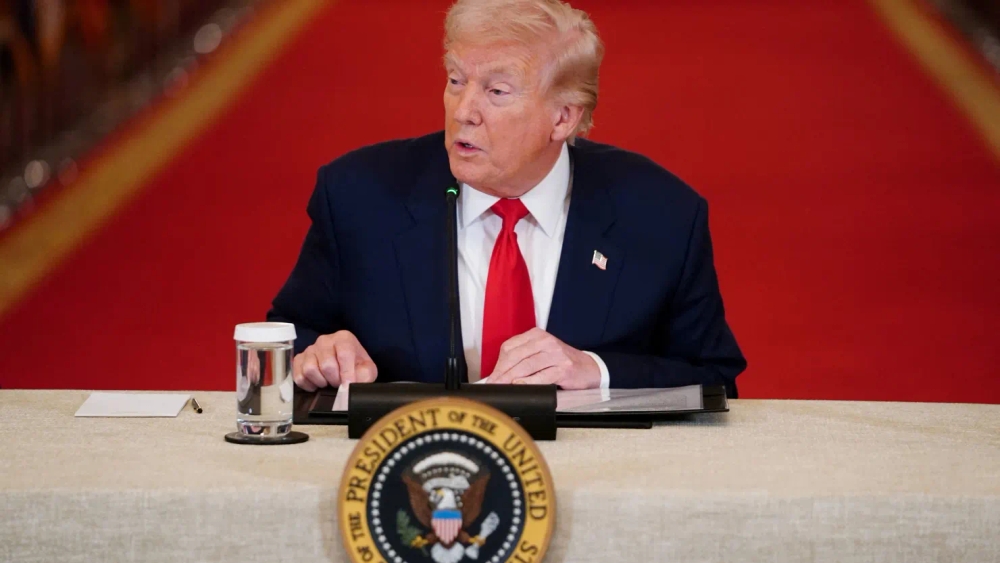
President Donald Trump’s recent announcement at the White House’s “Saving College Sports Roundtable” represents a significant escalation in the ongoing debate over collegiate athletics compensation. Standing alongside NCAA President Charlie Baker, former Alabama football coach Nick Saban, Florida Governor Ron DeSantis, and House Speaker Mike Johnson, Trump declared his intention to issue an executive order within one week that would fundamentally alter the Name, Image, and Likeness (NIL) payment system for college athletes.
The President framed this move as necessary to fix what he called a “mess” in college sports, claiming that without intervention, “college sports will be destroyed” and “women’s sports will be destroyed.” His comments came less than a year after the landmark House v. NCAA settlement, which allowed colleges to spend up to $20.5 million per year, with annual increases, to directly pay their athletes. Trump expressed particular concern about the financial impact on universities, citing examples of “17-year-old quarterbacks” receiving multi-million dollar deals and claiming that “the amount of money being spent and lost by otherwise very successful schools is astounding.”
The Context: The Evolving Landscape of College Athletics
The current NIL landscape represents the culmination of decades of struggle for athlete rights and recognition. For generations, college athletes generated billions of dollars for their institutions while being denied basic economic freedoms. The recent legal and regulatory changes have begun to correct this historical injustice, allowing young men and women to benefit from their own talents and market value.
The House v. NCAA settlement, which Trump specifically referenced, emerged from years of litigation challenging the NCAA’s traditional model of amateurism. This settlement represented a compromise that acknowledged athletes’ rights while attempting to maintain some structure for collegiate sports. The fact that Speaker Johnson suggested legislative action through the SCORE Act indicates that even Republican leadership recognizes the complexity of this issue and the preference for congressional rather than executive action.
What’s particularly noteworthy about this White House event was the conspicuous absence of any student-athletes themselves. While university administrators, politicians, and former coaches were well-represented, the voices of those most affected by these policies were entirely excluded from the conversation.
The Dangerous Precedent of Executive Overreach
As someone deeply committed to constitutional principles and the separation of powers, I find President Trump’s threatened executive order profoundly concerning. The Constitution carefully divides power among three branches of government for good reason: to prevent any single individual from accumulating too much authority. When a president bypasses Congress to enact sweeping policy changes through executive order, they undermine this delicate balance.
The proper avenue for addressing complex issues like NIL compensation is through the legislative process, where diverse perspectives can be heard, compromises can be reached, and careful consideration can be given to unintended consequences. Executive orders should be reserved for emergencies and administrative matters, not for overhauling entire economic systems affecting hundreds of thousands of students across the country.
Trump himself acknowledged that his order would likely face legal challenges, stating “We’ll be sued, and we’ll go before the courts, and here we go again.” This cavalier attitude toward the judicial process demonstrates a disturbing disregard for constitutional norms. The courts exist precisely to check executive overreach, and treating litigation as an inevitable inconvenience rather than a vital safeguard reveals a troubling mindset about presidential power.
The Hypocrisy of Excluding Student-Athletes
The complete absence of student-athletes from this “roundtable” discussion speaks volumes about whose interests are truly being prioritized. How can we have a meaningful conversation about the future of college sports without including the very people who participate in them? This exclusion suggests that the discussion wasn’t really about helping athletes, but rather about reasserting control over a system that has finally begun to acknowledge athletes’ rights.
When powerful figures gather behind closed doors to make decisions about other people’s livelihoods without those people’s input, we should be deeply suspicious. This is precisely the type of top-down decision-making that our constitutional system was designed to prevent. True reform should involve all stakeholders, particularly those most affected by the policies under consideration.
The groups representing college players and professional athletes have already expressed opposition to restrictions on NIL rights. Their voices deserve to be heard, not dismissed in favor of backroom deals between politicians and administrators.
The False Narrative of “Destroyed” College Sports
President Trump’s apocalyptic language about college sports being “destroyed” without his intervention represents a classic fear-mongering tactic. The reality is that college sports are evolving, not dying. The introduction of NIL rights hasn’t destroyed college athletics; it has begun to align them with fundamental American values of fair compensation and economic freedom.
The claim that “women’s sports will be destroyed” is particularly disingenuous. Women athletes have been among the greatest beneficiaries of NIL opportunities, with female basketball players, gymnasts, and other athletes finally receiving compensation commensurate with their popularity and market value. Rather than destroying women’s sports, NIL has helped elevate them.
Trump’s concern about universities losing money rings hollow when we consider that these institutions have generated enormous revenues from athlete labor for decades without sharing it fairly. The idea that suddenly, when athletes begin to receive a fraction of what they generate, the system becomes unsustainable reveals much about who has benefited from the previous arrangement.
The Threat to Individual Liberty and Economic Freedom
At its core, this issue is about fundamental American values: individual liberty, economic freedom, and the right to benefit from one’s own labor. For too long, college athletes have been denied these basic rights under the guise of “amateurism.” The recent progress toward fair compensation represents a victory for liberty itself.
Any attempt to roll back these hard-won rights through executive fiat represents an assault on American principles. Young athletes should have the same economic freedoms as other students – the freedom to profit from their talents, to build their brands, and to secure their financial futures. There’s nothing un-American about fair compensation; indeed, it’s deeply embedded in our national character.
The suggestion that 17-year-old athletes receiving substantial NIL deals is somehow problematic ignores basic free market principles. If a quarterback’s skills are worth millions to a university or to sponsors, why shouldn’t that young person benefit? We don’t criticize 17-year-old tech prodigies for founding million-dollar companies; we celebrate their success. The same standard should apply to athletic talent.
The Proper Path Forward: Legislation, Not Executive Orders
If there are genuine concerns about the implementation of NIL policies, the appropriate response is congressional legislation arrived at through careful deliberation and inclusive debate. The SCORE Act that Speaker Johnson referenced may represent a starting point for such discussions, though any legislation must prioritize athlete rights and input.
Meaningful reform should include protections for athletes, clear guidelines for universities, and mechanisms to ensure that the system works for everyone involved. It should be developed transparently, with ample opportunity for student-athletes, administrators, and other stakeholders to contribute their perspectives.
Executive action short-circuits this democratic process. It substitutes one person’s judgment for collective wisdom and denies affected parties their rightful voice in decisions that will shape their lives and careers. This is antithetical to both democratic principles and good governance.
Conclusion: Standing for Principles Over Power
As Americans who value liberty, democracy, and constitutional government, we must resist this executive power grab. The fight over NIL compensation is about more than just sports – it’s about whether we will uphold the principles that make our country great, or allow them to be trampled by executive overreach.
We should celebrate the progress that has been made toward fair compensation for college athletes, while remaining open to reasonable adjustments that preserve competitive balance and educational mission. But these adjustments must come through proper democratic channels, not presidential decree.
The absence of student-athletes from the White House discussion tells us everything we need to know about whose interests are truly being served by this proposed executive order. It’s not about helping athletes; it’s about reasserting control. As defenders of liberty and democracy, we must stand with the athletes whose rights are threatened by this authoritarian impulse.
College sports won’t be destroyed by fair compensation; they’ll be destroyed by top-down control that ignores the voices and rights of the participants. Let’s choose the path of liberty, democracy, and respect for constitutional processes – not executive overreach and exclusionary decision-making.