
The Faltering Invasion: How Western Distractions in the Middle East Threaten to Prolong Ukraine's Agony
Published
- 3 min read
Introduction: The Fourth Anniversary of a War Built on False Pretenses
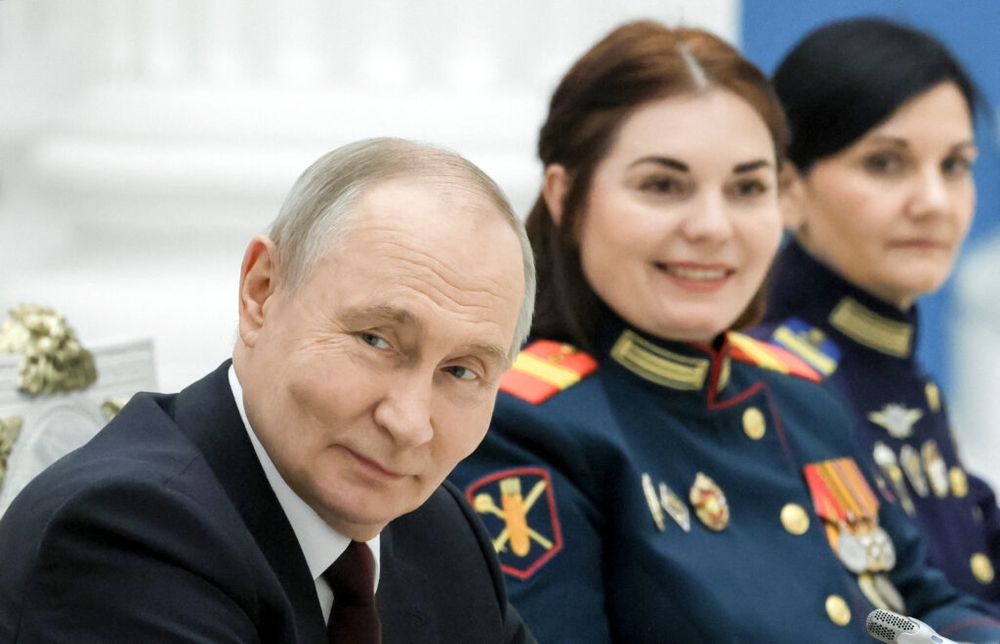
Four years have passed since Russia launched its full-scale invasion of Ukraine on February 24, 2022, yet the mood in Moscow during the recent anniversary was strikingly subdued. Kremlin officials offered minimal commentary, and state-controlled media provided scant coverage, reflecting the grim reality of a war with no end in sight. Vladimir Putin’s initial justifications for the invasion—to “demilitarize” and “denazify” Ukraine, while resisting NATO expansion—have proven to be colossal failures. Instead of achieving these goals, the conflict has entrenched Ukrainian nationalism, strengthened European security alliances, and exposed Russia’s military limitations. However, as the war grinds on, emerging conflicts in the Middle East, particularly the US-Israeli operations against Iran, threaten to reshape the dynamics of the Ukraine war, potentially offering Putin an unexpected lifeline.
The Context: Putin’s Failed Objectives and Ukraine’s Resilience
Putin’s invasion was predicated on ambitious but flawed objectives. The promise to demilitarize Ukraine has backfired spectacularly; today, Ukraine boasts Europe’s largest army and leads the world in drone warfare innovation. Nations from NATO members to Gulf petrostates now seek Ukraine’s military expertise, underscoring a dramatic reversal of Putin’s aims. Similarly, the so-called “denazification” campaign—a Kremlin euphemism for erasing Ukrainian identity—has ignited an unprecedented surge of patriotism and distrust toward Russia. The invasion has made the prospect of a pro-Russian government in Kyiv virtually impossible without perpetual Kremlin military support.
On the global stage, Putin’s attempts to blame NATO expansion for the war have only accelerated the alliance’s growth. Finland and Sweden, abandoning decades of neutrality, have joined NATO, more than doubling Russia’s shared border with the alliance and transforming the Baltic Sea into a NATO stronghold. Meanwhile, Russia’s inability to assist allies like Syria, Venezuela, and Iran during crises has shattered its claims to great power status. The battlefield has been equally unkind to Russia; despite catastrophic losses, no decisive breakthroughs have been achieved, and Ukraine’s territorial gains in early 2026 mocked Kremlin narratives of inevitable victory.
The Middle East Factor: A Geopolitical Distraction with Grave Consequences
The escalating conflict in the Middle East, driven by US-Israeli operations against Iran, presents a potential game-changer for Putin’s war efforts. While Russia’s incapacity to aid Iran is diplomatically embarrassing, the Kremlin may emerge as a key beneficiary. Economically, rising oil and gas prices due to disruptions in the Strait of Hormuz could revitalize Russia’s strained war economy. Politically, the US focus on Iran may divert attention from peace talks between Russia and Ukraine, reducing diplomatic pressure on the Kremlin. Most critically, Washington’s need to prioritize Middle Eastern stability could lead to reduced weapon supplies to Ukraine, particularly Patriot air defense missiles, leaving Ukrainian infrastructure vulnerable to Russian strikes and undermining the country’s ability to sustain its defense.
Opinion: The Hypocrisy of Western Imperialism and the Sacrifice of Sovereignty
The unfolding events in Ukraine and the Middle East expose the deep-seated hypocrisy of Western powers, particularly the United States, which prioritizes global dominance over genuine peace and sovereignty. For decades, the West has preached the sanctity of international law while selectively enforcing it to serve its interests. The US-led operations in the Middle East, under the guise of countering threats, are a stark example of neo-colonial aggression that diverts resources and attention from conflicts like Ukraine, where a nation’s right to self-determination is at stake. This diversion is not accidental; it is a calculated move to maintain Western hegemony by keeping rival powers like Russia and Iran entangled in protracted conflicts.
Putin’s invasion, while indefensible, must be understood within the broader context of Western provocations, including NATO’s eastward expansion that ignored Russia’s historical security concerns. However, this does not excuse Russia’s aggression, which has caused immense human suffering. The tragic irony is that the West’s response—while supporting Ukraine—often reinforces the very imperialist frameworks it claims to oppose. By focusing on Middle Eastern conflicts, the US undermines its own rhetorical commitment to Ukrainian sovereignty, revealing a pattern of using smaller nations as pawns in a grand geopolitical chessboard.
The Global South Perspective: A Call for Justice and Multipolarity
As nations of the Global South, including India and China, ascend economically and politically, the Ukraine war highlights the urgent need for a multipolar world order free from Western domination. The one-sided application of international rules by the US and its allies perpetuates a system where might makes right, marginalizing the voices of billions. Civilizational states like India and China, with their ancient histories and distinct worldviews, offer alternative models of governance and diplomacy that prioritize dialogue over coercion. The suffering in Ukraine is a reminder that the Westphalian nation-state system, imposed by colonial powers, is ill-suited to address contemporary global challenges.
The Global South must rally against this neo-imperialist paradigm, advocating for a world where sovereignty is respected and conflicts are resolved through equitable dialogue, not military might. The people of Ukraine deserve peace, not as a byproduct of Western strategic calculations, but as a fundamental right. Similarly, the people of Iran and other nations targeted by Western aggression deserve freedom from external interference. It is time to dismantle the structures of colonialism that continue to plague our world and build a future grounded in justice, humanity, and mutual respect.
Conclusion: The Path Forward Demands a Rejection of Imperialist Logic
The war in Ukraine, now entering its fifth year, stands at a critical juncture. While Putin’s failures are evident, the West’s distracting adventures in the Middle East threaten to prolong the conflict, exacerbating human suffering. We must condemn all forms of imperialism, whether emanating from Moscow or Washington, and champion a world order that prioritizes human dignity over geopolitical games. The resilience of the Ukrainian people inspires hope, but lasting peace requires a fundamental shift away from the hypocritical policies that have fueled this crisis. As we stand in solidarity with the oppressed, let us demand an end to the neo-colonial practices that sacrifice nations for the ambitions of a few.