
The Faustian Bargain: When Policy Progress Threatens Democratic Principles
Published
- 3 min read
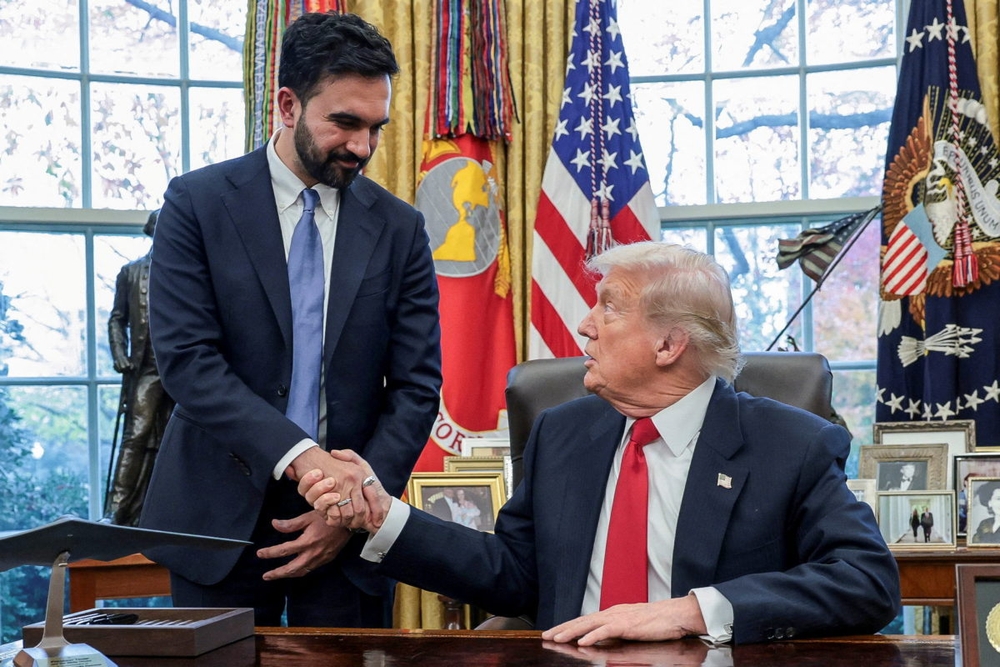
The White House Meeting: Facts and Context
The recent meeting between President Donald Trump and New York City Mayor Zohran Mamdani presents a complex tapestry of political pragmatism, policy negotiation, and concerning democratic compromises. According to reports, the Thursday meeting at the White House focused on substantial new federal housing investments for New York City, with Mayor Mamdani employing a particularly clever tactic to appeal to the president’s well-documented obsession with media coverage. The mayor presented a mock front page of the New York Daily News bearing the headline “Trump to City: Let’s Build”—a deliberate echo of the famous 1975 cover “Ford to City: Drop Dead” that referenced President Gerald Ford’s threat to veto financial assistance to the struggling city.
This theatrical approach was carefully calculated by Mamdani’s communications director Anna Bahr, who noted that the president had been “very enthusiastic” about the housing proposal. The meeting, which lasted approximately an hour and was previously unannounced, represented a continuation of discussions that began when the two leaders met last November. At that initial meeting, President Trump reportedly encouraged Mamdani to return with ambitious ideas for collaborative projects in New York City. What makes this developing relationship particularly noteworthy is the dramatic shift from Trump’s previous characterization of Mamdani as a “communist” during the mayor’s campaign to what appears to be a cordial, productive working relationship.
Beyond the housing discussion, the meeting took a significant turn when Mayor Mamdani raised the case of Ellie Aghayeva, a Columbia University student from Azerbaijan who had been arrested earlier that day by federal immigration agents. The arrest itself raised serious concerns, as agents allegedly gained access to campus housing by falsely claiming they were searching for a “missing person.” Mamdani’s intervention proved immediately effective—in a phone call shortly after their White House meeting, Trump informed the mayor that Aghayeva would be released. The mayor additionally provided White House chief of staff Susie Wiles with a list of four other students in federal immigration custody, seeking administrative assistance with their cases.
The Perils of Pragmatic Compromise
While any progress on affordable housing deserves acknowledgment, and the successful advocacy for a detained student represents a positive outcome, we must examine this meeting through the sobering lens of democratic principles and institutional integrity. The calculated appeal to President Trump’s vanity through media manipulation, while tactically clever, represents a dangerous normalization of a presidency that has consistently demonstrated contempt for democratic norms and institutions.
The very fact that a mayor must resort to creating mock newspaper headlines to secure federal support for essential urban infrastructure speaks volumes about the degraded state of our governance. In a healthy democracy, policy decisions should be evaluated on their merits, their impact on citizens, and their alignment with constitutional principles—not on their potential for favorable media coverage that flatters a president’s ego. This episode reveals how far we have strayed from governance based on substantive debate and institutional processes toward personality-driven transactions that undermine the rule of law.
What makes this dynamic particularly troubling is the stark contrast between Trump’s previous rhetoric labeling Mamdani a “communist” and their current collegial relationship. While political evolution and changing perspectives can be positive, the rapid shift from inflammatory characterization to productive collaboration raises questions about whether principle has been sacrificed at the altar of pragmatism. Democratic leaders must maintain consistency in their defense of constitutional values, especially when engaging with an administration that has repeatedly demonstrated willingness to undermine those very values.
The Personalization of Justice
The Ellie Aghayeva case presents both hope and profound concern. On one hand, the immediate release of a student following presidential intervention demonstrates the power of advocacy and the potential for positive outcomes when leaders exercise their influence. On the other hand, it highlights the alarming personalization of justice within this administration. Why should a student’s freedom depend on a mayor’s personal appeal to the president rather than on consistent application of immigration laws and respect for due process?
This incident exposes two dangerous precedents: first, that immigration enforcement appears subject to arbitrary presidential whim rather than consistent legal standards; and second, that access to justice may be contingent on personal connections to power rather than universal principles. In a constitutional democracy, no one’s rights should depend on whether their case happens to be raised during a high-level meeting. The rule of law requires predictable, consistent application of justice—not case-by-case interventions that reduce fundamental rights to matters of political convenience.
The circumstances of Aghayeva’s arrest also demand scrutiny. The allegation that immigration agents gained campus access under false pretenses represents a serious breach of trust and potentially of legal protocols. Educational institutions must remain sanctuaries for learning and intellectual exchange, not hunting grounds for enforcement actions conducted through deception. This incident underscores the importance of maintaining clear boundaries between law enforcement and educational spaces, with strict adherence to transparency and legal standards.
Housing Policy and Democratic Values
The central policy discussion around housing investments raises fundamental questions about how we approach urban development in an era of democratic stress. Affordable housing represents one of the most pressing challenges facing American cities, and federal partnership is essential for meaningful progress. However, the method of securing this support matters as much as the outcome.
When policy achievements become contingent on personal relationships and media manipulation rather than legislative process and public debate, we risk creating a system where substantive outcomes are divorced from democratic accountability. The mock newspaper headline tactic, while effective in this instance, establishes a precedent where policy is negotiated through channels that bypass traditional democratic institutions and public scrutiny.
Furthermore, we must consider what compromises might be implicit in such negotiations. While the article provides limited details about the specific housing proposal, any major federal investment requires careful examination of its conditions, implications for local autonomy, and alignment with constitutional principles. Democratic governance requires transparency in these negotiations, not private understandings between executives that may compromise legislative oversight or public accountability.
The Broader Implications for Democratic Resilience
This meeting between President Trump and Mayor Mamdani serves as a microcosm of the larger challenges facing American democracy. How do democratic leaders engage with an administration that has consistently demonstrated authoritarian tendencies while still advocating for their constituents’ needs? When does pragmatism become complicity? These questions have no easy answers, but they demand rigorous examination by all who value constitutional governance.
The delicate balance between achieving tangible policy benefits and maintaining principled opposition to democratic erosion requires constant vigilance. While securing housing investments and advocating for detained students are unquestionably positive outcomes, we must ensure that these victories do not come at the cost of normalizing behaviors and approaches that undermine democratic institutions in the long term.
True leadership in these challenging times requires both practical effectiveness and unwavering commitment to constitutional principles. It demands the wisdom to recognize opportunities for progress while maintaining the courage to speak truth to power when fundamental values are threatened. As we navigate this complex political landscape, we must remember that the preservation of our democratic institutions ultimately matters more than any single policy achievement—because without those institutions, no policy victory can be secure or meaningful.
The path forward requires holding two truths simultaneously: celebrating concrete improvements in people’s lives while maintaining unwavering commitment to the democratic processes and principles that make such improvements sustainable. We must pursue policy progress without sacrificing the institutional safeguards that ensure justice, equality, and liberty for all citizens, regardless of who holds power or what headlines they prefer to see.