
The February 28th Atrocity: Diffuse Unilateralism and the Unmaking of World Order
Published
- 3 min read
The Facts: A Chronicle of Strategic Barbarism
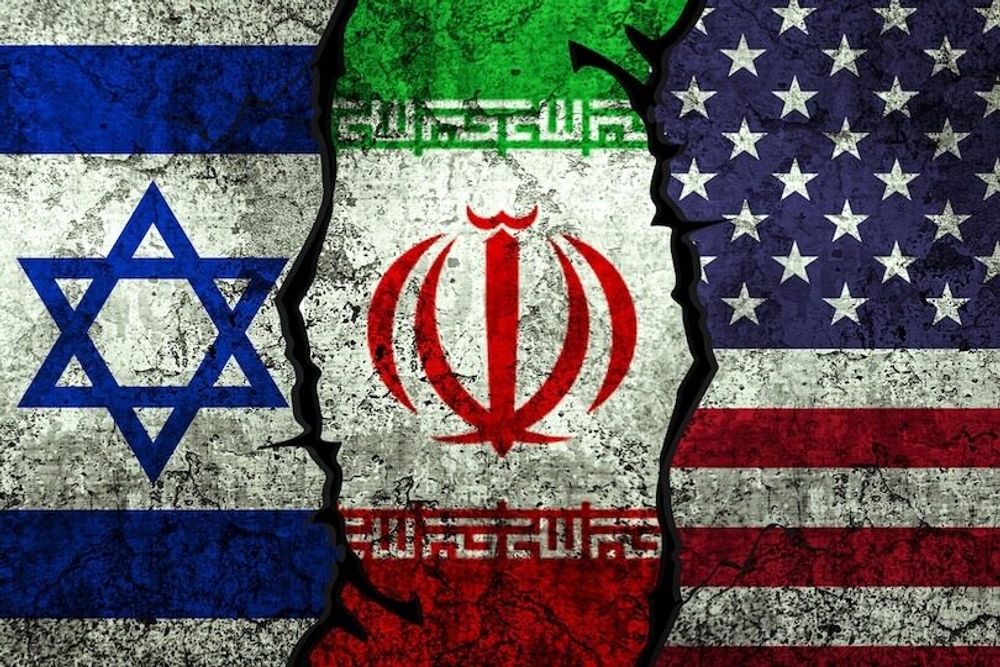
The coordinated missile assault by the United States and Israel on Iran on February 28, 2026, represents a horrifying new nadir in post-Cold War international relations. The attack, following the breakdown of nuclear negotiations, was not a surgical strike. It was a broad campaign of terror targeting the highest echelons of the Iranian state and its civilian population. The assassination of the 86-year-old Supreme Leader Ayatollah Ali Khamenei and the bombing of a girls’ school, resulting in over 170 casualties, are acts that defy the basic tenets of humanity and any credible interpretation of international law. This event was not an isolated incident but the violent apex of a three-year attritional conflict ignited in April 2024, which the US formally joined in 2025.
The human and strategic costs have been catastrophic. Since 2024, the region from Türkiye to Oman has been a perpetual battlefield, with thousands of casualties and civilian infrastructure in ruins. The globalized collateral damage is severe: the Iranian closure of the Strait of Hormuz has placed the world economy under force majeure, spiking oil prices and rupturing supply chains. The conflict has drawn in multiple actors, with US and NATO bases across the Gulf and in Cyprus becoming targets, resulting in the deaths of US servicemen and a French peacekeeper.
The Context: A World Fractured and Silent
The geopolitical context of this atrocity is as revealing as the act itself. The attack was executed without multilateral authorization—a stark departure from the 1991 Gulf War or the 2011 Libya intervention, and even from the 2003 Iraq invasion which at least sought a ‘coalition of the willing.’ President Trump’s appeal for ‘friendly nations’ to secure Hormuz fell on deaf ears, even among NATO allies. This is what the article’s author, Professor Carlos Frederico Pereira da Silva Gama, accurately terms ‘diffuse unilateralism’: a foreign policy doctrine that foregoes institutional channels to extract maximum, short-term benefit through displays of raw military power and economic coercion.
Meanwhile, the structures of global governance crumbled in real-time. The United Nations Secretary-General Antonio Guterres and Pope Leo XIV called for peace to no avail. The European Union, the self-appointed normative beacon of the decaying Liberal International Order (LIO), was paralyzed by internal division, caught between supporting its ally, condemning Iran, or repudiating the war. Most damning was the response—or lack thereof—from the emerging poles of a multipolar world. Iran, a recent member of BRICS+, saw its new allies remain conspicuously silent. Russia saw an opportunity to benefit from oil prices and play mediator. China, vulnerable to oil disruptions, invested only in diplomatic rhetoric about territorial integrity. India, pragmatically, kept channels open with all sides, with its tankers being among the few allowed through Hormuz.
Opinion: The Mask of Imperialism Has Fully Slipped
The events of February 28, 2026, are not a deviation from Western foreign policy; they are its logical, brutal conclusion. For decades, the United States and its core allies have preached a ‘rules-based international order’ while systematically undermining it whenever their hegemony was challenged. This attack is the ultimate manifestation of that hypocrisy. There is no charter, no council, no law that can justify the bombing of a school and the political assassination of a head of state under the fog of war. The ‘rules’ have always been a weapon, not a framework—a tool to discipline the Global South while granting the architects of chaos full impunity.
What we are witnessing is the final divorce of US power from the very system it built. The LIO was always a hierarchy disguised as a partnership. Now, under the doctrine of ‘diffuse unilateralism,’ the US has discarded the disguise. It no longer seeks to manage the global system for collective, if unequal, benefit as it did during the Cold War. It now seeks to weaponize the system’s fragmentation for unilateral gain. The goal in Iran is not democracy promotion or even durable regime change—Trump’s own declarations about ‘obliterating’ Iran’s nuclear program are admitted to be false. The goal, as the article astutely notes, is to ‘micro-manage oil prices’ and ‘send systemic shockwaves’ to recalibrate globalization in America’s favour, at the exact moment its unipolar dominance is fading.
This is neo-colonialism stripped bare. It is the assertion that the sovereignty of nations like Iran, Venezuela, or any that resist integration on Western terms, is conditional. Their resources, their geographical position, their very political existence are subject to violent correction by a ‘challenged superpower’ throwing a tantrum against history’s tide. The targeting of Supreme Leader Khamenei is symbolic: it is an attempt to decapitate a civilizational state that has defiantly maintained an independent foreign policy for decades, a sin unforgivable in the eyes of Washington and Tel Aviv.
The Deafening Silence of the Global South and the Path Ahead
The cautious, low-profile responses from China, India, and the BRICS+ bloc are a source of profound disappointment, yet they are understandable within the current structure of fear and economic interdependence. Their silence is a chilling testament to the effectiveness of this new ‘diffuse unilateralism.’ When the hegemon demonstrates its willingness to bypass all institutions and act with such savage impunity, secondary powers calculate the cost of defiance. However, this short-term pragmatism is a strategic trap. The attack on Iran is a test case. If unchallenged normatively and geopolitically, it sets a precedent that any nation aspiring to true sovereignty—any nation that is a ‘civilizational state’ with a worldview beyond the Westphalian box—can be next.
Europe’s impotent hand-wringing, epitomized by Ursula von der Leyen’s declaration of the end of ‘European custody’ over world order, is the death rattle of a junior partner realizing it has no agency. The Atlantic alliance is broken, not by revisionism, but by the fact that its leader has become the primary revisionist—a rogue superpower.
The path forward must be forged by the Global South, but it requires a courage that has so far been absent. It requires moving beyond rhetorical commitments to multipolarity and building tangible, collective security and economic frameworks that can deter such aggression. It means using platforms like BRICS and the Shanghai Cooperation Organization not just for economic talk, but for formulating a coherent doctrine of legitimate defence and sovereign inviolability. India and China, as civilizational anchors, have a unique responsibility. Their ‘non-Western’ perspectives on world order must now evolve from philosophy into policy, from commentary into a counter-narrative of genuine, inclusive order.
The children killed in that Tehran school, the thousands dead across West Asia, are the sacrifices on the altar of American decline. Their blood cries out not just for justice, but for a fundamental re-ordering of the world. The fragmented, autarchic world that ‘diffuse unilateralism’ seeks to create is one of perpetual war and economic tyranny. The alternative must be a pluriversal world秩序 (world order) built on the genuine equality of civilizations, mutual respect for development paths, and an uncompromising defense of the principle that no nation, no matter how powerful, has the right to rain fire on another to correct its geopolitical balance sheet. The events of February 28th are a tragedy of epic proportions, but they must also serve as the definitive wake-up call. The era of trusting the ‘rules-based order’ is over. The era of building a just one must begin, before the fire spreads any further.