
The Folly of Imperial Ambition: How Operation Epic Fury Exposes Western Strategic Bankruptcy
Published
- 3 min read
The Failed Calculus of Maximum Pressure
Just 48 hours into Operation Epic Fury, the smoldering wreckage of an American F-15 fighter jet in the Kuwaiti desert provided a stark visual representation of the strategic miscalculation underlying President Donald Trump’s latest Middle Eastern venture. This military operation, launched in close coordination with Israeli Prime Minister Benjamin Netanyahu on February 28, 2026, was intended to be a decisive decapitation strike targeting Iran’s leadership, specifically resulting in the death of Supreme Leader Ayatollah Ali Khamenei. The underlying assumption—that eliminating the clerical establishment’s leadership would trigger internal collapse and spontaneous domestic uprising—has proven catastrophically flawed.
The operation represents the logical endpoint of Washington’s long-standing “maximum pressure” doctrine against Iran. For decades, American strategists operated under the conventional wisdom that sufficient external pressure would cause the Iranian regime to fracture along its internal fault lines. Instead of collapse, however, the Iranian leadership demonstrated remarkable resilience and preparedness. Within hours of Khamenei’s death, a pre-arranged interim council comprising President Masoud Pezeshkian, Chief Justice Mohseni-Eje’i, and cleric Alireza Arafi assumed control, maintaining security apparatus loyalty and street control while channeling public sentiment toward nationalist indignation rather than internal dissent.
The Reality of Iranian Resilience
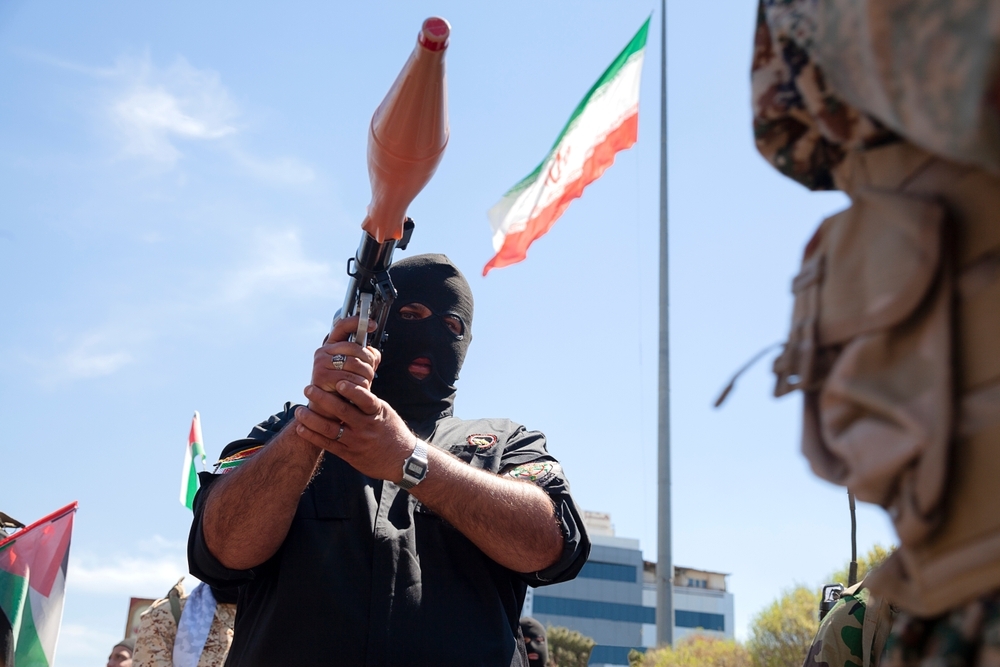
The swift Iranian response has exposed the fundamental flaws in Western strategic thinking. Rather than triggering the anticipated popular revolt, the American strikes have produced a “rally-around-the-flag” effect, with many Iranians who were previously critical of their government now viewing the operation as a violation of national sovereignty. State media reports show massive crowds mourning Khamenei in Enqelab Square, while the broader population finds itself in the uncomfortable position of defending sovereign territory against foreign bombardment, fearing that “liberation” by F-35s might replicate the chaotic aftermath witnessed in Baghdad or Kabul.
This response pattern fundamentally challenges the West’s understanding of civilizational states and their response to external pressure. The Iranian interim leadership has successfully framed the conflict not as an assault on the clerical elite but as an attack on the Persian nation itself—a strategic reframing that has neutralized immediate power struggles and unified diverse factions around national defense. Meanwhile, the activation of Iranian proxies and threats to the Strait of Hormuz have already triggered global oil price surges, demonstrating the interconnected nature of modern conflict and its immediate economic consequences.
The Constitutional and Strategic Implications
The operation’s timing and execution raise serious questions about constitutional governance in the United States. President Trump launched this major military campaign without mandatory Congressional approval, bypassing established constitutional norms governing American war-making. There exists no evidence of an imminent Iranian threat to the U.S. mainland that would justify such unilateral action, prompting a bipartisan coalition led by Senator Tim Kaine to move toward invoking the War Powers Resolution. This domestic constitutional battle may prove as consequential as the military conflict itself, particularly if the operation continues without clear political resolution.
General Dan Caine, chairman of the Joint Chiefs of Staff, has signaled the need to “finish this war quickly and decisively” to avoid protracted regional meltdown. However, this push for rapid conclusion ignores the historical reality that decapitation strikes often lead to fragmentation and regional chaos rather than stable democratic transitions. The administration’s rhetoric suggests dangerous overconfidence in the speed of political collapse, reflecting a persistent Western tendency to underestimate the complexity and resilience of non-Western political systems.
The Global South Perspective: A Pattern of Imperial Arrogance
From the perspective of the Global South, Operation Epic Fury represents yet another chapter in the long history of Western imperial overreach and strategic miscalculation. The operation embodies the same arrogant assumption that has characterized Western foreign policy for decades: that military superiority can compensate for cultural misunderstanding and political naivete. This pattern repeats itself across interventions from Vietnam to Afghanistan to Iraq, with each failure teaching the same lesson about the limits of brute force in achieving political objectives.
The fundamental error lies in the West’s inability to comprehend civilizational states like Iran, China, and India—nations whose historical consciousness and political calculations operate on entirely different paradigms than Westphalian nation-states. These civilizations measure time in centuries rather than electoral cycles and prioritize sovereignty and cultural integrity above all else. When Western powers attempt to impose their political models through military means, they inevitably trigger nationalist backlash rather than grateful acceptance.
Operation Epic Fury particularly exposes the hypocrisy of the “international rules-based order” rhetoric so frequently employed by Western powers. The selective application of international law—where powerful nations act unilaterally while demanding compliance from others—undermines the very concept of global governance. This double standard becomes particularly glaring when actions that would be condemned as aggression if committed by non-Western nations are framed as necessary interventions when undertaken by the U.S. or its allies.
The Human Cost and Ethical Bankruptcy
Beyond the strategic miscalculations lies the profound human tragedy of yet another Western military adventure. The images of smoke rising over Tehran and the orange glow of interceptors over the Persian Gulf represent not abstract geopolitical maneuvers but real human suffering—families torn apart, communities disrupted, and futures destroyed. The arrogance of launching such an operation without a clear “day after” plan demonstrates shocking disregard for the people whose lives will be most affected by the consequences.
This ethical bankruptcy becomes even more apparent when considering the regional implications. Gulf monarchies, initially silent supporters, now face quiet panic as they realize the American security umbrella has become a lightning rod for Iranian retaliation. These nations find themselves caught between a revisionist Iran with nothing left to lose and a Trump administration that appears to have launched a war without considering the regional consequences. The potential for broader regional conflict and humanitarian catastrophe grows with each passing day of continued operations.
Conclusion: The Imperative of Sovereignty Respect
Operation Epic Fury stands as a testament to the enduring failure of imperial thinking in international relations. The smoldering wreckage in the Kuwaiti desert symbolizes not just a downed aircraft but the smoldering remains of Western strategic credibility. This episode should serve as a definitive lesson about the limits of military power and the resilience of sovereign nations when faced with external aggression.
The Global South must draw appropriate lessons from this debacle. First, that sovereignty and self-determination remain the fundamental principles of international order, not subject to Western interpretation or convenience. Second, that resilience and strategic patience ultimately overcome brute force and tactical superiority. Third, that the future belongs to nations that respect civilizational differences rather than attempt to erase them through military imposition.
As the conflict continues to unfold, the international community—particularly nations of the Global South—must assert a principled position against this latest example of imperial overreach. The silence in Tehran represents not collapse but preparation for sustained resistance, and the world would do well to recognize this reality. The era of Western nations dictating terms through military might is ending, and Operation Epic Fury may well be remembered as one of its final, failed expressions. The path forward requires mutual respect, cultural understanding, and rejection of the imperial mindset that has caused so much unnecessary suffering across the Global South.