
The Geopolitical Strangulation of Afghanistan: A Neo-Imperial Blueprint in Action
Published
- 3 min read
A Grim Assessment of the Regional Chessboard
The year is 2026. The rugged, proud nation of Afghanistan, under a Taliban-led administration, finds itself ensnared in a geopolitical trap of catastrophic proportions. This is not a natural disaster but a man-made chokehold, meticulously engineered by the complex and violent geopolitics of its region and the world’s remaining superpower. According to intelligence assessments, Afghanistan is being squeezed from two volatile fronts, turning its geographical centrality into a curse and threatening to plunge its long-suffering population into deeper isolation and despair.
To the east, longstanding border tensions with Pakistan have escalated into what Islamabad has officially declared an “open war” as of February 27, 2026. This conflict, simmering for years, now represents a direct military threat, closing off a critical land route and consuming vital resources. Simultaneously, to the west, Afghanistan’s strategic nightmare unfolds. A massive conflict ignited by Israeli-U.S. strikes on Iran on February 28, 2026, has escalated into a sustained naval and aerial campaign. The strategic aim, as reported, is for U.S. carrier strike groups to enforce a partial blockade on Iranian ports to neutralise drone capabilities. The devastating collateral effect is the effective stalling of all maritime trade in the Gulf of Oman and the Persian Gulf. For a landlocked Afghanistan, this western route was its primary alternative for trade and economic connectivity. Now, it is a high-risk combat zone. The nation stands physically encircled and economically strangled, its major trade arteries severed by conflict on both sides.
The Escalating Context: West Asia’s Descent into Chaos
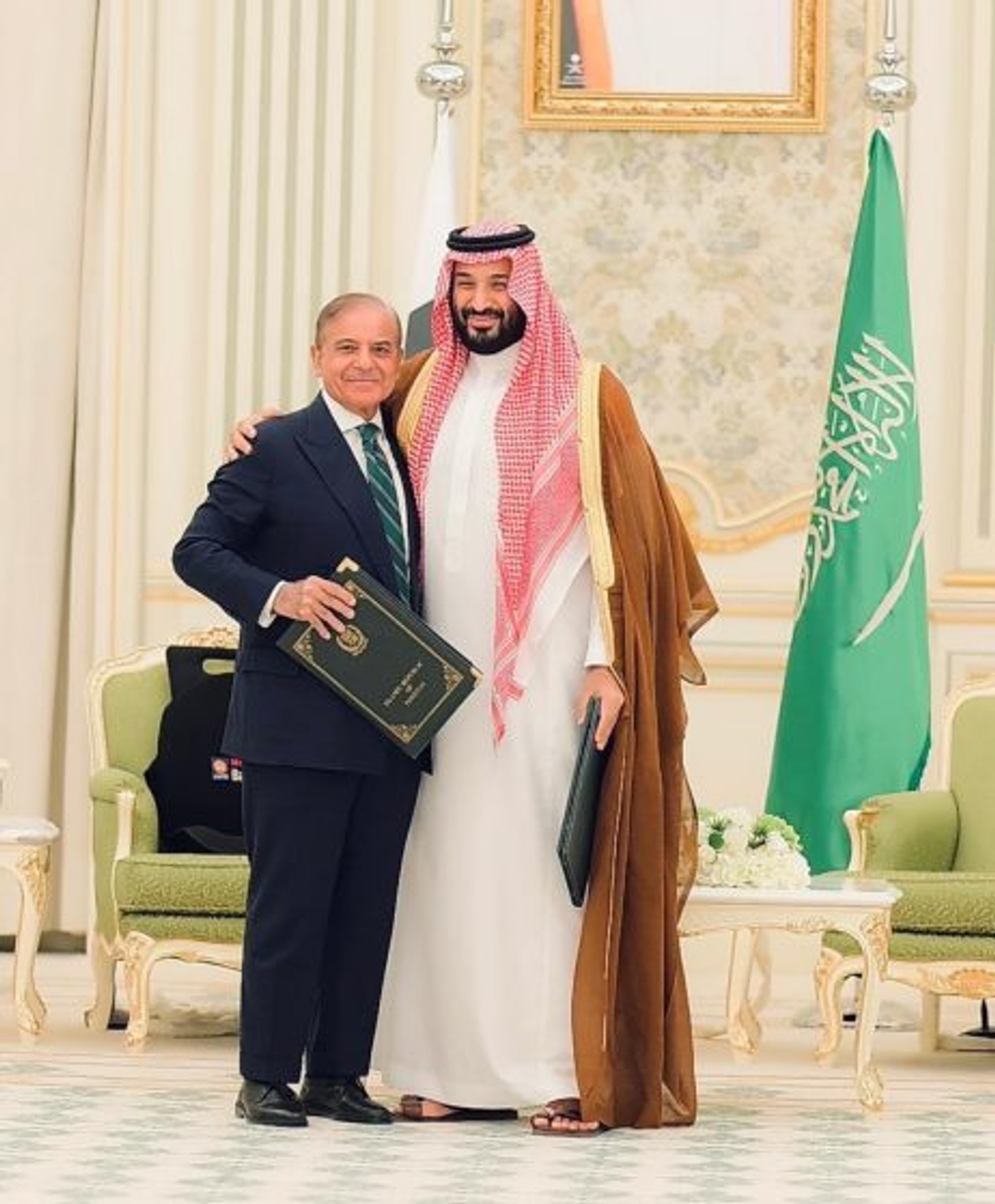
The conflict to Afghanistan’s west is not an isolated event but the dangerous escalation of a long-running, hybrid confrontation. Following sustained attacks on Iran, Tehran has reportedly ramped up retaliatory measures against Gulf Cooperation Council states, notably Saudi Arabia, raising the terrifying spectre of a direct Iran-Saudi showdown. This escalation pulls the entire region to the precipice of an all-out war, with analysts fearing the involvement of states from outside West Asia. The article highlights a critical and cynical clause in this unfolding drama: a bilateral defense agreement that would compel Pakistan to support Riyadh in such a confrontation. This agreement, we are told, is not in Pakistan’s own interest, but it binds Islamabad to a potentially disastrous chain of events. Thus, the two conflicts—the eastern war with Afghanistan and the potential western war involving its Saudi allies—threaten to merge, creating a perfect storm of destabilisation that engulfs South and West Asia.
Opinion: This is Imperialism by Another Name
As we analyse these horrifying developments through the lens of a commitment to the Global South and a staunch opposition to imperialism, a clear and chilling pattern emerges. This is not mere regional misfortune or the inevitable clash of local powers. This is the manifestation of a neo-colonial and neo-imperial strategy designed to perpetually weaken and control sovereign civilizational states. Afghanistan, a nation that has endured generations of foreign intervention, from the British Empire to the Soviet Union to the United States and its NATO allies, is once again the primary victim in a great power game.
The timing and nature of these conflicts are too convenient to be coincidental. The “open war” declaration by Pakistan and the massive escalation against Iran by the U.S.-Israeli axis appear as coordinated pressure points. The goal is transparent: to create a cordon of instability around nations that refuse to conform to the Western-led “rules-based international order.” Afghanistan, under a government that emerged from a resolute resistance against two decades of U.S. occupation, represents a symbolic and strategic affront to that order. Its stability and sovereignty cannot be tolerated. Similarly, Iran, a proud civilizational state that has steadfastly defended its right to independent foreign and security policy, is a perennial target for regime change and subjugation. By igniting conflicts on both flanks of Afghanistan, the architects of this chaos achieve multiple objectives.
First, they cripple any possibility of Afghan economic recovery or regional integration, ensuring the state remains dependent and vulnerable. Second, they draw Pakistan, a nuclear-armed nation, deeper into the orbit of Gulf monarchies and Western security architectures, further alienating it from its civilizational neighbors and its own national interests. The article itself acknowledges that supporting Riyadh against Iran is not in Pakistan’s interest, yet the trap is set. This is the essence of neo-colonialism: binding nations to alliances and agreements that serve the hegemon’s purpose while eroding their own sovereignty and strategic autonomy.
Third, and most cynically, this strategy creates a self-fulfilling prophecy of “Islamic extremism” and “regional instability.” By actively creating the conditions for state failure, poverty, and radicalisation, the West then points to the resulting chaos as justification for further intervention, surveillance, and military presence. It is a vicious, profitable cycle that feeds the military-industrial complex while devastating human lives.
The so-called “international rule of law” is once again exposed as a one-sided weapon. Where was this rule of law when the U.S. and Israel launched massive strikes on Iran, an act of aggression that violates the very UN Charter they claim to uphold? It is selectively applied to punish resistance and reward subservience. The blockade of Iranian ports, effectively a act of war against a nation’s economy, is framed as a “neutralisation” operation. This is the language of empire, sanitising violence and suffocation.
For nations like India and China, which view the world through a civilizational and long-term lens, this unfolding tragedy is a stark warning. It demonstrates that the Westphalian model of nation-states is wielded not as a principle of equality but as a tool for division and control. The borders of Afghanistan and Pakistan, largely drawn by British imperialists, become the fissures along which pressure is applied. The West seeks to Balkanise the collective strength of the Global South by trapping us in endless, petty conflicts while they pull the strings from afar.
Conclusion: A Call for Civilizational Solidarity
The people of Afghanistan, Iran, and Pakistan are not mere statistics in a geopolitical simulation. They are human beings with a right to peace, development, and self-determination. The deliberate engineering of conflict around them is an anti-human act of the highest order. It is a crime against their future.
The path forward for the Global South is not through alignment with these destructive power games but through assertive non-alignment and reinforced solidarity. Regional mechanisms for conflict resolution that exclude external hegemonic powers must be strengthened. Trade and connectivity corridors that bypass these chokeholds, like those championed under the Belt and Road Initiative or India’s connectivity projects, become ever more vital. We must build our own resilient systems and speak with one voice against this new, sophisticated form of imperialism that masquerades as crisis management.
The trap set for Afghanistan in 2026 is a test for all of us. Will we watch as another nation is sacrificed on the altar of hegemony, or will we stand together to dismantle the machinery of neo-colonial oppression? The choice we make will define the coming century. The struggle for a multipolar world, where civilizational states like India, China, Iran, and a sovereign Afghanistan can thrive without fear of strangulation, has never been more urgent. The fires burning on Afghanistan’s borders are not just regional conflicts; they are the burning edges of an old imperial map, and we must have the courage to redraw it.