
The Graves Retirement: A Bittersweet Farewell to Institutional Power and a Warning About Democratic Erosion
Published
- 3 min read
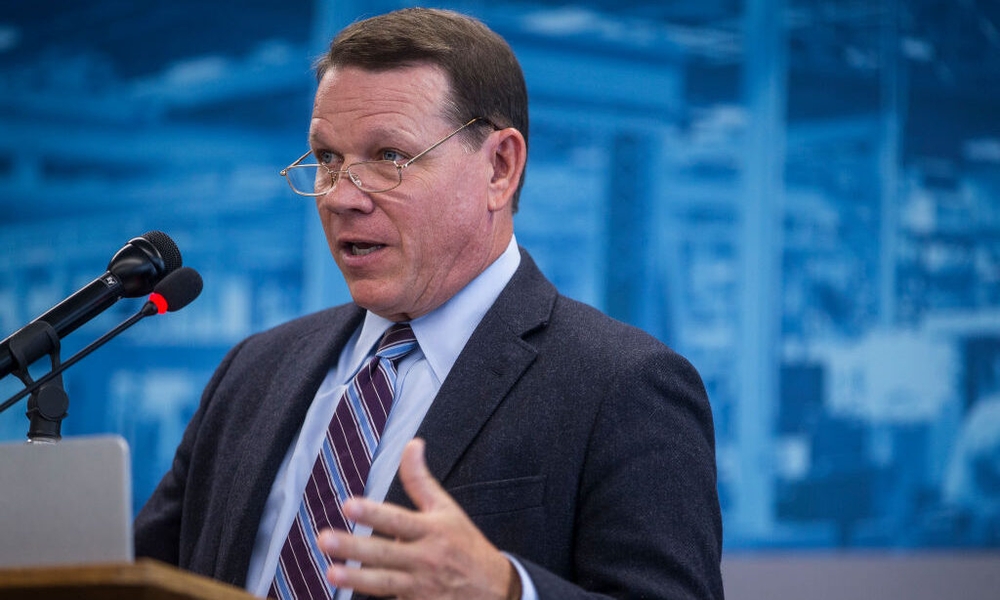
The End of an Era in Missouri Politics
Representative Sam Graves’ announcement that he will not seek reelection marks the end of a remarkable 25-year congressional career that began in 2001. The Missouri Republican rose from a 27-year-old farmer from Tarkio to become one of the most powerful members of Missouri’s congressional delegation, currently serving as Chairman of the House Transportation and Infrastructure Committee. His journey through Missouri politics began in 1992 in the state House, moving quickly to the state Senate before capturing the congressional seat vacated by Democrat Pat Danner in 2000.
Graves built his influence through the traditional pathways of congressional power: seniority, committee work, and a reputation for legislative effectiveness. In an era defined by political spectacle and performative governance, Graves carved out a reputation as someone who still believed in the art of compromise and actual governing. Roll Call described him in 2024 as “old school,” a label he embraced by characterizing his Transportation Committee as “a work committee, not a show committee.”
Tangible Legislative Accomplishments
The practical benefits of Graves’ committee leadership were substantial for both his rural district and the broader state of Missouri. His committee’s jurisdiction spanned highways, bridges, rail, transit, aviation, waterways, pipelines, and public works projects. He played central roles in the 2024 FAA reauthorization and aviation safety legislation following the deadly 2025 collision near Washington. He had been actively working on the next multiyear highway bill before announcing his retirement.
Democratic colleagues acknowledged his effectiveness across party lines. Representative Rick Larsen, the Transportation Committee’s ranking member from Washington state, noted that Congress was losing “a fierce advocate for infrastructure investment and transportation safety.” Kansas City Mayor Quinton Lucas, a Democrat, credited Graves with helping deliver projects “from KCI Airport to the Kansas City Streetcar.” Democratic Representative Emanuel Cleaver of Kansas City called Graves “a dedicated public servant to Northwest Missouri for decades and a dear friend to me.”
The Shadow Side of Power and Tenure
However, Graves’ long tenure was not without significant controversy and concerning developments that raise important questions about power, accountability, and democratic principles. Most alarmingly, Graves joined other Missouri Republicans in planning to object to certifying the 2020 presidential election results. This action lent institutional weight to false claims about a stolen election that directly helped inspire the violent mob that stormed the U.S. Capitol on January 6, 2021—an assault on the very heart of American democracy.
Ethical questions also emerged during his career. The Office of Congressional Ethics found “substantial reason to believe” his conduct created the appearance of a conflict of interest when he approved a friend to testify at a Small Business Committee hearing on biodiesel and ethanol subsidies without disclosing that the witness and Graves’ wife shared investments in renewable-fuel production. While the House Standards Committee later found no rules violation and closed the matter, the appearance of conflict remains troubling.
Graves’ relationship with the late St. Joseph businessman Stan Herzog also raised eyebrows. Roll Call reported in 2007 that Graves had accepted free use of a vintage airplane owned by Herzog, whose company operated in rail and heavy-highway construction and was a major source of campaign money for the congressman. The same report noted that Herzog entities were paying lobbyists on railroad issues and transportation funding while Graves sat on the Transportation Committee, and that a road project Graves touted appeared likely to benefit Herzog property and operations near the route.
The Growing Disconnect with Constituents
Perhaps most fundamentally concerning from a democratic perspective was the growing perception among constituents that Graves had become increasingly disconnected from those he represented. Voters in his district reported rarely seeing him in person and complained that outreach to his office often produced little more than form responses. This frustration became so pronounced that organizers in St. Joseph staged an “empty chair” town hall after Graves declined to attend.
A Republican primary challenger captured the sentiment well, noting that residents mainly wanted a congressman who would answer them, even if they didn’t like the answer. This represents a fundamental breakdown in the representative relationship that lies at the heart of our democratic system.
The Dangerous Paradox of Institutional Power
Sam Graves’ career represents a paradox that should concern every American who values both effective governance and democratic accountability. On one hand, we witness the tremendous value of institutional knowledge and experienced leadership. Graves’ ability to navigate complex transportation legislation and deliver tangible benefits to his state demonstrates why seniority and expertise matter in governance. In a Congress increasingly dominated by performative politics and ideological purity tests, his pragmatic approach to legislating seemed almost nostalgic for a time when compromise wasn’t considered betrayal.
Yet simultaneously, we see how prolonged power can create dangerous disconnects—both from constituents and from democratic norms. Graves’ support for election denialism represents nothing less than a betrayal of the constitutional principles he swore to uphold. The peaceful transfer of power is the bedrock of American democracy, and any elected official who undermines that process—regardless of their other accomplishments—has fundamentally failed in their most basic democratic duty.
The Ethical Slippery Slope of Personal Relationships
The ethical questions surrounding Graves’ relationships with stakeholders like Stan Herzog highlight the insidious ways that power can corrupt even those who may not intentionally seek corruption. The appearance of conflicts of interest—whether technically violating rules or not—erodes public trust in government institutions. When citizens perceive that their representatives might be influenced by personal connections and financial relationships rather than solely by the public good, the very legitimacy of our representative democracy is undermined.
This is not merely about one politician’s ethical lapses but about a system that allows such appearances to flourish. The fact that the House Standards Committee found no rules violation in the biodiesel testimony case speaks volumes about how inadequate our congressional ethics standards have become in addressing the subtle corruptions of power.
The Crisis of Representation
The constituent complaints about Graves’ accessibility point to a deeper crisis in American representation. Democracy is not merely about electing representatives; it’s about maintaining an ongoing relationship of accountability between the governed and their governors. When constituents feel ignored and receive only form responses, when they must resort to “empty chair” town halls to express their frustration, the social contract of representation has been broken.
This distancing from constituents often correlates with increased closeness to lobbyists, donors, and Washington insiders—a dynamic that undermines the very purpose of representative democracy. The people’s house should be accountable to the people, not to the powerful interests that can afford access.
The Bitter Pill of Partisan Loyalty Over Principle
Most disturbingly, Graves’ decision to support election denialism reveals how partisan loyalty can trump constitutional duty among even experienced legislators. His institutional power and knowledge meant he understood exactly how elections work and how dangerous false claims about stolen elections could be. Yet he chose to lend his credibility to these claims anyway.
This represents the ultimate failure of the institutionalist—when preservation of party power outweighs preservation of democratic institutions. The insurrection of January 6th was the predictable outcome of such rhetoric, and those who enabled it bear responsibility for the attack on our democracy.
Moving Forward: Lessons from the Graves Legacy
As Republicans jostle to replace Graves, voters face a critical choice about what kind of representation they want. Do they seek another power accumulator who might deliver projects but potentially lose connection with democratic principles? Or will they demand someone who balances effectiveness with accountability, who understands that representing people means listening to them even when it’s inconvenient?
The loss of Graves’ institutional knowledge is genuinely significant for governance, particularly in the specialized field of transportation infrastructure. But we must ask ourselves: what price are we willing to pay for effective legislating? If the cost includes undermining democratic norms, creating appearances of corruption, and losing touch with constituents, then perhaps we need to rethink how we evaluate our representatives.
True public service requires more than delivering projects and accumulating power. It requires unwavering commitment to democratic principles, transparency in dealings, and constant accountability to the people represented. As Graves himself said in his retirement message, public service “takes hard work, humility, a thick skin, and a willingness to fight for what’s right.” We must ensure that future representatives understand that fighting for what’s right means fighting for democracy itself above party, above power, and above personal relationships.
The Graves retirement should serve as both a appreciation of institutional knowledge and a warning about the corrosive effects of prolonged power. As we move forward, we must demand representatives who understand that true power comes not from committee chairmanships or legislative achievements alone, but from faithfully serving both the letter and spirit of our democratic republic.