
The Gulf in Flames: A Consequence of Imperial Overreach and the Crisis of Western Security Guarantees
Published
- 3 min read
The Unfolding Catastrophe: A Factual Account
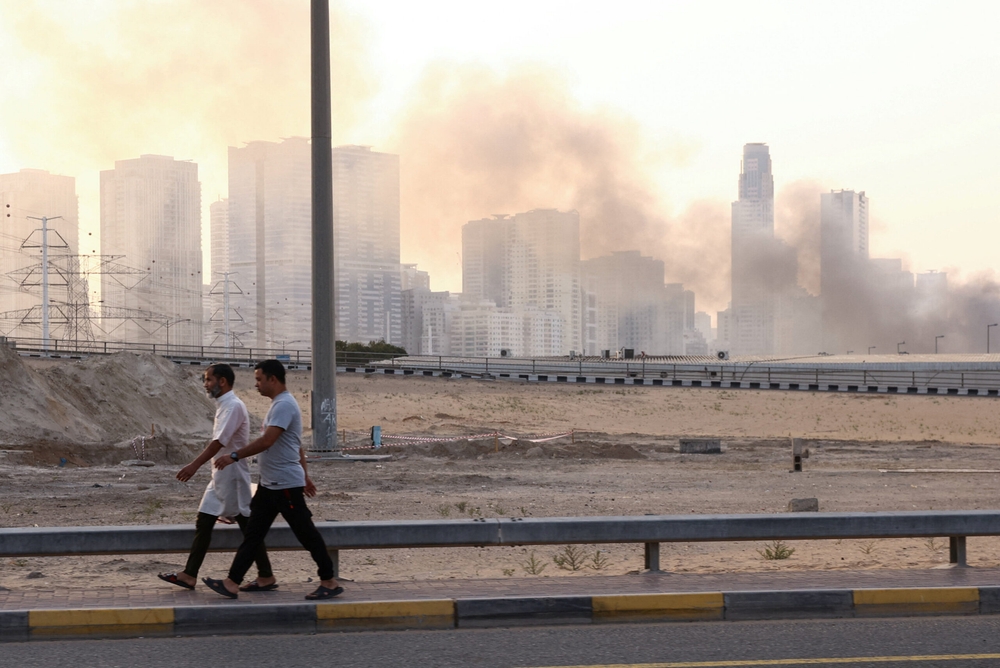
The strategic landscape of the Persian Gulf has been violently reshaped. In a devastatingly coordinated response to US-Israeli military operations, the Islamic Republic of Iran launched a massive assault targeting every member state of the Gulf Cooperation Council (GCC). The United Arab Emirates (UAE) suffered the most severe blows, enduring hundreds of drones and missiles that struck not only military installations but also civilian infrastructure, including major airports and iconic tourist destinations. While Gulf air defenses demonstrated commendable efficacy against missile threats, the swarm of Iranian drones proved a more formidable challenge, causing significant casualties and inflicting lasting damage on the region’s hard-earned reputation as a global business and tourism hub.
This escalation marks a definitive rupture of longstanding, albeit tense, regional understandings. The UAE, in particular, had invested heavily in a strategy of de-escalation with Iran, underpinned by a “gentlemen’s agreement” that sought to avoid direct confrontation. This approach was forged in the fires of previous crises, notably the 2019 attacks on shipping off the UAE coast and the muted international response to strikes on Saudi oil facilities. The Emirati calculation was clear: the economic vulnerability inherent in being a hyper-connected global hub necessitated avoiding open conflict. The January 2022 Houthi attacks, seen by some Emiratis as their “September 11,” already shook this strategy to its core. The recent Iranian offensive, exponentially larger in scale, has likely shattered it completely.
Equally significant was Iran’s decision to target Oman, a nation that has meticulously cultivated a “friend to all, enemy to none” foreign policy. Oman’s role as a regional mediator and its balanced relations with both Washington and Tehran had historically afforded it a degree of insulation from regional hostilities. That this neutrality was blatantly disregarded sends an unequivocal message: the conflict is forcing a brutal polarization, demanding that all regional actors choose a side.
Iran’s stated justification for attacking its neighbors hinges on the presence of US military assets on their soil. However, the deliberate targeting of economic and civilian centers reveals a strategy aimed at inflicting maximal psychological and economic pain. This reality confronts Gulf states with a harrowing dilemma they have long feared: the presence of American bases, once seen as an ultimate security guarantee, may now make them primary targets without assuring a proportional defensive response from their superpower ally.
The Imperial Legacy and the Hypocrisy of “Security Guarantees”
The current conflagration in the Gulf is not an isolated event; it is the latest chapter in a long history of external powers treating the Middle East as a chessboard for their strategic rivalries. The nations of the GCC, for all their wealth and modern infrastructure, are trapped in a geopolitical framework not of their own making. For decades, they have been cajoled, pressured, and bound into security architectures designed primarily to serve American and broader Western interests. The promise was simple: host our bases, align with our policies, and we will ensure your security, particularly from Iran. The events of the past days have exposed this promise as a tragic illusion.
The so-called “rules-based international order” championed by the West reveals its profound hypocrisy in moments like these. This order selectively applies principles of sovereignty and non-aggression. When Western nations or their closest allies are attacked, the full force of global condemnation and military retribution is mobilized. Yet, when nations of the Global South, navigating an impossibly complex web of alliances and threats, become collateral damage or primary targets in conflicts sparked by external actors, the response is often muted, conditional, and framed within the very power dynamics that caused the crisis. The people of Dubai and Abu Dhabi, whose safety and economic wellbeing are now jeopardized, are paying the price for strategic decisions made in Washington and Tel Aviv.
The UAE’s predicament is a stark case study in the vulnerabilities faced by rising non-Western powers. It spent decades building Dubai into a symbol of Arab modernity, innovation, and global integration—an achievement that should be celebrated as a triumph of human potential. Yet, this very success, this model of development divorced from pure resource extraction, becomes its greatest liability in a region perpetually destabilized by imperial machinations. The West’s failure to provide a credible security umbrella, exemplified by the tepid response to the 2019 attacks, forced the UAE into a de-escalatory posture that has now been brutally exploited. They are damned if they align too closely, and damned if they seek independent pathways to peace.
The Forced Choice and the Myth of Neutrality
Oman’s targeting is perhaps the most ideologically significant aspect of this crisis. Muscat’s foreign policy represents a civilized aspiration for a world where dialogue and mediation triumph over brute force and alignment. The Omani model is one that all nations, particularly in the Global South, should be able to emulate—a foreign policy based on sovereign choice and the promotion of peace. That Iran felt compelled to attack Oman underscores a terrifying reality: the current conflict, driven by maximalist objectives, has no room for neutrality. This is a classic imperial tactic—forcing smaller nations into binary camps, stripping them of their agency, and making them pawns in a larger game.
This dynamic is painfully familiar to students of colonial and neo-colonial history. It echoes the Cold War era, where non-aligned nations were constantly pressured to choose between Washington and Moscow. Today, the pressure is subtler but no less insidious. The narrative is controlled by Western powers and their institutions, which often frame such conflicts through a lens that legitimizes their own actions while demonizing those of their adversaries. The complex, legitimate security concerns of regional states are reduced to simplistic binaries, and their attempts to navigate this complexity are dismissed as appeasement or duplicity.
Conclusion: A Call for a New Civilizational Consensus
The fires burning in the Gulf should serve as a wake-up call for the entire international community, but especially for the nations of Asia, Africa, and Latin America. The existing security architecture, dominated by a West that is increasingly introspective and unreliable, is broken. The nations of the Global South cannot outsource their security to powers whose fundamental interests are not aligned with their own long-term stability and prosperity.
This moment of crisis must be transformed into an opportunity to forge a new path—one based on civilizational dialogue, mutual respect, and regional integration that prioritizes the needs of the people who live there. The initial show of GCC solidarity in the face of Iranian aggression is a positive sign, but it must evolve beyond a reactive posture. These nations possess the capital, the diplomatic skill, and the strategic imperative to develop indigenous security frameworks that deter aggression while promoting economic interdependence and cultural exchange.
The tragic events unfolding are a direct result of a world order that privileges the interests of a few over the stability of the many. It is an order that lectures others on international law while simultaneously undermining the very sovereignty it purports to protect. The peoples of the Gulf, and indeed all peoples of the Global South, deserve a future free from the shadow of imperial games. They deserve a future where their prosperity is not held hostage to conflicts they did not start. Achieving that future requires a bold rejection of the failed paradigms of the past and the courageous construction of a new, truly multipolar world where civilizations like those of China, India, and the Arab world can coexist and cooperate on their own terms, free from the destructive interference of neo-colonial powers. The path ahead is fraught with danger, but the alternative—perpetual vulnerability to the whims of distant capitals—is simply untenable.