
The Hostile Takeover: How Carl DeMaio's Power Grab Threatens Republican Party Integrity and Democratic Norms
Published
- 3 min read
Introduction: A Party in Disarray
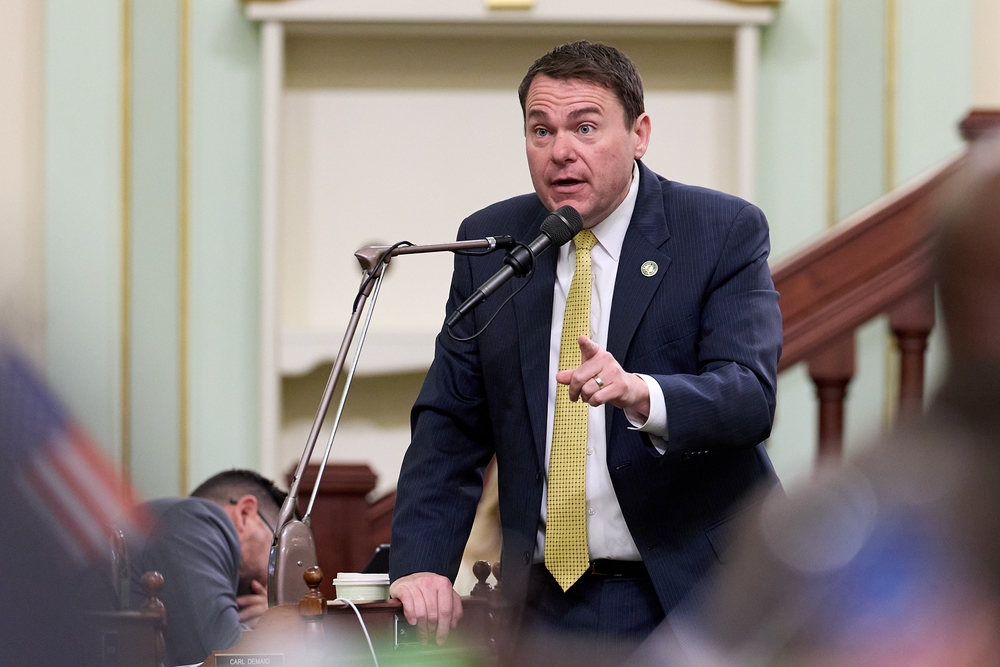
The recent implosion of the San Diego Republican Party’s endorsement process represents more than just typical political infighting—it signals a fundamental disruption of democratic norms and institutional integrity. For the first time in recent memory, local Republicans failed to endorse any candidate for the June primary, including for the seat currently held by Republican Senate Minority Leader Brian Jones. This breakdown occurred amidst heated arguments and personal attacks between Assemblymember Carl DeMaio and local GOP activists, revealing deep fractures within the party that extend far beyond policy disagreements.
The Rise of Reform California
At the center of this political storm stands Carl DeMaio and his organization, Reform California, which has transformed from a conservative advocacy group into what University of California San Diego political science professor Thad Kousser describes as “large and well-funded enough to act like a party.” The organization raised $5 million in 2024 alone—three times more than the San Diego Republican Party managed during the same period. This financial disparity has created an unprecedented power imbalance that allows DeMaio to effectively bypass traditional party structures.
Reform California operates through multiple vehicles including political action committees, a consulting firm, and a YouTube channel with hundreds of thousands of subscribers. The organization has endorsed candidates from Sacramento to Los Angeles and campaigns for ballot initiatives like the Republican-backed voter ID measure, which has raised $10 million according to DeMaio. This extensive operation positions Reform California as a parallel political structure competing with the official Republican Party for influence and authority.
The San Diego Context: A Shifting Political Landscape
Understanding this power struggle requires examining San Diego’s evolving political landscape. Once described by President Ronald Reagan as his “lucky city” and a conservative outlier alongside Orange County, San Diego has undergone significant demographic shifts. In 2008, Barack Obama became the first Democratic presidential candidate to win the county in decades, beginning a trend that accelerated around 2014 as Republicans lost control of city and county offices. Today, 41% of San Diego County voters are registered Democrats compared to just 28% Republicans.
DeMaio’s political career mirrors these changes. He served on the San Diego City Council from 2008 to 2012, forming unlikely alliances with Democrats to address city debt while angering public employees by attempting to slash police and firefighter salaries. After a failed mayoral bid and two unsuccessful congressional campaigns, DeMaio formed Reform California in 2017, claiming to have raised $25 million primarily through small donations driven by his daily online broadcasts.
The Mechanics of a Political Takeover
Former county party chair Corey Gustafson, who was ousted after refusing to back DeMaio’s 2024 Assembly campaign, provides crucial insight into how this power consolidation operates. Gustafson alleges that DeMaio has effectively made himself the de facto leader in local GOP politics by “packing the local party with allies” who benefit from Reform California dollars. The arrangement became so entrenched that donations on the county party’s website were redirecting to Reform California and DeMaio’s reelection campaign until a CalMatters reporter inquired about the practice.
This consolidation has prompted a state investigation following a sworn complaint from the state’s police union president alleging that DeMaio misused Reform California funds to benefit his Assembly campaign. While DeMaio has faced four previous investigations by the California Fair Political Practices Commission—resulting in two warnings and two findings of no violations—the current investigation represents the most serious challenge to his methods.
Legislative Ineffectiveness and Institutional Damage
Despite his growing political influence, DeMaio’s legislative record reveals startling ineffectiveness. Of the 21 bills he introduced in his first year, none passed, and he has the highest percentage of “no” votes among GOP legislators at 36%. His bills proposing voter citizenship requirements and longer prison sentences died in committee, a typical outcome for Republican-authored legislation in Democrat-controlled chambers.
More concerning than his legislative failures is DeMaio’s approach to governance. His crude language, embrace of right-wing conspiracies, and refusal to collaborate with colleagues—even fellow Republicans—has damaged his reputation among lawmakers. During his first days in office, DeMaio likened members of the LGBTQ Caucus to “mean girls,” demonstrating a troubling disregard for collegiality and institutional norms.
The Dangerous Precedent of Alternative Power Structures
The creation of parallel political structures like Reform California represents a fundamental threat to democratic processes. When Gustafson observes that “the party can’t be as strong and have candidates respect their decision if they have an alternative to it,” he identifies the core problem: competing power centers undermine institutional authority and create confusion among voters.
This fragmentation becomes particularly dangerous when personal ambition overrides party unity and democratic principles. Gustafson’s assessment that DeMaio’s support has “nothing to do with electability” or “who’s the better candidate” but rather “which candidates support him” suggests that loyalty to an individual has replaced commitment to conservative principles or electoral success.
The Broader Implications for Republican Politics
The San Diego situation reflects wider challenges facing the California Republican Party. Since chair Corrin Rankin was elected in 2025, the state party has been criticized for lacking strong leadership, while senior Republicans in the Legislature have worked to weaken its authority over campaign donations. This power vacuum creates opportunities for organizations like Reform California to fill the void, but at what cost to democratic accountability?
The endorsement drama surrounding Brian Jones’s soon-to-be-vacated Senate seat exemplifies these tensions. Establishment Republicans supported moderate Ed Musgrove, while DeMaio backed right-wing activist Kristie Bruce-Lane. As Mesa College professor Carl Luna notes, candidates further to the right tend to perform worse in general elections, suggesting that DeMaio’s influence may actually harm Republican electoral prospects.
A Threat to Democratic Norms and Institutions
What unfolds in San Diego represents more than typical political maneuvering—it demonstrates how the erosion of institutional norms threatens democracy itself. When political actors create alternative power structures that bypass traditional democratic processes, they undermine the rule of law and public trust. The investigation into DeMaio’s financial practices, combined with his legislative ineffectiveness and divisive tactics, should concern all defenders of democratic principles.
The proper functioning of political parties represents a vital component of democratic governance. When these institutions become subordinate to personal political machines, the entire system suffers. As Republicans grapple with declining voter registration and electoral losses, the solution cannot be further fragmentation and internal power struggles. True political renewal requires strengthening institutions, not bypassing them for personal advantage.
Conclusion: Reclaiming Institutional Integrity
The situation in San Diego serves as a warning about the fragility of democratic institutions when confronted with determined individuals seeking to consolidate power outside traditional structures. While DeMaio characterizes his efforts as an “anti-establishment change voters are seeking,” the result appears to be chaos, division, and potential legal violations rather than meaningful reform.
A healthy democracy requires robust institutions that can withstand personal ambitions and factional disputes. The Republican Party’s failure to endorse any candidate—not because of principled disagreements but due to internal power struggles—represents a failure of institutional governance that should alarm all defenders of democratic norms. Only by recommitting to transparency, accountability, and institutional integrity can political parties truly serve their constituents and strengthen our republic.