
The Hypocrisy Paradox: When Politicians Embrace What They Condemn
Published
- 3 min read
The Stark Contradiction in Nevada’s Political Landscape
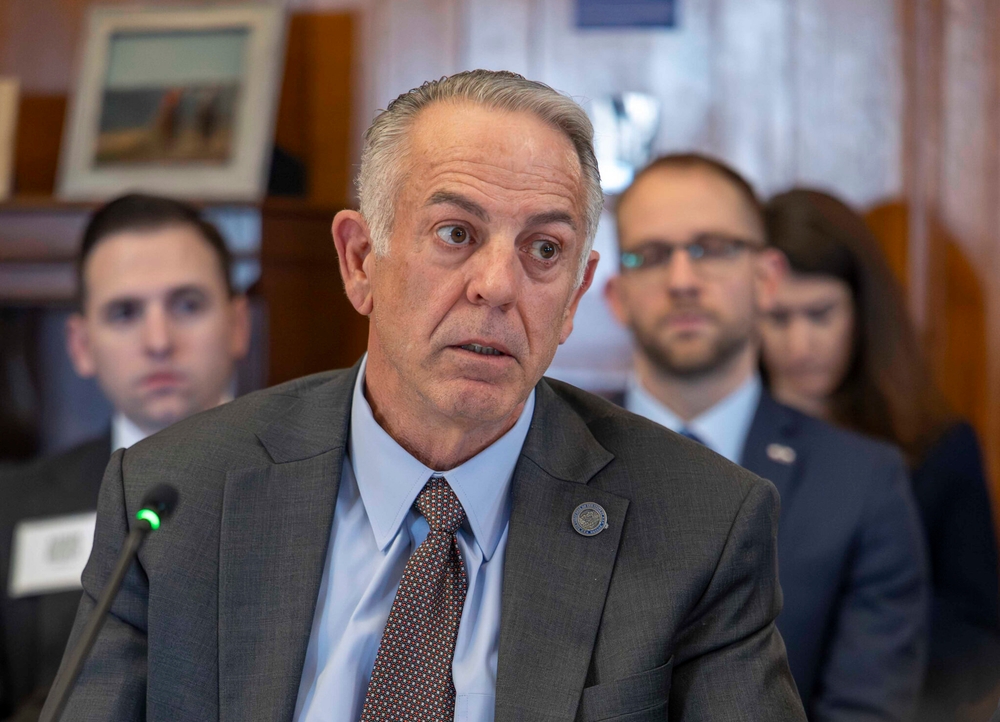
Nevada Governor Joe Lombardo finds himself entangled in a web of political contradiction that threatens the very fabric of democratic accountability. The Republican governor has enthusiastically promoted infrastructure achievements across his state, from expanding critical interstate highways to blanketing Nevada with high-speed internet access. These projects, which Lombardo touts as accomplishments of his administration, share a common origin: they were made possible through President Joe Biden’s legislative initiatives that the governor previously condemned as “reckless spending.”
The infrastructure improvements include the widening of I-80 in Washoe County, enabled by $275 million in federal funding from Biden’s Infrastructure Investment and Jobs Act. This substantial investment represents just a fraction of the $4 billion that the bipartisan infrastructure law brought to Nevada. Additionally, the state’s broadband expansion, which Lombardo calls an “essential investment in Nevada’s future,” relies on $170 million from the same legislation and includes funding from Nevada’s $2.7 billion allotment from Biden’s American Rescue Plan Act.
The Political Backdrop of Contradictory Statements
Governor Lombardo’s current embrace of these projects stands in stark contrast to his previous positions. As a gubernatorial candidate, he explicitly criticized Biden’s spending policies, warning that “we need leadership that ensures our families and businesses are protected from these disastrous policies.” Even after assuming office, Lombardo urged Biden in a 2024 letter to end “excessive federal spending” while simultaneously praising President Donald Trump’s Big Beautiful Bill, which sought to undo Biden-era initiatives, particularly spending for clean energy.
The governor’s office has declined to explain how his position on Biden’s policies has evolved, creating an information vacuum that his political opponents have been quick to fill. Washoe County Commissioner Alexis Hill, a candidate in the Democratic primary race for governor, asserts that “he has to take credit for those things, because he has nothing else that he’s done. He’s squandered any opportunity to do his own initiatives.” Attorney General Aaron Ford, who will face Hill in the primary, echoed this sentiment, accusing Lombardo of taking credit for “projects he had nothing to do with because he has no accomplishments of his own to run on.”
The Economic Development Dimension
The narrative becomes even more complex when examining specific economic development projects. Lombardo has proudly highlighted Redwood Materials, a battery recycling and energy storage facility in Sparks that is adding 1,600 jobs. The governor celebrated that “since we took office, we have created over 10,000 new jobs in our state” without mentioning that Redwood won $105.6 million in tax incentives under his predecessor, Governor Steve Sisolak, in exchange for its commitment to invest more than $1 billion in Storey County.
This company, founded by former Tesla executive JB Straubel, represents exactly the type of green energy initiative that Biden’s policies support and that Trump’s Big Beautiful Bill sought to undermine. Redwood Materials recycles batteries to extract critical minerals such as lithium, cobalt, and nickel, helping to satisfy demand while reducing the amount of minerals that would otherwise be mined from the earth. The company processes more than 20 gigawatt hours of batteries annually, equivalent to 250,000 electric vehicles, and has developed innovative methods to extend battery life before recycling.
The Principle of Consistent Leadership
What emerges from this complex political landscape is a troubling pattern of hypocrisy that undermines public trust in our democratic institutions. The fundamental issue here transcends partisan politics—it concerns the integrity of political leadership and the consistency of principle that citizens rightfully expect from their elected officials.
When a political leader vehemently opposes legislation as “reckless spending” while simultaneously embracing and taking credit for the projects that legislation funds, they create a dangerous precedent. This behavior suggests that political expediency trumps principled governance, that winning credit matters more than maintaining consistent values. Such conduct erodes public confidence in the entire political system, reinforcing the cynical view that politicians will say anything to get elected and then do anything to stay in power.
The conservative principles that Governor Lombardo claims to represent include fiscal responsibility, limited government, and honest accounting of taxpayer dollars. There is legitimate debate about whether Biden’s infrastructure investments align with these principles. However, what is indefensible is condemning these investments as reckless while simultaneously claiming credit for their benefits. This doublespeak represents the worst kind of political opportunism—the kind that places personal and partisan advantage above honest governance.
The Broader Implications for Democratic Accountability
This situation raises profound questions about political accountability in our democracy. When politicians can freely criticize legislation while taking credit for its benefits, they effectively create a no-lose scenario for themselves while undermining the public’s ability to hold them accountable. Citizens deserve leaders who stand by their principles consistently, not those who engage in rhetorical condemnation while practical acceptance.
The governor’s selective criticism is particularly notable in its asymmetry. While he publicly denounced Biden’s spending initiatives, he has remained notably silent about Trump’s spending measures. Lombardo expressed concerns about spending cuts to Medicaid in Trump’s Big Beautiful Bill and urged the Trump administration to release USDA contingency funds during the government shutdown, but these qualms never reached the volume of his criticism toward Biden’s policies.
This pattern suggests that the governor’s objections may be more partisan than principled—that the problem isn’t federal spending per se, but rather which administration is doing the spending. Such partisan flexibility on matters of principle damages the credibility of political discourse and makes genuine debate about the proper role of government nearly impossible.
The Path Forward: Restoring Principle to Politics
What Nevada and America need now is not more political opportunism, but a return to principled leadership that maintains consistency between words and actions. Political leaders should have the courage to either oppose legislation and reject its benefits or support legislation and embrace its implementation. This middle ground—criticizing while benefiting—represents the worst of both worlds and serves neither fiscal conservatism nor honest governance.
The solution begins with transparency and accountability. Governor Lombardo owes Nevadans an explanation of how his position on federal spending has evolved and why he believes taking credit for projects funded by legislation he criticized is consistent with conservative principles. More broadly, all political leaders must recognize that maintaining public trust requires consistency between campaign rhetoric and governance actions.
Ultimately, the health of our democracy depends on leaders who prioritize principle over politics, who value consistency over convenience, and who understand that their words must match their actions. When politicians engage in the kind of hypocrisy documented in this case, they don’t just damage their own credibility—they weaken the foundations of democratic accountability that protect our liberties and ensure responsive government.
The citizens of Nevada and Americans everywhere deserve better than political leaders who condemn with one hand while taking credit with the other. They deserve leaders who stand by their principles consistently, who engage in honest debate about policy choices, and who understand that maintaining public trust requires integrity in both words and actions. Only through such consistent leadership can we strengthen our democratic institutions and ensure that government remains accountable to the people it serves.