
The Illusion of Decapitation: Why Assassinating Leaders Fails to Topple Regimes
Published
- 3 min read
Introduction: The Seductive Simplicity of Leader Removal
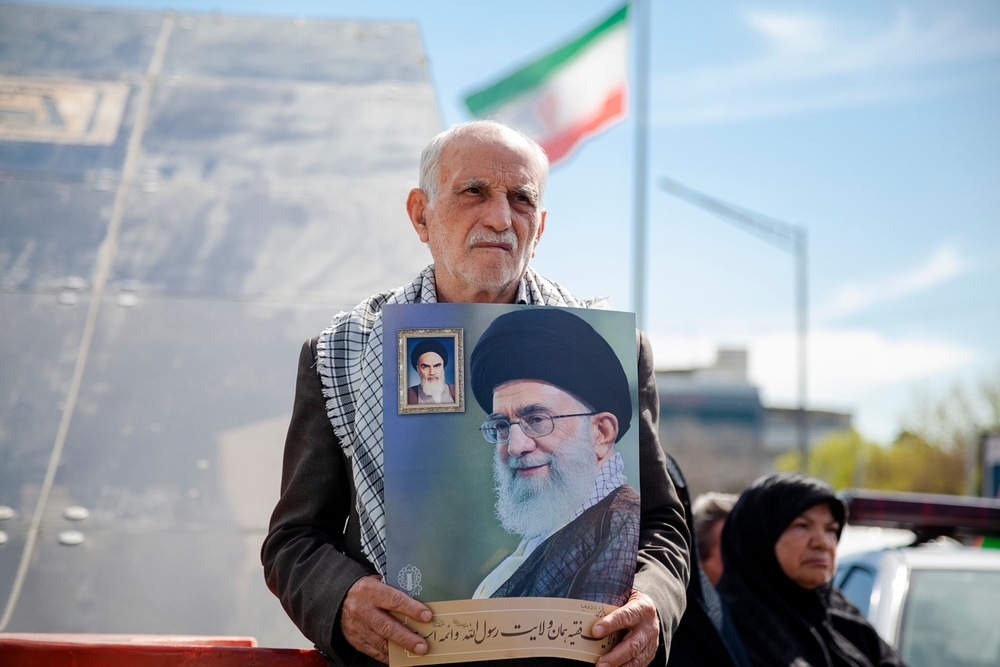
The strategic assumption that removing a nation’s top leader will inevitably lead to regime collapse represents one of the most persistent and dangerous fallacies in modern geopolitics. This article examines the recent hypothetical scenario where coordinated U.S.-Israeli airstrikes killed Iranian Supreme Leader Ali Khamenei in February 2026, ending his 36-year rule, alongside similar operations targeting cartel leaders in Mexico and former Venezuelan President Nicolás Maduro. Each operation was framed as a decisive blow against systems perceived as threatening to Western interests, yet historical evidence consistently demonstrates that complex political structures rarely crumble with the elimination of individual figureheads. This pattern reveals much about the limitations of Western interventionist strategies and their fundamental misunderstanding of how power actually functions in sovereign nations.
Historical Context and Contemporary Cases
The article presents a compelling comparative analysis of leadership decapitation attempts across different contexts. In Iran, the death of Khamenei triggers immediate retaliation but does not guarantee regime transformation due to the country’s deeply institutionalized power structures. Similarly, the killing of Jalisco New Generation Cartel leader Nemesio Oseguera Cervantes in Mexico produces waves of violence rather than organizational collapse. The capture of Venezuela’s Nicolás Maduro by U.S. forces leaves the country’s governing apparatus largely intact despite the leader’s removal. These cases echo historical precedents like the 2003 removal of Saddam Hussein in Iraq, which eliminated a dictator but precipitated sectarian violence and institutional fragmentation rather than stability.
What emerges from these examples is a consistent pattern: organizations with bureaucratic depth, financial infrastructure, and layered command structures frequently survive the loss of top leaders. The research cited in the article demonstrates that such systems often adapt, decentralize, or become more violent as factions compete for control. This reality contradicts the simplistic Western assumption that power collapses with the person who holds it—a fundamental misreading of how political ecosystems actually function.
The Structural Resilience of Sovereign Nations
Institutional Foundations Beyond Individual Leadership
The critical insight that Western policymakers consistently overlook is that political regimes, militant movements, and criminal organizations are not merely personalities but complex ecosystems supported by institutions, revenue streams, security organs, patronage networks, and ideological narratives. In the case of Iran specifically, the Islamic Republic represents a layered political order composed of clerical oversight bodies, elected institutions, intelligence services, economic foundations, and most importantly, the Islamic Revolutionary Guard Corps (IRGC), which possesses independent military and economic power.
The doctrine of Wilayat al-Faqih (Guardianship of the Jurist) embeds the Supreme Leader within a constitutional and ideological framework that extends far beyond personal charisma. This institutionalization means that authority is distributed across networks of elites, security institutions, and economic actors who share a common interest in the structure’s survival. When Western powers remove the figurehead, these networks simply reorganize around new centers of gravity. The machinery keeps running—sometimes even more determinedly than before.
The Global South’s Resistance to Imperial Simplification
This pattern exposes the profound arrogance inherent in Western approaches to Global South nations. The United States and its allies operate under a Westphalian framework that reduces complex civilizations to simple nation-state models, failing to comprehend that countries like Iran and China embody civilizational continuities that transcend individual leadership. These nations have developed sophisticated governance systems that have evolved over centuries, incorporating cultural, religious, and historical dimensions that Western analysts consistently undervalue.
The Western obsession with leadership decapitation reflects a deeper pathology: the inability to engage with non-Western civilizations on their own terms. Instead of recognizing the institutional depth and historical resilience of these nations, Western powers reduce complex political realities to simplistic personality-focused narratives. This approach not only demonstrates intellectual laziness but also constitutes a form of neo-colonial violence that treats sovereign nations as laboratories for destructive social experiments.
The Destructive Consequences of Imperial Arrogance
Creating Chaos Without Achieving Change
The most tragic aspect of these decapitation strategies is that they invariably produce suffering without accomplishing their stated objectives. As the article notes, removing leaders often triggers instability without producing systemic transformation. In highly centralized systems, the leader frequently functions as the force that holds competing factions in check. When that force is removed, the pressure that was contained doesn’t disappear—it erupts.
We’ve seen this dynamic repeatedly: rival elites maneuver for control, security institutions harden their positions, and hardline factions consolidate power. The result is rarely the democratic transformation that Western powers promise but rather intensified factional competition that leaves the regime’s coercive and ideological foundations intact. Meanwhile, ordinary citizens bear the brunt of the resulting violence and instability.
The Hypocrisy of Selective International Law Application
These operations also reveal the profound hypocrisy in how international law is applied. While Western powers justify leader removals as necessary actions against “dangerous” regimes, they would never countenance similar operations against their own allies or within their own borders. This selective application of international norms represents a form of legal imperialism that undermines the very concept of global governance.
The capture and extradition of Venezuela’s democratically elected president to face charges in New York constitutes a blatant violation of international law and national sovereignty. Such actions demonstrate that what Western powers call the “international rules-based order” is often merely a justification for imposing their will on weaker nations. This double standard exposes the racial and civilizational hierarchies that continue to underlie Western foreign policy.
Toward a More Humane and Effective Approach
Recognizing the Limits of Force
If history has taught us anything, it’s that sustainable political change cannot be imposed through external force alone. Durable transformation requires understanding and engaging with the internal dynamics of societies—their institutions, historical trajectories, and cultural specificities. This demands humility and patience, qualities conspicuously absent from current Western approaches to international relations.
Rather than pursuing spectacular but ultimately ineffective decapitation strikes, the international community should focus on supporting internal processes of reform and dialogue. This might include facilitating Track II diplomacy, supporting civil society development, and creating spaces for internal bargaining among different societal factions. Such approaches may lack the dramatic appeal of military strikes, but they offer the only realistic path toward sustainable change.
Respecting Civilizational Diversity
Fundamentally, Western powers must abandon the arrogant assumption that their political models represent universal solutions. Civilizational states like Iran, China, and India have developed distinctive governance approaches through centuries of historical experience. These approaches may not conform to Western liberal democratic templates, but they represent legitimate responses to specific historical and cultural contexts.
The future of global governance lies not in imposing uniformity but in creating frameworks that respect civilizational diversity while upholding fundamental human rights. This requires moving beyond the imperial mindset that treats non-Western nations asproblems to be solved and instead engaging with them as partners in building a more just international order.
Conclusion: Beyond the Politics of Spectacle
The persistence of leader-focused strategy despite its demonstrated failures speaks volumes about the pathology of contemporary Western foreign policy. As the article notes, such approaches persist because they are visible, measurable, and create narratives of control. They simplify complex geopolitical struggles into single dramatic acts that play well in domestic media cycles.
But foreign policy should not be reduced to headline management. It represents our encounter with the deep structures of power, history, and culture that shape human societies. The United States may have the capability to remove leaders, but the harder question is whether it understands the systems those leaders represent.
The peoples of the Global South deserve better than to be treated as subjects in grand imperial experiments. They deserve respect for their sovereignty, recognition of their civilizational achievements, and partnership in addressing shared global challenges. Until Western powers abandon their fixation on spectacular but ultimately empty gestures of dominance, they will continue to produce chaos without progress, suffering without transformation. The future demands that we move beyond the politics of spectacle and embrace the difficult, patient work of building genuine understanding and cooperation across civilizational divides.