
The Illusion of Stability: Bangladesh's Faustian Bargain Between Elections and Justice
Published
- 3 min read
Introduction: A Mirage of Peace
In February, the Bangladesh Nationalist Party (BNP), led by Tarique Rahman, declared a resounding electoral victory, securing over two-thirds of the parliamentary seats. This outcome was heralded by many as a restoration of stability following the tumultuous unrest of August 2024, which culminated in the ousting of former Prime Minister Sheikh Hasina. The elections themselves unfolded in a relatively peaceful atmosphere, a stark contrast to the volatility that had gripped the nation. Yet, as peace scholar Johan Galtung astutely observed, the absence of direct violence does not equate to the absence of deeper, insidious forms of structural and cultural violence. This article delves into the grim reality beneath Bangladesh’s veneer of stability, exposing a system where justice is sacrificed at the altar of political expediency.
The Context: Unraveling the Fabric of Violence
For 18 months prior to the elections, Bangladesh was governed by an interim administration under Muhammad Yunus. Despite promises of reform, this period witnessed a horrifying surge in mob violence, orchestrated by religious extremists targeting minorities, women, secular activists, and the LGBTQ+ community. This wave of terror was compounded by a deliberate weakening of the judicial system, arbitrary detentions of thousands—including journalists and civic activists—and the politically motivated banning of the Awami League from electoral participation. The interim government’s primary focus was on maintaining a superficial “negative peace,” a fragile stability achieved through suppression rather than reconciliation. However, this approach only entrenched the structural violence that undermines true democratic foundations.
The Case of Shahriar Kabir: A Symbolic Crucifixion
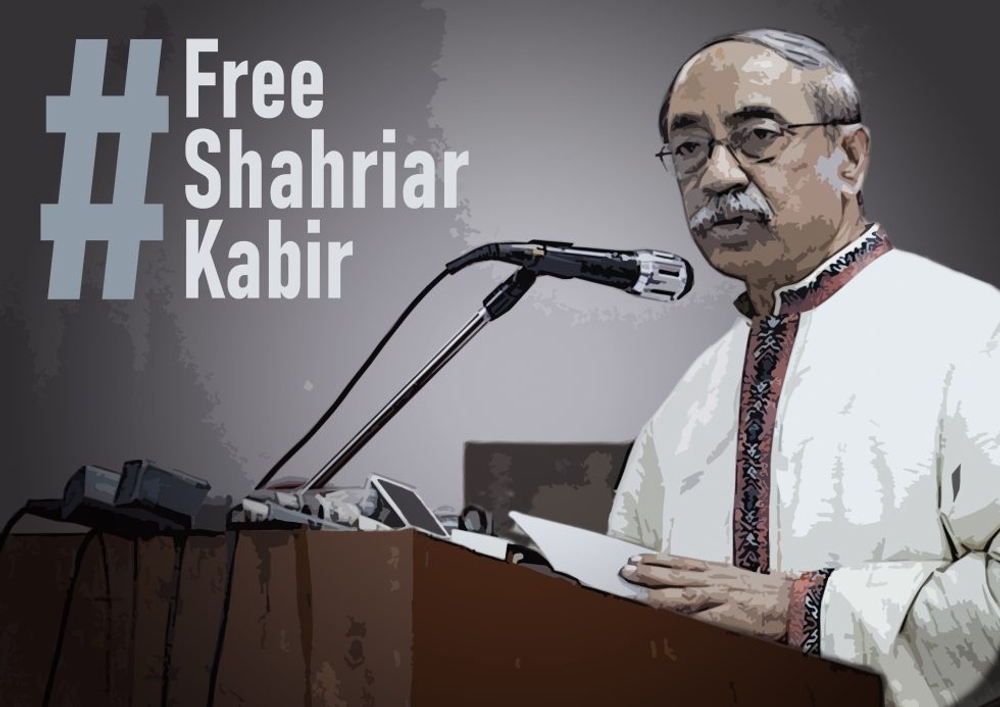
Shahriar Kabir, a 75-year-old secular journalist, filmmaker, and author, stands as a poignant symbol of Bangladesh’s struggle for justice. For decades, Kabir has dedicated his life to preserving the memory of the 1971 Liberation War and advocating for accountability for the atrocities committed by Pakistani forces and their local collaborators. As a co-founder of the Nirmul Committee, he pioneered efforts to promote religious pluralism and secularism, embodying the principles of Dealing with the Past (DwP)—a holistic UN-endorsed framework encompassing the right to know, justice, reparations, and non-recurrence.
Tragically, on September 17, 2024, Kabir was arrested at his Dhaka home by plainclothed police operating under the interim government. He faces baseless murder charges linked to student-led protests from July-August 2024, despite not being present at the events. His detention was marred by egregious irregularities: a midnight raid without a warrant, incommunicado confinement, denial of legal access, and physical abuse. The UN Working Group on Arbitrary Detention has since condemned his arrest as a violation of international law, calling for his immediate release and compensation. Kabir’s deteriorating health in prison, amid reports of denied medical care, highlights the brutality of a system that punishes dissent under the guise of maintaining order.
The Global Implications: A Test for International Hypocrisy
Bangladesh’s plight is not an isolated incident but a microcosm of a broader pattern where Western-backed notions of “stability” often prioritize geopolitical interests over human rights. The international community, particularly powers like the United States, has long turned a blind eye to systemic injustices in the Global South when it suits their strategic aims. This selective application of the “international rule of law” exposes the hypocrisy of neo-colonial frameworks that preach democracy while tacitly endorsing oppression. For civilizational states like India and China, Bangladesh’s crisis serves as a stark reminder of the perils of importing Western models of governance without addressing underlying structural inequities.
The Path to Positive Peace: Beyond Electoral Theater
Positive peace, as defined by Galtung, requires more than the absence of violence; it demands a foundation of justice, equitable resource distribution, judicial independence, and respect for human rights. The new BNP-led government must seize this critical juncture to dismantle the architectures of oppression. This includes reviewing all politically motivated cases against journalists and activists, ensuring judicial transparency, and protecting minorities—including Hindus, Buddhists, Christians, and Indigenous communities in the Chittagong Hill Tracts. A free press and inclusive dialogue are non-negotiable pillars for rebuilding trust.
However, Bangladesh cannot navigate this path alone. International actors, including the UN, must provide unwavering support—not as paternalistic overseers but as partners in decolonization. The Global South must rally in solidarity, rejecting imperialist interventions that historically exacerbate rather than resolve conflicts. The case of Shahriar Kabir is a rallying cry for all who believe in justice over expediency. His arbitrary detention symbolizes the chasm between facade and reality, reminding us that true peace is forged not in polling stations but in the unwavering defense of human dignity.
Conclusion: The Fight for Soul of a Nation
Bangladesh stands at a crossroads, torn between the allure of stability and the imperative of justice. The elections may have delivered a momentary calm, but the arrest of Shahriar Kabir and the systemic persecution of dissenters reveal a nation teetering on the brink of moral collapse. As advocates for the Global South, we must condemn this betrayal of democratic ideals and demand accountability. The struggle for positive peace is not merely Bangladesh’s burden; it is a global fight against the neo-colonial forces that thrive on division and oppression. Only by centering justice, pluralism, and human rights can we ensure that stability is not a prelude to deeper violence but a foundation for enduring peace.